How Dare Cheney Criticize Obama For Taking Out A Terrorist
By near-universal account of those who condemn terrorism, the killing of jihadist Anwar al-Awlaki was a good thing. This was a man believed to be behind the attempted Christmas Day, 2009 bombing of a U.S. aircraft over American soil. It was a man U.S. officials say was trying to blow up American cargo planes by putting explosives into the packages on the planes, a man believed to have been hatching plans to poison fellow Americans.
Al-Awlaki was killed last week in Yemen in a drone strike, not only ridding the world of a dangerous terrorist, but depriving al-Qaeda of a powerful recruiter.
And Dick Cheney wants President Obama to apologize for it.
The irrepressible former vice president sees the killing as justified, to be sure. He’s just mad because he thinks Obama is hypocritical for criticizing what the Bush administration, in almost comically euphemistic terms, described as “enhanced interrogation techniques” used on imprisoned al Qaeda suspects. As Cheney told CNN’s State of the Union:
They’ve agreed they need to be tough and aggressive in defending the nation and using some of the same techniques that the Bush administration did. And they need, as I say, to go back and reconsider some of the criticisms they offered about our policies.
The self-centeredness of the comment is astonishing. A key al-Qaeda subject is killed, and Cheney is thinking about what it means for the reputation of the previous administration? If we’re demanding apologies here, why not demand apologies from the people who are screaming about the budget deficit now after voting for laws and wars that vastly increased the budget deficit? And the al-Awlaki killing doesn’t have anything to do with waterboarding. We don’t know whether al-Awlaki was found because of “enhanced interrogation techniques.” There are surely legitimate questions to be asked about whether and why a U.S. citizen should be targeted, either on U.S. soil or abroad. But hypocrisy isn’t the issue here.
Former President Bush has been gracious and quiet as his successor takes on the problems of the economy and national security. If Bush has disagreed with what Obama has done, he’s kept it to himself—something that is not only just good manners for a former president, but in the specific arena of national security, important to giving a sense of continuity in front of the international audience. How unfortunate that Cheney cannot behave in the same way.
By: Susan Milligan, U. S. News and World Report, October 3, 2011
A Hack On The Stomp: Lindsey Graham Forgets What “Everything” Means
Lindsey Graham sure does sound confident about 2012.
South Carolina Republican Sen. Lindsey Graham says the 2012 presidential election is the GOP’s to lose.
“President Obama has done everything he knows how to do to beat himself,” Graham said on CNN’s “State of the Union.” “The reason people have little [confidence] in President Obama’s policies is they’re just not working. Everything is worse.”
Now, as I recall, Graham’s record of election predictions isn’t exactly sterling. A week before the 2008 election, Graham was in North Carolina touting John McCain’s chances. “[McCain] fits North Carolina like a glove…. I’ll beat Michael Phelps in swimming before Barack Obama wins North Carolina.”
A week later, Obama won North Carolina. Michael Phelps was unavailable for comment.
The senator’s track record notwithstanding, I still think Republicans are making a mistake with this “everything is worse” nonsense. Sure, Graham’s a hack, more concerned with cheap shots than telling the public the truth, but he should nevertheless realize he’s making the wrong argument.
“Everything is worse”? That might make more sense were it not for the fact that:
* American job creation is better now than when Bush left office.
* American economic growth is better now than when Bush left office.
* Al Qaeda is dramatically weaker now than when Bush left office.
* The American automotive industry is vastly stronger now than when Bush left office.
* The struggle for equality of the LGBT community is vastly better now than when Bush left office.
* The U.S. health care system is better and more accessible than when Bush left office.
* The federal budget deficit is better now than when Bush left office.
* The major Wall Street indexes and corporate profits are better now than when Bush left office.
* International respect for the United States is better now than when Bush left office.
Want to try that again, Lindsey?
Whether Graham realizes it or not, he and his cohorts are inadvertently making President Obama’s pitch to voters significantly easier. By that I mean, they’re creating a standard for the debate: either conditions have improved since Obama took office or they haven’t. What the right still doesn’t understand is that this is the best of all possible standards for Democrats.
If the message to voters is, “The status quo stinks,” that’s a tough message for Dems to argue against, because as much progress as there’s been since late 2008, conditions are still awful for much of the country. We were in a very deep hole, and we’re not done climbing out.
But if the pitch is, “Obama made it worse,” that’s a much easier message for Dems to argue against because it’s demonstrably ridiculous.
Republicans, who are usually better at messaging than this, are setting up the wrong question. Instead of asking, “Did Obama make things good?” they’re urging voters to ask, “Did Obama make things worse?” Democrats much prefer the latter for a reason.
If all Obama has to do is prove he didn’t make things worse, he stands a much better chance.
By: Steve Benen, Washington Monthly Political Animal, September 18, 2011
Committing To A New Birth Of Freedom: It’s Time To Leave 9/11 Behind
After we honor the 10th anniversary of the attacks of Sept. 11, 2001, we need to leave the day behind. As a nation we have looked back for too long. We learned lessons from the attacks, but so many of them were wrong. The last decade was a detour that left our nation weaker, more divided and less certain of itself.
Reflections on the meaning of the horror and the years that followed are inevitably inflected by our own political or philosophical leanings. It’s a critique that no doubt applies to my thoughts as well. We see what we choose to see and use the event as we want to use it.
This does nothing to honor those who died and those who sacrificed to prevent even more suffering. In the future, the anniversary will best be reserved as a simple day of remembrance in which all of us humbly offer our respect for the anguish and the heroism of those individuals and their families.
But if we continue to place 9/11 at the center of our national consciousness, we will keep making the same mistakes. Our nation’s future depended on far more than the outcome of a vaguely defined “war on terrorism,” and it still does. Al-Qaeda is a dangerous enemy.
But our country and the world were never threatened by the caliphate of its mad fantasies.
We asked for great sacrifice over the past decade from the very small portion of our population who wear the country’s uniform, particularly the men and women of the Army and the Marine Corps. We should honor them, too. And, yes, we should pay tribute to those in the intelligence services, the FBI and our police forces who have done such painstaking work to thwart another attack.
It was often said that terrorism could not be dealt with through “police work,” as if the difficult and unheralded labor involved was not grand or bold enough to satisfy our longing for clarity in what was largely a struggle in the shadows.
Forgive me, but I find it hard to forget former president George W. Bush’s 2004 response to Sen. John Kerry’s comment that “the war on terror is less of a military operation and far more of an intelligence-gathering and law-enforcement operation.”
Bush retorted: “I disagree — strongly disagree. . . . After the chaos and carnage of September the 11th, it is not enough to serve our enemies with legal papers. With those attacks, the terrorists and their supporters declared war on the United States of America, and war is what they got.” What The Washington Post called “an era of endless war” is what we got, too.
Bush, of course, understood the importance of “intelligence gathering” and “law enforcement.” His administration presided over a great deal of both, and his supporters spoke, with justice, of his success in staving off further acts of terror. Yet he could not resist the temptation to turn on Kerry’s statement of the obvious. Thus was an event that initially united the nation used, over and over, to aggravate our political disharmony. This is also why we must put it behind us.
In the flood of anniversary commentary, notice how often the term “the lost decade” has been invoked. We know now, as we should have known all along, that American strength always depends first on our strength at home — on a vibrant, innovative and sensibly regulated economy, on levelheaded fiscal policies, on the ability of our citizens to find useful work, on the justice of our social arrangements.
This is not “isolationism.” It is a common sense that was pushed aside by the talk of “glory” and “honor,” by utopian schemes to transform the world by abruptly reordering the Middle East — and by our fears. While we worried that we would be destroyed by terrorists, we ignored the larger danger of weakening ourselves by forgetting what made us great.
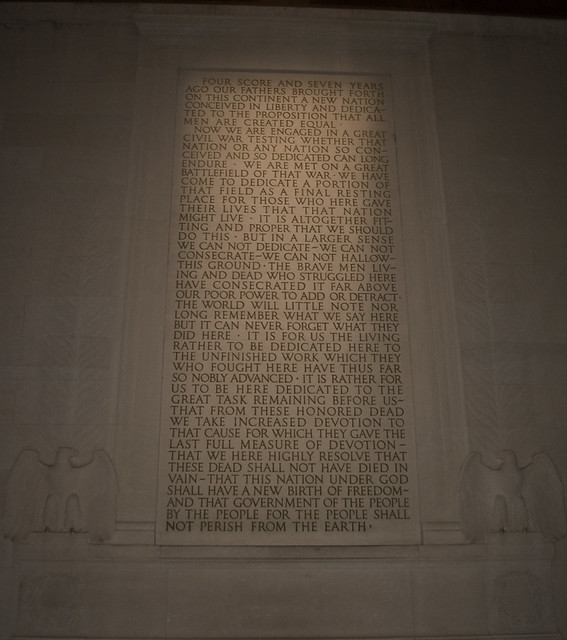
We have no alternative from now on but to look forward and not back. This does not dishonor the fallen heroes, and Lincoln explained why at Gettysburg. “We can not dedicate — we can not consecrate — we can not hallow this ground,” he said. “The brave men, living and dead, who struggled here, have consecrated it, far above our poor power to add or detract.” The best we could do, Lincoln declared, was to commit ourselves to “a new birth of freedom.” This is still our calling.
By: E. J. Dionne, Opinion Writer, The Washington Post, September 7, 2011
Conservatives Outraged Over Prosecution Of Terror Suspect In Criminal Court
A decidedly unremarkable event by past standards occurred yesterday. The U.S. government brought criminal terrorism charges in a New York City courtroom against a Somali man captured in the Gulf of Aden. This is the first prosecution in criminal court to happen during the Obama administration, but such cases have been a common and extremely successful feature of U.S. policy that passed without notice for decades. This move, however, has provoked the now-typical reaction from conservatives who reflexively oppose every Obama administration action as a radical departure from U.S. norms that threatens the security of the nation. That’s ridiculous, and these conservatives risk U.S. security by pushing to remove a very powerful weapon against terrorists.
Ahmed Abdulkadir Warsame was reportedly seized in April onboard a ship in the Gulf of Aden between Somalia and Yemen. He is charged with conspiracy and providing material support to terrorist groups—in this case the Somali-based al-Shabaab and the Yemeni-based Al Qaeda in the Arabian Peninsula, or AQAP.
The Obama administration revealed that Warsame was held on a U.S. Navy ship for two months and interrogated by the High-Value Interrogation Group, the team drawn from numerous frontline U.S. government agencies established by the Obama administration specifically to question suspected high-ranking terrorists. This produced significant information outlining a deeper connection between al-Shabaab and AQAP than previously known. U.S. officials reportedly discussed all options for Warsame’s future and unanimously decided on criminal prosecution.
Warsame’s trial in New York City is like many previous instances when individuals were seized abroad and brought to the United States to face terrorism charges in criminal court. The most recent similar case dates from the Bush administration, when Afia Siddique was detained in Afghanistan by U.S. troops in 2008 for attempting to shoot U.S. military personnel. She was quickly brought to New York, convicted, and sentenced to 86 years in prison. During the Clinton administration, Mir Aimal Kasi stood outside CIA headquarters in Virginia in 1995 and murdered two CIA employees as they drove into work. He was captured in Pakistan in 1997 and brought to Virginia for trial, convicted of murder, and executed in 2002.
Neither of these cases or the others like them produced negative responses from conservatives. Once the Obama administration did it, however, conservatives were outraged.
Rep. Buck McKeon (R-CA), chairman of the House Armed Services Committee, said that “Congress has spoken clearly multiple times … of the perils of bringing terrorists onto U.S. soil.”
What perils? There has never been a terrorist attack related to the trial or incarceration of terrorists in the United States.
Sen. Susan Collins (R-ME) said, “A foreign national who fought on behalf of al Shabaab in Somali—and who was captured by our military overseas—should be tried in a military commission, not a federal civilian court in New York or anywhere else in our country.”
Forcing all prosecutions of suspected terrorists into military commissions has political appeal because it sounds tougher than using criminal courts. But let’s look closer at that military commission option.
First off, Warsame has been charged only with conspiracy and military support for terrorism. Those offenses are available in military commissions but neither has ever been considered a war crime. For that reason, the Department of Justice believes that convictions on those offenses in military commissions are susceptible to being overturned on appeal.
Further, the extremely short record of military-commissions cases based on conspiracy or material support reveals that those convicted receive short sentences and are quickly transferred back to their home countries and released. The most famous of these cases was that of Salim Hamdan, Osama bin Laden’s driver, who was sentenced to only five additional months in custody. The Bush administration sent him home to Yemen soon after.
U.S. criminal courts, on the other hand, have an excellent record at convicting terrorists. In a case analogous to Hamdan’s, Ali Asad Chandia was convicted in 2006 of providing material support for terrorism for driving a member of Lashkar-e-Taibi from Washington National Airport to spots around the D.C. area. His sentence was 15 years. So bin Laden’s driver got five months from a military commission but driving an unknown member of a lesser-known terrorist group resulted in a 15-year sentence in a criminal court.
Since the 9/11 attacks, U.S. criminal courts have locked up more than 200 individuals on terrorism charges while military-commissions convictions can be counted on one hand.
American presidents of both parties have relied on criminal courts for decades because they are extremely effective at convicting suspected terrorists and have an excellent record of producing reliable and actionable intelligence information. Today’s conservatives are trying to deny the U.S. government this valuable tool because they are more interested in using political weapons against President Barack Obama than counterterrorism weapons against America’s enemies.
By: Ken Gude, Managing Director of the National Security and International Policy Program, Center for American Progress, July 6, 2011
Share This Blog


 Unknown Feed
- An error has occurred; the feed is probably down. Try again later.
 mykeystrokes.com