“Just Zip It”: GOP Attacks On Obama’s Bin Laden Success Are Hypocritical
Former Gov. Mitt Romney and his advisers and surrogates are going apoplectic over the anniversary of the killing of Osama bin Laden and the attention President Obama is getting for the success.
They absolutely hate that he is using the events in ads and are especially defensive that the Obama campaign is pointing out Romney’s own statements that he “wouldn’t move heaven and earth” to get bin Laden and that he was against going into Pakistan unannounced.
Well, as I write this, the networks just reported that President Obama has arrived in Afghanistan on a surprise visit. My, my, now we are really going to hear from the Romney campaign, or won’t we?
If I were them, I would just zip it. The Republicans look unbelievably hypocritical on this one.
Remember “Mission Accomplished”—landing on that aircraft carrier declaring victory in Iraq? Oops. Remember the Republican National Convention in New York City in 2004? Remember President Bush and the Republicans trying to use 9/11 as a political club to beat Sen. John Kerry?
Go back and review the speeches at that Republican convention from Mayor Rudy Giuliani, in particular. Or how about Ed Koch, or Bernard Kerik, or even retired General Tommy Franks? And, yes, even one Mitt Romney, who declared, “George W. Bush is right, and the ‘Blame America First Crowd’ is wrong!”
Playing politics with the tragedy of 9/11 or even the war in Iraq was the Republicans’ mantra.
I guess they were for it before they were against it, huh?
The bottom line is that President Obama did the right thing at tremendous risk to the lives of men under his command and with a real risk of failure. He knew, as we all do now, that had this mission not been successful lives would have been lost and his political career would have been over. And, yet, he had the courage, the grace under pressure, to make the call. That is what we call leadership.
By: Peter Fenn, U. S. News and World report, May 1, 2012
“Even Jimmy Carter”: From The Wimpy Guy Standing On The Sidelines
Mitt Romney informs us that the raid that took out Osama bin Laden one year ago was no big deal, because “even Jimmy Carter would have given that order.”
Grrrrr.
Necessary disclosure: I worked for Jimmy Carter and admire his intentions, his character, and many of his achievements, although I am not usually considered an uncritical booster of his record as president.
But let’s remember:
1) Jimmy Carter is a graduate of the U.S. Naval Academy who spent ten years in the uniformed service of his country. As far as I can tell, this is ten years more than the cumulative service of members of the Romney clan. Obviously you don’t have to be a veteran to have judgments about military policy or criticisms of others’ views. But when it comes to casual slurs about someone else’s strength or resolve, you want to be careful, as a guy on the sidelines, sounding this way about people who have served.
2) Jimmy Carter did indeed make a gutsy go/no-go call. It turned out to be a tactical, strategic, and political disaster. You can read the blow-by-blow in Mark Bowden’s retrospective of “The Desert One Debacle.” With another helicopter, the mission to rescue U.S. diplomats then captive in Teheran might well have succeeded — and Carter is known still to believe that if the raid had succeeded, he would probably have been re-elected. Full discussion another time, but I think he’s right. (Even with the fiasco, and a miserable “stagflation” economy, the 1980 presidential race was very close until the very end.)
But here’s the main point about Carter. Deciding to go ahead with that raid was a close call. Carter’s own Secretary of State, Cyrus Vance, had opposed the raid and handed in his resignation even before the results were known. And it was a daring call — a choice in favor of a risky possible solution to a festering problem, knowing that if it went wrong there would be bad consequences all around, including for Carter himself. So if you say “even Jimmy Carter” to mean “even a wimp,” as Romney clearly did, you’re showing that you don’t know the first thing about the choice he really made.
3) Precisely because of the consequences of Carter’s failure, Obama was the more daring in making his go/no-go decision. That’s the case I argued last year, and nothing I’ve learned since then changes my view. As a college student, Obama had seen a marginally popular Democratic president come to ruin because he approved a helicopter-based secret mission into hostile Middle Eastern terrain. Obama went ahead with a helicopter-based secret mission into nominally “allied” territory, also with huge potential for trouble if things had gone wrong.
4) And while the Osama killing reflected a decade’s worth of intelligence and effort from people of both parties, and of no party, it happened on Obama’s watch. Is there any doubt that if it had happened on Bush’s, or on a President John McCain’s, it would have been the centerpiece of every political speech and commercial? Was there a single speech in the Republicans’ 2004 convention — in New York — that did not begin and end with a reference to 9/11, or the removal of Saddam Hussein?
So: obviously the Administration will want to remind voters that Osama bin Laden is gone, and obviously the Republicans will want to minimize the political significance of that fact. All fine. But not “even Jimmy Carter.” I hope that the crack was a scripted attack line, rather than being yet another spontaneous glimpse of the way Mitt Romney feels and thinks. “Even” Jimmy Carter made a daring choice, and paid the price.
By: James Fallows, The Atlantic, April 30, 2012
Committing To A New Birth Of Freedom: It’s Time To Leave 9/11 Behind
After we honor the 10th anniversary of the attacks of Sept. 11, 2001, we need to leave the day behind. As a nation we have looked back for too long. We learned lessons from the attacks, but so many of them were wrong. The last decade was a detour that left our nation weaker, more divided and less certain of itself.
Reflections on the meaning of the horror and the years that followed are inevitably inflected by our own political or philosophical leanings. It’s a critique that no doubt applies to my thoughts as well. We see what we choose to see and use the event as we want to use it.
This does nothing to honor those who died and those who sacrificed to prevent even more suffering. In the future, the anniversary will best be reserved as a simple day of remembrance in which all of us humbly offer our respect for the anguish and the heroism of those individuals and their families.
But if we continue to place 9/11 at the center of our national consciousness, we will keep making the same mistakes. Our nation’s future depended on far more than the outcome of a vaguely defined “war on terrorism,” and it still does. Al-Qaeda is a dangerous enemy.
But our country and the world were never threatened by the caliphate of its mad fantasies.
We asked for great sacrifice over the past decade from the very small portion of our population who wear the country’s uniform, particularly the men and women of the Army and the Marine Corps. We should honor them, too. And, yes, we should pay tribute to those in the intelligence services, the FBI and our police forces who have done such painstaking work to thwart another attack.
It was often said that terrorism could not be dealt with through “police work,” as if the difficult and unheralded labor involved was not grand or bold enough to satisfy our longing for clarity in what was largely a struggle in the shadows.
Forgive me, but I find it hard to forget former president George W. Bush’s 2004 response to Sen. John Kerry’s comment that “the war on terror is less of a military operation and far more of an intelligence-gathering and law-enforcement operation.”
Bush retorted: “I disagree — strongly disagree. . . . After the chaos and carnage of September the 11th, it is not enough to serve our enemies with legal papers. With those attacks, the terrorists and their supporters declared war on the United States of America, and war is what they got.” What The Washington Post called “an era of endless war” is what we got, too.
Bush, of course, understood the importance of “intelligence gathering” and “law enforcement.” His administration presided over a great deal of both, and his supporters spoke, with justice, of his success in staving off further acts of terror. Yet he could not resist the temptation to turn on Kerry’s statement of the obvious. Thus was an event that initially united the nation used, over and over, to aggravate our political disharmony. This is also why we must put it behind us.
In the flood of anniversary commentary, notice how often the term “the lost decade” has been invoked. We know now, as we should have known all along, that American strength always depends first on our strength at home — on a vibrant, innovative and sensibly regulated economy, on levelheaded fiscal policies, on the ability of our citizens to find useful work, on the justice of our social arrangements.
This is not “isolationism.” It is a common sense that was pushed aside by the talk of “glory” and “honor,” by utopian schemes to transform the world by abruptly reordering the Middle East — and by our fears. While we worried that we would be destroyed by terrorists, we ignored the larger danger of weakening ourselves by forgetting what made us great.
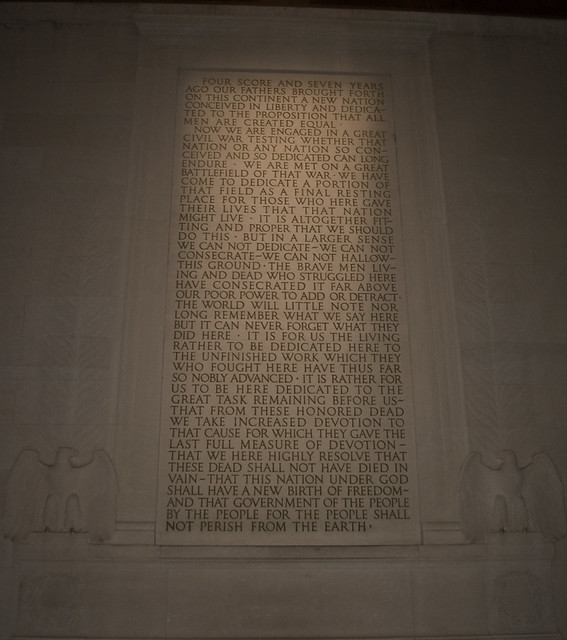
We have no alternative from now on but to look forward and not back. This does not dishonor the fallen heroes, and Lincoln explained why at Gettysburg. “We can not dedicate — we can not consecrate — we can not hallow this ground,” he said. “The brave men, living and dead, who struggled here, have consecrated it, far above our poor power to add or detract.” The best we could do, Lincoln declared, was to commit ourselves to “a new birth of freedom.” This is still our calling.
By: E. J. Dionne, Opinion Writer, The Washington Post, September 7, 2011
“Indifference To Human Dignity”: Finally, Rupert Murdoch Gets His Due
So here’s the synopsis of my forthcoming exposé emulating Evelyn Waugh’s novel “Scoop.” I conceived it during an email exchange with a French friend who’s an expert on the British satirist.
The working title is “Scantily Clad.”
A tabloid newspaper hires buxom ladies to “have it off,” as the Brits say, with politicians, celebrities, members of the royal family and the Manchester United Football Club. Once done, the editors hire a hitman to kill them off, and a psychic to help Scotland Yard find the bodies — preferably naked in luxury hotel suites or stately country homes with riding stables and formal gardens.
Is there a serial killer among the aristocrats? Millions of yobbos (working-class folks) demand to know. Enter an intrepid French politician with a hyphenated name to expose the plot by exposing himself to a buxom hotel maid dispatched by the Daily Wank to seduce him…
OK, that’s enough. Even if I could write fiction, I couldn’t write British fiction. Besides, satire depends upon comic exaggeration, while the deepening scandal involving Rupert Murdoch’s News International corporation has far surpassed my puerile imaginings.
After all, prostitutes get bumped off every day in this fallen world. For a newspaper to exploit the families of kidnapped 13-year-old girls, the victims of terrorist attacks, and the families of soldiers killed in Iraq and Afghanistan, however, implies an indifference to human dignity that can only be described as depraved. All that and more was apparently done by Murdoch’s now-defunct News of the World.
News International shuttered the weekly tabloid in a transparent attempt to pretend that executives have been shocked by the transgressions of overzealous staffers.
Meanwhile, the Sun, Murdoch’s other London tabloid, obtained the medical records of then Prime Minister Gordon Brown’s 4-month-old son. Brown said that he and his wife were “in tears” on learning that their infant’s cystic fibrosis would decorate the newspaper’s front page.
Brown has accused another Murdoch newspaper, the allegedly respectable Sunday Times, of hiring “known criminals” to rummage through his bank accounts, legal records and tax returns.
“If I,” Brown has said, “with all the protection and all the defenses and all the security that a chancellor of the Exchequer or a prime minister, am so vulnerable to unscrupulous tactics, to unlawful tactics, methods that have been used in the way we have found, what about the ordinary citizen?”
So that’s lesson one. Privacy in the digital age no longer exists. The more fortunate or, in the case of victims of terrorism or tragedy, the more unfortunate you are, the more your intimate sins and sorrows will be merchandised as infotainment for the rabble.
Perhaps British audiences titillated to hear of Prince Charles’ wish to become a tampon shouldn’t be so horrified to see innocent crime victims treated as rudely as philandering aristocrats.
After all, Murdoch’s minions may have rationalized, what does it matter why somebody’s famous? Fame has no rights.
Even more than his fiercely competitive business practices, it’s Murdoch’s unsparingly cynical view of human nature that’s made him the most powerful media mogul in the world. Mass audiences respond to voyeurism: sex, violence, personal tragedy, and racial and political melodrama. And in Great Britain particularly, people yearn to see the mighty humiliated.
Nevertheless, the British are horrified. They’re outraged about journalists bribing cops, about interfering in murder investigations, about identity theft, and about hacking thousands of cellphones, even as News International executives assured Parliament that a handful of rogue employees were involved. (News flash: Newspaper staffers can’t authorize six-figure payoffs.)
Murdoch’s coziness with Tory and Labour politicians alike has become a problem for him and them. See, something else people love is the vicarious pleasure of watching a coverup come undone. News International big shots are face cards, too. Prominent careers will be ruined; powerful people are going to prison.
Meanwhile, notice how studiously everybody in the United States is concentrating on the purely British aspects of the scandal? Murdoch’s ruthless; he gets even. Besides, a person could end up working for him.
However, cracks have developed in the transatlantic wall. Already, a former New York cop has said News of the World offered him cash to hack the cells of the 9/11 dead. Les Hinton, the longtime aide that Murdoch placed in charge of the Wall Street Journal, is among those who gave now-inoperative testimony to Parliament in 2007. One bad apple, he said.
Even Roger Cohen, for my money the New York Times’ best columnist, defends Murdoch’s “visionary, risk-taking determination” even as he deplores the influence of his biggest moneymaker, Fox News. “[With] its shrill right-wing demagoguery masquerading as news,” he writes, “[Fox has] made a significant contribution to the polarization of American politics, the erosion of reasoned debate, the debunking of reason itself, and the ensuing Washington paralysis.”
Apart from having the moral imagination of a water moccasin, in other words, Rupert Murdoch’s just a terrific guy.
By: Gene Lyons, Columnist, Arkansas Democrat-Gazette, published in Salon, July 13, 2011
The Threat Of The Tea Party’s Budget Terrorism
Round one of the season’s big budget battle is over, with no real winners. Rounds two and three—the 2012 fiscal year budget and the debt ceiling—are bound to be nastier and more difficult. And it’s not just because budget-cutting is no fun and the Hill is so partisan. It’s that we now have a new element in the war against congressional impasse: the government suicide bomber.
It used to be, in budget battles past, that there was a common element that served as both a brake on emotional decision-making and an impetus for compromise. No one wanted to stop the entire government from operating, to deny basic services to people far away, literally and figuratively, from the partisan fights on the Hill. The floor fights had personal implications, as well, with lawmakers engaging in vitriolic, in-person arguments on the floor. I have a vivid memory of former Rep. Richard Gephardt somehow managing to slam the swinging doors in frustration as he exited the House chamber during one such battle. I remember former Rep. Ron Dellums, dressed exquisitely in a tuxedo—and not in honor of the budget fight vgb—as he pleaded for progress so he could attend the wedding of one of his children. “Mr. Speaker, can I please go love my son?” the former California lawmaker said.
As bad as those days were, they at least included a human element, and a common desire to avoid hurting their constituents. Now, lawmakers rarely debate each other on the House floor—they are more likely to come to the floor, make a two- or three-minute speech, then head back to their offices or party caucus meetings. And now, just as we have learned to adapt to airline security in a post-9/11 world, we have to contend with a federal budget terrorist mindset—the camp that is prepared to bring us all down to advance a political mission. What was once an ominous threat is now a battle cry, with antigovernment, Tea Party forces gleefully yelling “shut it down!”—as though all that was needed for peace and prosperity was to send home government workers.
There is a great deal of hypocrisy in some of that crowd; Michael Fletcher smartly reports in the Washington Post about the antigovernment mood in Oklahoma, which as a state benefits greatly from federal largesse. But while worries about the federal debt and deficit are justifiable, contempt for the very existence of government—and, by extension, the democratic process—is not. Members of Congress were elected to serve in the U.S. Capitol, not blow it up.
By: Susan Milligan, U.S. News and World Report, April 11, 2011
Share This Blog


 Unknown Feed
- An error has occurred; the feed is probably down. Try again later.
 mykeystrokes.com