Committing To A New Birth Of Freedom: It’s Time To Leave 9/11 Behind
After we honor the 10th anniversary of the attacks of Sept. 11, 2001, we need to leave the day behind. As a nation we have looked back for too long. We learned lessons from the attacks, but so many of them were wrong. The last decade was a detour that left our nation weaker, more divided and less certain of itself.
Reflections on the meaning of the horror and the years that followed are inevitably inflected by our own political or philosophical leanings. It’s a critique that no doubt applies to my thoughts as well. We see what we choose to see and use the event as we want to use it.
This does nothing to honor those who died and those who sacrificed to prevent even more suffering. In the future, the anniversary will best be reserved as a simple day of remembrance in which all of us humbly offer our respect for the anguish and the heroism of those individuals and their families.
But if we continue to place 9/11 at the center of our national consciousness, we will keep making the same mistakes. Our nation’s future depended on far more than the outcome of a vaguely defined “war on terrorism,” and it still does. Al-Qaeda is a dangerous enemy.
But our country and the world were never threatened by the caliphate of its mad fantasies.
We asked for great sacrifice over the past decade from the very small portion of our population who wear the country’s uniform, particularly the men and women of the Army and the Marine Corps. We should honor them, too. And, yes, we should pay tribute to those in the intelligence services, the FBI and our police forces who have done such painstaking work to thwart another attack.
It was often said that terrorism could not be dealt with through “police work,” as if the difficult and unheralded labor involved was not grand or bold enough to satisfy our longing for clarity in what was largely a struggle in the shadows.
Forgive me, but I find it hard to forget former president George W. Bush’s 2004 response to Sen. John Kerry’s comment that “the war on terror is less of a military operation and far more of an intelligence-gathering and law-enforcement operation.”
Bush retorted: “I disagree — strongly disagree. . . . After the chaos and carnage of September the 11th, it is not enough to serve our enemies with legal papers. With those attacks, the terrorists and their supporters declared war on the United States of America, and war is what they got.” What The Washington Post called “an era of endless war” is what we got, too.
Bush, of course, understood the importance of “intelligence gathering” and “law enforcement.” His administration presided over a great deal of both, and his supporters spoke, with justice, of his success in staving off further acts of terror. Yet he could not resist the temptation to turn on Kerry’s statement of the obvious. Thus was an event that initially united the nation used, over and over, to aggravate our political disharmony. This is also why we must put it behind us.
In the flood of anniversary commentary, notice how often the term “the lost decade” has been invoked. We know now, as we should have known all along, that American strength always depends first on our strength at home — on a vibrant, innovative and sensibly regulated economy, on levelheaded fiscal policies, on the ability of our citizens to find useful work, on the justice of our social arrangements.
This is not “isolationism.” It is a common sense that was pushed aside by the talk of “glory” and “honor,” by utopian schemes to transform the world by abruptly reordering the Middle East — and by our fears. While we worried that we would be destroyed by terrorists, we ignored the larger danger of weakening ourselves by forgetting what made us great.
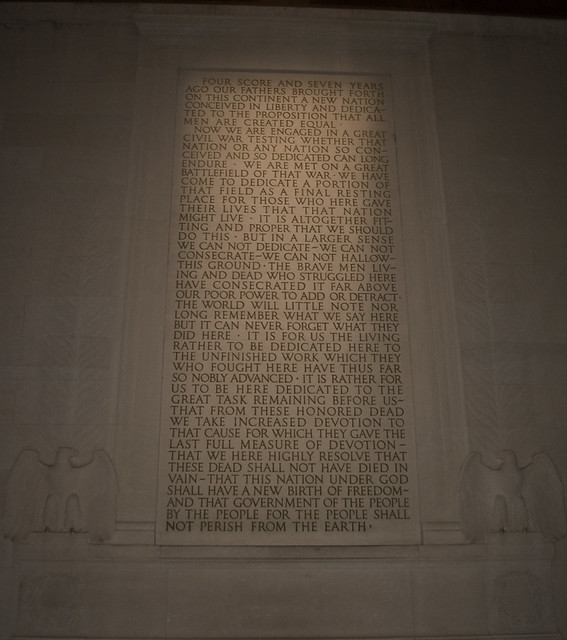
We have no alternative from now on but to look forward and not back. This does not dishonor the fallen heroes, and Lincoln explained why at Gettysburg. “We can not dedicate — we can not consecrate — we can not hallow this ground,” he said. “The brave men, living and dead, who struggled here, have consecrated it, far above our poor power to add or detract.” The best we could do, Lincoln declared, was to commit ourselves to “a new birth of freedom.” This is still our calling.
By: E. J. Dionne, Opinion Writer, The Washington Post, September 7, 2011
Eric Cantor Is A Hypocrite On Disaster Relief Spending
Buried in this Saturday’s Washington Post Metro section was a short piece about the request from conservative Virginia Republican Gov. Robert McDonnell for $39 million in federal disaster relief for his state.
This was an initial request for 22 localities in Virginia hard hit by Hurricane Irene. According to the article, other local governments can request more aid and, in addition, McDonnell also asked for Hazard Mitigation Assistance for all Virginia localities.
This comes from a governor who, along with his Republican congressional counterpart Eric Cantor, rails against Washington and “government spending.”
What makes this quite interesting is the position taken by Cantor last week on Federal Emergency Management funding for disasters. We have had a record 66 natural disasters this year and Hurricane Irene was one of the 10 most costly ever.
Cantor, whose district was hit hard by the earthquake and the hurricane, has said that any spending for FEMA should be tied to cuts elsewhere, dollar for dollar, “Just like any family would operate when it’s struck with disaster,” says Cantor. Funny, that is not how he felt back in 2004 when he appealed for money for his district after another hurricane and voted against the amendment by Republican Rep. Jeb Hensarling of Texas to do require offsets.
Did Eric Cantor ask for dollar for dollar cuts to pay for the wars in Iraq and Afghanistan? Did he ask for dollar for dollar cuts to pay for the Bush tax cuts for the millionaires and billionaires? Did he ask for dollar for dollar cuts to pay for increases to homeland security? How about border agents?
Another very conservative congressman from Virginia, Leonard Lance, totally disagrees with Cantor. Help is needed now. Gov. Chris Christie of New Jersey, no friend of government spending, talks as though Eric Cantor has lost his marbles: “Our people are suffering now, and they need support now. And they [Congress] can all go down there and get back to work and figure out budget cuts later.”
It is time for a host of protesters to go to Cantor’s district office and call him on his absurdity. Does he believe we should help the victims of these disasters? Is that what government has done for over 200 years? Does he just want to play politics and delay help? Does he represent the people of Virginia? Does he care about the others who have been the victims of tornadoes and floods across this country?
It reminds me of a Senate debate where a certain Republican from Idaho was complaining about a bill that included funding for rat control in New York City.
“In Idaho, we take care of our own rats,” to which the New York senator replied, “In New York, we take care of our own forest fires.”
That about sums it up.
By: Peter Fenn, U. S. News and World Report, September 6, 2011
Dick Cheney’s Book Is Less Memoir Than Caricature
Self-reflection is not something we have come to expect in elected officials, particularly those who have left office fairly recently. But could former Vice President Dick Cheney have not even made the slightest effort to convince people he didn’t deserve the “Darth Vader” moniker assigned by his foes?
Cheney’s memoir, written with his daughter, Liz Cheney, is so unapologetic as to be a caricature. One could hardly imagine that Cheney—or even anyone from the recently-departed Bush administration—would suddenly decide that the war in Iraq had been a mistake, based on lies. But he might have acknowledged that the basis for going to war—even if one believes that it was an honest misunderstanding, instead of a craven lie—turned out to be (oops!) not true. He chides the nation for failing to live within its means, but fails to consider the fiscal impact of two wars, massive tax cuts and a huge Medicare drug entitlement program. And his no-apology book tour confirms the theme; Cheney told the Today show that he thinks waterboarding is an acceptable way for the United States to get information out of suspected terrorists, but says he’d object if another nation did it to a U.S. citizens.
Former President George Bush certainly offered no apologies in his memoir, and that’s to be expected. But Bush wasn’t mean or angry in his book. He even told a rather charming story of how an African-American staffer had brought his two young boys to the White House during the waning days of the presidency, and that one of the boys had asked, “Where’s Barack Obama?” There is characteristically nothing kind or charming or insightful to be found in Cheney’s tome. Even the cover is daunting—a grimacing Cheney inside the White House, looking like he’s deliberately trying to scare away the tourists.
The shot against former Secretary of State Condoleezza Rice is inexcusable: Cheney tells a story about how Rice had “tearfully” admitted to him that she was wrong to tell Bush that he should have apologized for misleading the American public about Saddam Hussein’s alleged attempt to secure yellowcake uranium from Niger. Whether Rice broke down before Cheney, we may never know. But to turn an accomplished woman like Rice into some silly, weak little girl is unforgivable. Agree with Rice or not. Slam her for misstating or misreading intelligence before and after 9-11 or not. But she is brilliant; she has dedicated her life to scholarship and public service, and she deserves to be treated better.
Former Secretary of State Colin Powell—who preceded Rice, and whom Cheney seems to believe was somehow hounded from office, although Powell said he had always intended to stay just one term—offers the best summation: Cheney took some “cheap shots” in the book. That’s not the reflective mindset necessary for a memoir.
By: Susan Milligan, U.S. News and World Report, August 30, 2011
Just Plain Sinful: GOP Hostage Taking Now Extends To Disaster Relief
Hurricane Irene made landfall this morning, hitting North Carolina with sustained winds of 90 miles per hour. Irene was downgraded overnight to a Category 1 hurricane, but it remains a powerful storm capable of doing serious harm.
Obviously, we can all hope the severity of the damage is limited. Regrettably, though, the line on federal disaster aid from congressional Republicans has not changed.
This week, House Majority Leader Eric Cantor (R-Va.) said the GOP approach would break from how U.S. policymakers have operated. Whereas Congress used to provide emergency funds after a disaster, without regard for budget caps or offsets, Republicans have said they will no longer accept such an approach — if Democrats want emergency assistance in the wake of a natural disaster, Republicans will insist on attaching some strings to the relief funds.
In this case, the strings are cuts elsewhere in the budget. Or as Cantor’s spokesperson put it, GOP leaders expect “additional funds for federal disaster relief” to be “offset with spending cuts.”
The Republican position is already drawing fire.
“It is sinful to require us to cut somewhere … in order to provide emergency disaster assistance for American citizens,” Rep. Cedric Richmond (D-La.) told The Huffington Post on Friday.
The Louisiana Democrat pointed out that this weekend is the sixth anniversary of Hurricane Katrina, which devastated his district and cost the federal government more than $100 billion. That recovery effort would have been delayed “by years” if Congress had required the same kind of spending cuts to offset aid, he said.
“I have been one who has been preparing for the hurricane, trying to give people some comfort. One thing they need to know is the federal government can come to their aid,” Richmond said. “I don’t think we’re in a position, given the rules set up by the majority, that we’re going to be able to come to their aid quickly.”
Perhaps realizing the potential for a political nightmare — Republicans are already unpopular; just wait until they hold hostage relief funds for communities hit by a hurricane — GOP leaders weren’t eager to talk about their position yesterday.
But they didn’t disavow it, either. Cantor’s office rejected questions about “hypothetical federal aid caused by hypothetical damage,” despite the fact that the Majority Leader and his spokesperson were more than willing to discuss the position 24 hours earlier.
House Speaker John Boehner’s (R-Ohio) office was also cagey, saying policymakers will “discuss costs when and if they occur.”
Neither Republican leader offered the correct response, which is, “Of course we’ll do whatever it takes to help the affected communities.”
With any luck, this will be a moot point. If the damage isn’t severe, Congress won’t have to approve emergency relief. At this point, we just don’t know.
But in the event of extensive damage, there’s a real possibility that the first question from congressional Republicans won’t be, “How can we help?” but rather, “What will Democrats give us in exchange for disaster aid?”
By: Steve Benen, Contributing Writer, Washington Monthly Political Animal, August 27, 2011
Religion, Patriotism And Freedom: Ayn Rand Vs. America
Ayn Rand has a large and growing influence on American politics. Speaking at an event in her honor, Congressman Paul Ryan said, “The reason I got involved in public service, by and large, if I had to credit one thinker, one person, it would be Ayn Rand.”
A few weeks ago, Maureen Fiedler, the producer of the weekly radio show, Interfaith Voices, asked me to participate in a debate with Onkar Ghate, a senior fellow at the Ayn Rand Institute. I eagerly accepted. I wanted to hear how a follower of Rand would defend proposals to cut Medicare, Medicaid, and food stamps while exempting the wealthy from paying their fair share.
In one sense there was agreement. Maureen, a Sister of Loretto, argued that Republican budget proposals turned their back on Christ’s admonition to care for “the least among us,” the hungry, the sick, the homeless. Ghate did not dispute that. Rand, he said, was an atheist who did not believe in government efforts to help those in need.
Ghate countered Sister Maureen’s religious position with a moral argument. He maintained that redistribution of wealth was unfair to the rich and weakened the ambition of the rest. I wasn’t surprised by this position, since I’d heard it repeatedly during the fight on welfare reform.
What I did find startling was Ghate’s insistence that just as there should be a separation of church and state, so there should be a separation of economics and state. That notion really got me thinking.
I’ve always understood that one’s loyalty to God should take precedence over one’s patriotic duty. Churches are exempt from taxation, and conscientious objectors aren’t required to serve in war. Our high regard for the First Amendment shows the preeminence of faith in the American consciousness.
But to place economics on the same level as religious freedom seemed to me almost blasphemous. Are we really to believe that the freedom to make money should stand on the same level of religious liberty? Are the words of Milton Friedman equal to the Sermon on the Mount? I don’t think so. But maybe in the eyes of Ayn Rand and Paul Ryan, they are.
Ayn Rand’s biography goes a long way toward explaining her animus to government. Her first-hand experience of communism showed her how the state can crush people, kill dissent, and exile lovers of freedom to the gulag. Horrified by what government power could do, she was determined to shrink it to the point of impotence.
America was the perfect place for Rand’s single-minded celebration of the individual. After all, this was the nation that inspired intrepid emigrants to leave behind country, family, and friends with little more than the shirt on their back to make a new life. Here they wouldn’t be judged by what they were before or who their parents were but by what they could made of themselves.
America was a beacon of freedom from its earliest days. But the freedom to earn one’s living is not the same as the freedom to emasculate government. It’s a mistake to enshrine individual liberty without acknowledging the role that a good government plays in preserving and promoting it. Look at places like Haiti, Somalia, and the Congo to see what happens when governments aren’t around much.
When government is marginalized, it’s not just individual freedom that suffers; the economy suffers too. A vibrant capitalism requires a legal system: contracts must be honored, fraud punished. Markets have to work, and for that we need a strong infrastructure of roads, rail, energy, and water and sewage systems.
Good government sets us free to spend our days in fruitful endeavors, not evasive action motivated by fear and distrust. Government regulations reassure us that speeding drivers will be arrested, that the financial products we buy won’t cheat us, and that it will be safer to put our money in banks than under our pillows. If we can’t trust our food to be healthy, our drugs to be safe, or our planes to fly without crashing, we’ll waste a lot of productive time.
During the debate, I also raised the point that the separation of economics and state implies that businesses and the people who run them are under no obligation to be patriotic.
In the 19th century, the Rockefellers, Carnegies, Fricks, and J.P. Morgans wanted America to do well because their own fortunes were tied to American prosperity. They made America a great economic power by creating jobs and technological advances right here at home. They knew that their own fortunes were bound up with the well-being of their fellow Americans.
In Ayn Rand’s America, the first obligation of CEOs is to their shareholders, not to citizens. Their business is global, not local. Why should they care if they send jobs overseas? Why should they be concerned if American kids can’t do math or write a sentence? They’ll just outsource the work. Why should they worry that the next generation of Americans is going to have a tough time? Their own kids will do just fine. And in the meantime, they’re doing just fine themselves.
Andy Grove, the former CEO of Intel, sees a problem with this view. He writes, “You could say, as many do, that shipping jobs overseas is no big deal because the high-value work–and much of the profits–remain in the U.S. That may well be so. But what kind of a society are we going to have if it consists of highly paid people doing high-value-added work–and masses of unemployed?”
Don Peck makes a similar point in his new book, Pinched, and in an Atlantic cover story. “Arguably,” he writes, “the most important economic trend in the United States over the past couple of generations has been the ever more distinct sorting of Americans into winners and losers, and the slow hollowing-out of the middle class.”
Besides this economic problem, I also see a moral issue with Ayn Rand’s insistence that all of us, CEOs included, should be totally free of the ties that bind. I especially disagree when it comes to CEOs. As I wrote here a few months ago, the wealthy have a special responsibility. Much will be asked of those to whom much has been given. Participating in government and civic life, serving in war, helping the less fortunate, and–yes–paying a fair share of taxes are inescapable responsibilities for all Americans, especially for those who have realized the American dream that inspires us all.
I doubt there was anything I could have said in the debate that would have induced Onkar Ghate to view the meaning of freedom in a different light. I suppose he might say the same of me. Still, I can’t see how one can be free in a vacuum. Freedom takes work, by each of us, and by our government, to create the place where each of us can prosper. The freedom to sleep under a bridge is no freedom at all. We can only be free when we work together for the well-being of all Americans–including the least among us.
By: Kathleen Kennedy Townsend, The Atlantic, August 23, 2011
Share This Blog


 Unknown Feed
- An error has occurred; the feed is probably down. Try again later.
 mykeystrokes.com