Committing To A New Birth Of Freedom: It’s Time To Leave 9/11 Behind
After we honor the 10th anniversary of the attacks of Sept. 11, 2001, we need to leave the day behind. As a nation we have looked back for too long. We learned lessons from the attacks, but so many of them were wrong. The last decade was a detour that left our nation weaker, more divided and less certain of itself.
Reflections on the meaning of the horror and the years that followed are inevitably inflected by our own political or philosophical leanings. It’s a critique that no doubt applies to my thoughts as well. We see what we choose to see and use the event as we want to use it.
This does nothing to honor those who died and those who sacrificed to prevent even more suffering. In the future, the anniversary will best be reserved as a simple day of remembrance in which all of us humbly offer our respect for the anguish and the heroism of those individuals and their families.
But if we continue to place 9/11 at the center of our national consciousness, we will keep making the same mistakes. Our nation’s future depended on far more than the outcome of a vaguely defined “war on terrorism,” and it still does. Al-Qaeda is a dangerous enemy.
But our country and the world were never threatened by the caliphate of its mad fantasies.
We asked for great sacrifice over the past decade from the very small portion of our population who wear the country’s uniform, particularly the men and women of the Army and the Marine Corps. We should honor them, too. And, yes, we should pay tribute to those in the intelligence services, the FBI and our police forces who have done such painstaking work to thwart another attack.
It was often said that terrorism could not be dealt with through “police work,” as if the difficult and unheralded labor involved was not grand or bold enough to satisfy our longing for clarity in what was largely a struggle in the shadows.
Forgive me, but I find it hard to forget former president George W. Bush’s 2004 response to Sen. John Kerry’s comment that “the war on terror is less of a military operation and far more of an intelligence-gathering and law-enforcement operation.”
Bush retorted: “I disagree — strongly disagree. . . . After the chaos and carnage of September the 11th, it is not enough to serve our enemies with legal papers. With those attacks, the terrorists and their supporters declared war on the United States of America, and war is what they got.” What The Washington Post called “an era of endless war” is what we got, too.
Bush, of course, understood the importance of “intelligence gathering” and “law enforcement.” His administration presided over a great deal of both, and his supporters spoke, with justice, of his success in staving off further acts of terror. Yet he could not resist the temptation to turn on Kerry’s statement of the obvious. Thus was an event that initially united the nation used, over and over, to aggravate our political disharmony. This is also why we must put it behind us.
In the flood of anniversary commentary, notice how often the term “the lost decade” has been invoked. We know now, as we should have known all along, that American strength always depends first on our strength at home — on a vibrant, innovative and sensibly regulated economy, on levelheaded fiscal policies, on the ability of our citizens to find useful work, on the justice of our social arrangements.
This is not “isolationism.” It is a common sense that was pushed aside by the talk of “glory” and “honor,” by utopian schemes to transform the world by abruptly reordering the Middle East — and by our fears. While we worried that we would be destroyed by terrorists, we ignored the larger danger of weakening ourselves by forgetting what made us great.
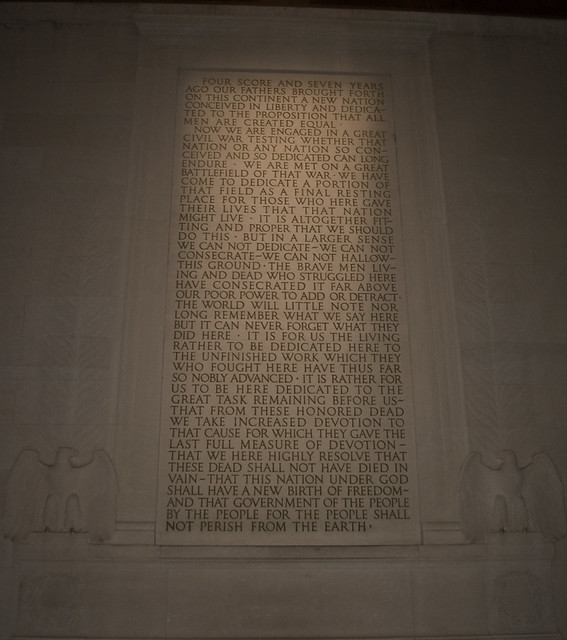
We have no alternative from now on but to look forward and not back. This does not dishonor the fallen heroes, and Lincoln explained why at Gettysburg. “We can not dedicate — we can not consecrate — we can not hallow this ground,” he said. “The brave men, living and dead, who struggled here, have consecrated it, far above our poor power to add or detract.” The best we could do, Lincoln declared, was to commit ourselves to “a new birth of freedom.” This is still our calling.
By: E. J. Dionne, Opinion Writer, The Washington Post, September 7, 2011
Why The Republicans Want To Raise Your Taxes
House Majority Leader Eric Cantor’s recent assertion that any disaster relief for Hurricane Irene would have to be offset with spending cuts elsewhere sparked a great deal of outrage, especially in the progressive sectors of the blogosphere.
On one level Cantor’s position is no surprise. Paying for emergency disaster relief used to be standard operating procedure in Washington, because it would be inconceivable that the federal government would force the states and individuals to shoulder the burden alone. But with the new GOP House majority, Washington has new rules. Now when there’s a policy objective that enjoys bipartisan support—avoiding a government shutdown or default, for example, or providing disaster relief—the GOP will use it as a hostage to extract their partisan policy objectives.
More broadly, people look askance at Cantor and the GOP for previously supporting (but not paying for) disaster relief, a pair of foreign wars, an expansion of Medicare, and the Bush tax cuts, and then finding their inner fiscal hawks when a Democrat entered the White House. (Robert’s 10th Rule of Politics: A party’s dedication to fiscal responsibility is inversely proportional to its political power.)
Of course the GOP still wants to make the Bush tax cuts permanent, at a cost of $4 trillion over 10 years. If pushing budget-busting tax cuts while carrying the banner of fiscal austerity on issues like disaster relief seems like cognitive dissonance, it is. But that’s today’s GOP.
Take taxes. Last month’s Iowa GOP presidential debate provided a defining moment for the party. The assembled would-be nominees were asked if they would accept tax increases if there were $10 in spending cuts for every dollar of new revenues. To a person, they refused. This came days after the conclusion of the debt ceiling crisis, which had been deliberately manufactured by House Republicans, and which had turned on their flat refusal to accept any tax increase. And it came after months of pious declarations that one never, ever, ever raises taxes on a soft economy (the experiences of Presidents Reagan in 1982 and Clinton in 1993 apparently notwithstanding).
And yet the GOP now wants to raise taxes, both in the immediate term and as a broader matter of principle.
They oppose, for example, President Obama’s call to prolong the payroll tax cut enacted last year when the (temporary) Bush tax cuts were extended. Ordinarily, American workers pay 6.2 percent of their wages in a tax that funds Social Security, with their employers matching the amount. For 2011, that rate was cut to 4.2 percent. The logic is simple: The poor and working class are most likely to pump extra disposable income back into the economy, making the tax cut a more efficient stimulant than, say, rate cuts for the wealthy. It’s as broad-based a tax cut as can be imagined, as it benefits virtually everyone who works, even those who don’t earn enough to pay income taxes. So of course Republicans oppose its extension, preferring to allow a broad-based tax hike to go into effect in the new year. “Not all tax relief is created equal,” Rep. Jeb Hensarling, the House’s fourth-ranking Republican, told the Associated Press, while others cited fiscal concerns. Extending the tax holiday, which cost $67.2 billion this year and a total of $111.7 billion over 10 years, would be fiscally irresponsible while extending the Bush tax cuts is sound policy? Not all tax cuts are created equal indeed.
And this isn’t an isolated instance of the GOP breaking from its usual anti-tax orthodoxy. The truth is that many leading Republicans yearn to raise taxes on working-class and poor Americans.
“We’re dismayed at the injustice that nearly half of all Americans don’t even pay any income tax,” Texas Gov. Rick Perry intoned last month when announcing for president. What to do? Here’s Minnesota Rep. Michele Bachmann: “We need to broaden the base so that everybody pays something, even if it’s a dollar.” More recently, former Utah Gov. Jon Huntsman approvingly cited Florida Sen. Marco Rubio as saying we don’t have enough people paying taxes in this country. The GOP as stalwart fighters against taxes? No more. That more Americans should pay taxes is, according to the Wall Street Journal, “the new Republican orthodoxy.”
And who is it Republicans would like to raise taxes upon? According to the Tax Policy Center, 46 percent of U.S. households won’t pay income taxes this year. The elderly (who are mostly retired, have a larger deduction, and often don’t have their Social Security benefits taxed) make up a plurality of 44 percent of the nonpayers, while people whose income tax liability is wiped out by the child tax credit, child and dependent care tax credit, and the earned income tax credit—all of which were enacted with Republican support—make up an additional 30 percent of the group. (The rest of the nonpayers get a handful of smaller tax credits, including education credits, itemized deductions, and even capital gains benefits.)
Keep in mind that these people not having any income tax liability does not mean that they don’t pay taxes (as is often implied in GOP talking points). They pay state and local taxes, not to mention federal payroll taxes, which of course the GOP wants to see rise.
So Republicans worry about the wealthy paying too much in taxes while fretting about freeloading lower classes. They talk a big deficit game but are more concerned about cutting government spending, specifically on programs that benefit the nonrich. Perhaps this isn’t cognitive dissonance but the logical evolution of the modern GOP into an Ayn Rand-ian coalition explicitly focused on freeing a wealthy elite from the parasitical depredations of everyone else.
By: Robert Schlesinger, U. S. News and World Report, September 7, 2011
.
Eric Cantor Is A Hypocrite On Disaster Relief Spending
Buried in this Saturday’s Washington Post Metro section was a short piece about the request from conservative Virginia Republican Gov. Robert McDonnell for $39 million in federal disaster relief for his state.
This was an initial request for 22 localities in Virginia hard hit by Hurricane Irene. According to the article, other local governments can request more aid and, in addition, McDonnell also asked for Hazard Mitigation Assistance for all Virginia localities.
This comes from a governor who, along with his Republican congressional counterpart Eric Cantor, rails against Washington and “government spending.”
What makes this quite interesting is the position taken by Cantor last week on Federal Emergency Management funding for disasters. We have had a record 66 natural disasters this year and Hurricane Irene was one of the 10 most costly ever.
Cantor, whose district was hit hard by the earthquake and the hurricane, has said that any spending for FEMA should be tied to cuts elsewhere, dollar for dollar, “Just like any family would operate when it’s struck with disaster,” says Cantor. Funny, that is not how he felt back in 2004 when he appealed for money for his district after another hurricane and voted against the amendment by Republican Rep. Jeb Hensarling of Texas to do require offsets.
Did Eric Cantor ask for dollar for dollar cuts to pay for the wars in Iraq and Afghanistan? Did he ask for dollar for dollar cuts to pay for the Bush tax cuts for the millionaires and billionaires? Did he ask for dollar for dollar cuts to pay for increases to homeland security? How about border agents?
Another very conservative congressman from Virginia, Leonard Lance, totally disagrees with Cantor. Help is needed now. Gov. Chris Christie of New Jersey, no friend of government spending, talks as though Eric Cantor has lost his marbles: “Our people are suffering now, and they need support now. And they [Congress] can all go down there and get back to work and figure out budget cuts later.”
It is time for a host of protesters to go to Cantor’s district office and call him on his absurdity. Does he believe we should help the victims of these disasters? Is that what government has done for over 200 years? Does he just want to play politics and delay help? Does he represent the people of Virginia? Does he care about the others who have been the victims of tornadoes and floods across this country?
It reminds me of a Senate debate where a certain Republican from Idaho was complaining about a bill that included funding for rat control in New York City.
“In Idaho, we take care of our own rats,” to which the New York senator replied, “In New York, we take care of our own forest fires.”
That about sums it up.
By: Peter Fenn, U. S. News and World Report, September 6, 2011
Quality Vs Quantity: Yes, We Need Jobs. But What Kind?
On Thursday, President Obama will deliver a major speech on America’s employment crisis. But too often, what is lost in the call for job creation is a clear idea of what jobs we want to create.
I recently led a research team to the Rio Grande Valley in Texas, where Gov. Rick Perry, a contender for the Republican presidential nomination, has advertised his track record of creating jobs. From January 2000 to January 2010, employment in the Valley grew by a remarkable 42 percent, compared with our nation’s anemic 1 percent job growth.
But the median wage for adults in the Valley between 2005 and 2008 was a stunningly low $8.14 an hour (in 2008 dollars). One in four employed adults earned less than $6.19 an hour. The Federal Reserve Bank of Dallas reported that the per capita income in the two metropolitan statistical areas spanning the Valley ranked lowest and second lowest in the nation.
These workers aren’t alone. Last year, one in five American adults worked in jobs that paid poverty-level wages. Worker displacement contributes to the problem. People who are laid off from previously stable employment, if they are lucky enough to find work, take a median wage hit of over 20 percent, which can persist for decades.
To understand the impact of low wages, in the Valley and elsewhere, we interviewed a wide range of people, including two directors of public health clinics, three priests, a school principal and four focus groups of residents. Everyone described a life of constantly trying to scrape by. One month they might pay for the phone, another, for utilities. Everyone knew how long each company would carry unpaid bills before cutting service. People spoke not only of their fear of an unexpected crisis — an illness, a broken car — but also of the challenge of paying for basic needs like school supplies. Many used the phrase “one paycheck away from homelessness.”
Because their parents cannot afford child care, children move among relatives and neighbors. They watch too much TV. They don’t finish their homework. Older children grow up too fast from parenting their younger siblings. As one person observed, “All you think about is which bill is more important.”
Economic stress strains marriages. Parents cannot afford quinceañeras for their daughters. In church youth groups, teenagers ask why they should stay in school if all they can get are low wages.
Many children are latchkey kids. Accidents are frequent; we heard of an elementary school student who badly burned himself in a science experiment, with his older brother watching. Their father couldn’t take time off from work to visit his son in the hospital. Children come to school sick. Parents miss teacher conferences because they can’t afford time off. Type 2 diabetes is a scourge in the Valley. Since Type 2 diabetics can be asymptomatic for years, many don’t buy medicine; as time passes, they become severely ill, often losing sight or a limb.
The director at one clinic, with nearly 70,000 visits a year, estimated that half of its patients had anxiety or depression. Often people can’t get to the clinic because they cannot afford to lose work time or because gas costs too much. When they go, they take their families, because they have no child care.
And yet the Valley is not hopeless. Teachers stay late to help with homework. They make home visits to meet parents. Health clinic employees work overtime. The community organization Valley Interfaith has pushed for training opportunities and living-wage jobs. There is no “culture of poverty,” but the low-wage economy has corrosive and tragic consequences.
Must we choose between job quality and quantity? We have solid evidence that when employees are paid better and given more opportunities within a company, the gains outweigh the costs. For example, after a living wage ordinance took effect for employees at the San Francisco International Airport, in 1999, turnover fell and productivity rose.
Contrary to the antigovernment rhetoric, there is much that the public sector can do to improve the quality of jobs.
A recent analysis by the Economic Policy Institute reported that 20 percent of federal contract employees earned less than the poverty level for a family of four, as opposed to 8 percent of traditional federal workers. Many low-wage jobs in the private sector (notably, the health care industry) are financed by taxpayers. The government can set an example by setting and enforcing wage standards for contractors.
When states and localities use their zoning powers to approve commercial projects, or offer tax incentives to attract new employers, they can require that workers be paid living wages; research shows this will not hurt job growth.
Labor standards have to be upgraded and enforced, particularly for those employers, typically in low-wage industries, who engage in “wage theft,” by failing to pay required overtime wages or misclassifying workers as independent contractors so that they do not receive the benefits to which they are entitled.
Americans have long believed that there should be a floor below which job quality does not fall. Today, polls show widespread support for upgrading employment standards, including raising the minimum wage — which is lower, in inflation-adjusted terms, than it was in 1968. It’s time for the federal government to take the lead in creating not just more jobs, but more good jobs. The job-growth mirage of the Rio Grande Valley cannot be our model.
By: Paul Osterman, Op-Ed Contributor, The New York Times, September 5, 2011
Public Perceptions And The Limited Value Of Recent History
CNN’s Candy Crowley made a noteworthy comment on the air last night, and we’ve heard similar remarks from other media figures quite a bit lately. The subject was President Obama’s prospects for a second term.
“He has to buck history, number one, a president with that kind of high unemployment rate has never been re-elected at 9 percent.”
At first blush, the observation is plainly false. Franklin Delano Roosevelt won a second term when unemployment was at 17%.
In fairness, though, Crowley probably just misspoke, and meant to refer to the post-Depression era. But even if we give her the benefit of the doubt here, the observation is largely pointless.
As a factual matter, it’s true that every president since FDR who’s won re-election has seen an unemployment rate below 7.2%. Will the unemployment rate fall below 7.2% by Election Day 2012? No one, anywhere, believes this is even remotely realistic.
But the context matters, and the media routinely pretends it doesn’t exist. No president since FDR has won with a high unemployment rate because no president since FDR has had to govern at a time of a global economic crisis like the Great Depression or the Great Recession. The U.S. has seen plenty of downturns over the last eight decades, but financial collapses are fairly rare, produce far more severe conditions, and take much longer to recover from.
Of course the unemployment rate won’t be below 7.2%. Under the circumstances and given the calamity Obama inherited, that’s impossible.
The more relevant question is what Americans are willing to tolerate and consider in context. In 1934, during FDR’s first midterms, the unemployment rate was about 22%. The public was thrilled — not because a 22% unemployment rate is good news, but because it had come down considerably from 1932. By 1936, when FDR was seeking re-eleciotn, the unemployment rate was about 17%. How can an incumbent president win re-election with a 17% unemployment rate? Because things were getting better, not worse.
That’s obviously the challenge for President Obama. The numerical thresholds are largely irrelevant — comparing the current economic circumstances to what other modern presidents have dealt with is silly. The more relevant metric is directional — are things better or getting worse by the time voters head to the polls, and if worse, who gets the blame.
What’s more, let’s also not lose sight of sample sizes. CNN’s Crowley made it seem as if no American president has ever won a second term with this high an unemployment rate. But even if we limit the analysis to the post-FDR era, as Dana Houle explained a couple of months ago, “Since FDR only Eisenhower, Nixon, Carter, Reagan, Clinton and the two Bush’s have been elected president and then sought reelection. It’s hard to draw big conclusions from a sample of seven.”
If the media is preoccupied with this metric, it will shape the public’s perceptions and help drive the campaign. Here’s hoping news outlets come to realize how incomplete this picture is.
By: Steve Benen, Contributing Writer, Washington Monthly Political Animal, September 4, 2011
Share This Blog


 Unknown Feed
- An error has occurred; the feed is probably down. Try again later.
 mykeystrokes.com