Committing To A New Birth Of Freedom: It’s Time To Leave 9/11 Behind
After we honor the 10th anniversary of the attacks of Sept. 11, 2001, we need to leave the day behind. As a nation we have looked back for too long. We learned lessons from the attacks, but so many of them were wrong. The last decade was a detour that left our nation weaker, more divided and less certain of itself.
Reflections on the meaning of the horror and the years that followed are inevitably inflected by our own political or philosophical leanings. It’s a critique that no doubt applies to my thoughts as well. We see what we choose to see and use the event as we want to use it.
This does nothing to honor those who died and those who sacrificed to prevent even more suffering. In the future, the anniversary will best be reserved as a simple day of remembrance in which all of us humbly offer our respect for the anguish and the heroism of those individuals and their families.
But if we continue to place 9/11 at the center of our national consciousness, we will keep making the same mistakes. Our nation’s future depended on far more than the outcome of a vaguely defined “war on terrorism,” and it still does. Al-Qaeda is a dangerous enemy.
But our country and the world were never threatened by the caliphate of its mad fantasies.
We asked for great sacrifice over the past decade from the very small portion of our population who wear the country’s uniform, particularly the men and women of the Army and the Marine Corps. We should honor them, too. And, yes, we should pay tribute to those in the intelligence services, the FBI and our police forces who have done such painstaking work to thwart another attack.
It was often said that terrorism could not be dealt with through “police work,” as if the difficult and unheralded labor involved was not grand or bold enough to satisfy our longing for clarity in what was largely a struggle in the shadows.
Forgive me, but I find it hard to forget former president George W. Bush’s 2004 response to Sen. John Kerry’s comment that “the war on terror is less of a military operation and far more of an intelligence-gathering and law-enforcement operation.”
Bush retorted: “I disagree — strongly disagree. . . . After the chaos and carnage of September the 11th, it is not enough to serve our enemies with legal papers. With those attacks, the terrorists and their supporters declared war on the United States of America, and war is what they got.” What The Washington Post called “an era of endless war” is what we got, too.
Bush, of course, understood the importance of “intelligence gathering” and “law enforcement.” His administration presided over a great deal of both, and his supporters spoke, with justice, of his success in staving off further acts of terror. Yet he could not resist the temptation to turn on Kerry’s statement of the obvious. Thus was an event that initially united the nation used, over and over, to aggravate our political disharmony. This is also why we must put it behind us.
In the flood of anniversary commentary, notice how often the term “the lost decade” has been invoked. We know now, as we should have known all along, that American strength always depends first on our strength at home — on a vibrant, innovative and sensibly regulated economy, on levelheaded fiscal policies, on the ability of our citizens to find useful work, on the justice of our social arrangements.
This is not “isolationism.” It is a common sense that was pushed aside by the talk of “glory” and “honor,” by utopian schemes to transform the world by abruptly reordering the Middle East — and by our fears. While we worried that we would be destroyed by terrorists, we ignored the larger danger of weakening ourselves by forgetting what made us great.
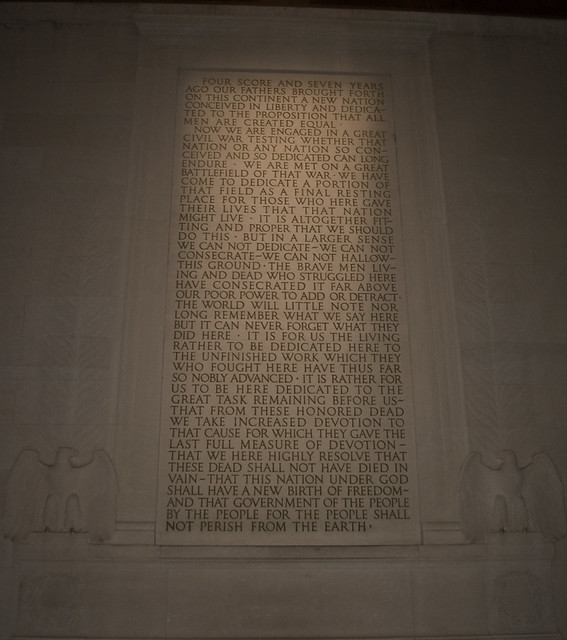
We have no alternative from now on but to look forward and not back. This does not dishonor the fallen heroes, and Lincoln explained why at Gettysburg. “We can not dedicate — we can not consecrate — we can not hallow this ground,” he said. “The brave men, living and dead, who struggled here, have consecrated it, far above our poor power to add or detract.” The best we could do, Lincoln declared, was to commit ourselves to “a new birth of freedom.” This is still our calling.
By: E. J. Dionne, Opinion Writer, The Washington Post, September 7, 2011
Why The Republicans Want To Raise Your Taxes
House Majority Leader Eric Cantor’s recent assertion that any disaster relief for Hurricane Irene would have to be offset with spending cuts elsewhere sparked a great deal of outrage, especially in the progressive sectors of the blogosphere.
On one level Cantor’s position is no surprise. Paying for emergency disaster relief used to be standard operating procedure in Washington, because it would be inconceivable that the federal government would force the states and individuals to shoulder the burden alone. But with the new GOP House majority, Washington has new rules. Now when there’s a policy objective that enjoys bipartisan support—avoiding a government shutdown or default, for example, or providing disaster relief—the GOP will use it as a hostage to extract their partisan policy objectives.
More broadly, people look askance at Cantor and the GOP for previously supporting (but not paying for) disaster relief, a pair of foreign wars, an expansion of Medicare, and the Bush tax cuts, and then finding their inner fiscal hawks when a Democrat entered the White House. (Robert’s 10th Rule of Politics: A party’s dedication to fiscal responsibility is inversely proportional to its political power.)
Of course the GOP still wants to make the Bush tax cuts permanent, at a cost of $4 trillion over 10 years. If pushing budget-busting tax cuts while carrying the banner of fiscal austerity on issues like disaster relief seems like cognitive dissonance, it is. But that’s today’s GOP.
Take taxes. Last month’s Iowa GOP presidential debate provided a defining moment for the party. The assembled would-be nominees were asked if they would accept tax increases if there were $10 in spending cuts for every dollar of new revenues. To a person, they refused. This came days after the conclusion of the debt ceiling crisis, which had been deliberately manufactured by House Republicans, and which had turned on their flat refusal to accept any tax increase. And it came after months of pious declarations that one never, ever, ever raises taxes on a soft economy (the experiences of Presidents Reagan in 1982 and Clinton in 1993 apparently notwithstanding).
And yet the GOP now wants to raise taxes, both in the immediate term and as a broader matter of principle.
They oppose, for example, President Obama’s call to prolong the payroll tax cut enacted last year when the (temporary) Bush tax cuts were extended. Ordinarily, American workers pay 6.2 percent of their wages in a tax that funds Social Security, with their employers matching the amount. For 2011, that rate was cut to 4.2 percent. The logic is simple: The poor and working class are most likely to pump extra disposable income back into the economy, making the tax cut a more efficient stimulant than, say, rate cuts for the wealthy. It’s as broad-based a tax cut as can be imagined, as it benefits virtually everyone who works, even those who don’t earn enough to pay income taxes. So of course Republicans oppose its extension, preferring to allow a broad-based tax hike to go into effect in the new year. “Not all tax relief is created equal,” Rep. Jeb Hensarling, the House’s fourth-ranking Republican, told the Associated Press, while others cited fiscal concerns. Extending the tax holiday, which cost $67.2 billion this year and a total of $111.7 billion over 10 years, would be fiscally irresponsible while extending the Bush tax cuts is sound policy? Not all tax cuts are created equal indeed.
And this isn’t an isolated instance of the GOP breaking from its usual anti-tax orthodoxy. The truth is that many leading Republicans yearn to raise taxes on working-class and poor Americans.
“We’re dismayed at the injustice that nearly half of all Americans don’t even pay any income tax,” Texas Gov. Rick Perry intoned last month when announcing for president. What to do? Here’s Minnesota Rep. Michele Bachmann: “We need to broaden the base so that everybody pays something, even if it’s a dollar.” More recently, former Utah Gov. Jon Huntsman approvingly cited Florida Sen. Marco Rubio as saying we don’t have enough people paying taxes in this country. The GOP as stalwart fighters against taxes? No more. That more Americans should pay taxes is, according to the Wall Street Journal, “the new Republican orthodoxy.”
And who is it Republicans would like to raise taxes upon? According to the Tax Policy Center, 46 percent of U.S. households won’t pay income taxes this year. The elderly (who are mostly retired, have a larger deduction, and often don’t have their Social Security benefits taxed) make up a plurality of 44 percent of the nonpayers, while people whose income tax liability is wiped out by the child tax credit, child and dependent care tax credit, and the earned income tax credit—all of which were enacted with Republican support—make up an additional 30 percent of the group. (The rest of the nonpayers get a handful of smaller tax credits, including education credits, itemized deductions, and even capital gains benefits.)
Keep in mind that these people not having any income tax liability does not mean that they don’t pay taxes (as is often implied in GOP talking points). They pay state and local taxes, not to mention federal payroll taxes, which of course the GOP wants to see rise.
So Republicans worry about the wealthy paying too much in taxes while fretting about freeloading lower classes. They talk a big deficit game but are more concerned about cutting government spending, specifically on programs that benefit the nonrich. Perhaps this isn’t cognitive dissonance but the logical evolution of the modern GOP into an Ayn Rand-ian coalition explicitly focused on freeing a wealthy elite from the parasitical depredations of everyone else.
By: Robert Schlesinger, U. S. News and World Report, September 7, 2011
.
Eric Cantor Is A Hypocrite On Disaster Relief Spending
Buried in this Saturday’s Washington Post Metro section was a short piece about the request from conservative Virginia Republican Gov. Robert McDonnell for $39 million in federal disaster relief for his state.
This was an initial request for 22 localities in Virginia hard hit by Hurricane Irene. According to the article, other local governments can request more aid and, in addition, McDonnell also asked for Hazard Mitigation Assistance for all Virginia localities.
This comes from a governor who, along with his Republican congressional counterpart Eric Cantor, rails against Washington and “government spending.”
What makes this quite interesting is the position taken by Cantor last week on Federal Emergency Management funding for disasters. We have had a record 66 natural disasters this year and Hurricane Irene was one of the 10 most costly ever.
Cantor, whose district was hit hard by the earthquake and the hurricane, has said that any spending for FEMA should be tied to cuts elsewhere, dollar for dollar, “Just like any family would operate when it’s struck with disaster,” says Cantor. Funny, that is not how he felt back in 2004 when he appealed for money for his district after another hurricane and voted against the amendment by Republican Rep. Jeb Hensarling of Texas to do require offsets.
Did Eric Cantor ask for dollar for dollar cuts to pay for the wars in Iraq and Afghanistan? Did he ask for dollar for dollar cuts to pay for the Bush tax cuts for the millionaires and billionaires? Did he ask for dollar for dollar cuts to pay for increases to homeland security? How about border agents?
Another very conservative congressman from Virginia, Leonard Lance, totally disagrees with Cantor. Help is needed now. Gov. Chris Christie of New Jersey, no friend of government spending, talks as though Eric Cantor has lost his marbles: “Our people are suffering now, and they need support now. And they [Congress] can all go down there and get back to work and figure out budget cuts later.”
It is time for a host of protesters to go to Cantor’s district office and call him on his absurdity. Does he believe we should help the victims of these disasters? Is that what government has done for over 200 years? Does he just want to play politics and delay help? Does he represent the people of Virginia? Does he care about the others who have been the victims of tornadoes and floods across this country?
It reminds me of a Senate debate where a certain Republican from Idaho was complaining about a bill that included funding for rat control in New York City.
“In Idaho, we take care of our own rats,” to which the New York senator replied, “In New York, we take care of our own forest fires.”
That about sums it up.
By: Peter Fenn, U. S. News and World Report, September 6, 2011
Politics Without Purpose: September 11 Should Not Be Another Media Event
It was another one of those weeks in the capital when our leaders debated matters crucial to the survival of American civilization.
Did President Obama try to upstage the Republican presidential debate by asking to address a joint session of Congress that same night? And did House Speaker John Boehner dis the president, and the presidency, by denying him that slot?
Tempted though I was to weigh in on this important matter, I decided instead to head over to the Smithsonian’s National Museum of American History, to preview a small but immensely powerful exhibit marking the 10th anniversary of the Sept. 11 attacks.
There, displayed for the first time, are sacred relics of 9/11: the crumpled piece of the fuselage where the American flag had been painted on the Boeing 757 that crashed in a Pennsylvania field, a flight-attendant call button from the plane, a window shade, a landing gear strut, and a log book with the pages intact. The exhibit is simple and raw, without glass or showcases. Some dried mud caked on an airplane seatbelt was flaking off onto a tablecloth.
Nearby is the door from a fire truck crushed at Ground Zero and the beeper of a man who died in the South Tower. There’s a Pentagon clock frozen at about the time American Airlines Flight 77 struck the complex and the phone on which Ted Olson received the last call from his wife on the doomed plane. Most poignant, perhaps, is the postcard from another passenger, written to her sister the day before the crash to give the address of a new home in which she would never live.
The spare exhibit brought back the horror of that time. But it also reminded me of the pride in what followed, the national unity and sense of purpose.
The warm feelings didn’t last long, of course, destroyed by the war in Iraq and the politicization of homeland security. By now, we have lost all sense of purpose in politics, alternately distracted by Sarah Palin’s bus tours, Anthony Weiner’s private parts, David Wu’s tiger suit, Donald Trump’s birth-certificate campaign, and Dick Cheney’s broadsides.
Obama, whose uncertain trumpet has ceased to rally even his own troops, contemplated his long-delayed jobs agenda while lounging on Martha’s Vineyard last month. His leading Republican rival for the presidency talks of treason and secession. Another challenger arranges to quadruple the size of his California home (his defense: He’s only doubling the living space). Lawmakers play games with the debt ceiling and wound the nation’s credit rating but can’t agree on anything to put Americans back to work.
The political extraneousness of the moment, in other words, is like that of early September 2001. We spent those days amusing ourselves with Gary Condit and shark attacks. President George W. Bush spent August on a record-long ranch vacation. The biggest issue under debate: stem-cell research. Warnings about Osama bin Laden were ignored while the administration obsessed over rewriting a missile treaty with Russia.
What will it require to end the drift this time? A depression? Another attack? Or is there a less painful way to regain national purpose?
“For most people,” curator David Allison told me as I toured the Smithsonian exhibit, “Sept. 11 is only a media event.” The exhibit is a modest attempt at changing that, taking that day’s ruins out of storage and rekindling memory. The lucky few who see the exhibit during its short run will be reminded that there are things more important than whether the president addresses Congress on a Wednesday or a Thursday.
Consider the simple postcard, written by Georgetown economist Leslie Whittington to her sister and brother-in-law, as Whittington, her husband and their 8- and 3-year-old daughters headed off to Australia for a sabbatical. The card, postmarked Sept. 12 at Dulles Airport, must have been mailed just before the family boarded American Flight 77. The note says, in its entirety:
9/10/01
Dear Sara & Jay,
Well, we’re off to Australia. When we return we will have a new address (as of 11/30): 8034 Glendale Rd. Chevy Chase, MD 20815
We don’t know our phone # yet. While we are in “Oz”, email will work best for contacting us: whittinl@georgetown.edu.
Love, Leslie, Chas, Zoe & Dana
I thought about Sara receiving that postcard from her dead sister, and about those little girls who never made it to Glendale Road – because of 19 evil men and a government distracted by less important things.
Then I went out onto Constitution Avenue, where, across from the museum, a bus labeled “Extreme Makeover: Home Edition” had just parked.
By: Dana Milbank, Opinion Writer, The Washington Post, September 2, 2011
“Just Say It”: For Michele Bachmann, Ignorance Is Bliss
What a wonderful world! My daughter brought me a satellite radio for my birthday and I have been listening to the classic hits of the’50s. I call the station “50s on the Five for 50-Somethings.” Unfortunately every time I hear the classic 1950s song “What a Wonderful World” by the great Sam Cooke, I think of Michele Bachmann. Why? Because of the opening words, “Don’t’ know much about history. Don’t know much biology.”
Earlier this year, Bachmann said that the Battles of Lexington and Concord, which started the Revolutionary War, were fought in New Hampshire when every school kid knows the battles were fought in Massachusetts. Any day, I expect her to say that Kaiser Willy should have been tried for war crimes for starting World War II.
Earlier this year, the conservative congresswoman described homosexuality as “sexual dysfunction.” She may be surprised to know that the American Medical Association doesn’t list homosexuality as a sexual dysfunction. Representative Bachmann has promised to release her healthcare proposal to the public shortly. Her husband tries to convince gays that they are straight and my guess is her solution to the healthcare crisis will be to convince the sick and injured that they’re felling just fine.
I would add meteorology to biology and history on the list of things she doesn’t know much about. She said that hurricane Irene was a warning to politicians to reduce government spending. Her spokesperson said the candidate made the statement “in jest”. The congresswoman has a sick sense of humor. I don’t think a joke about a disaster that killed dozens of people and caused billion of dollars in damage is very funny. I wonder what other kinds of disasters Representative Bachmann thinks are funny.
The congresswoman from Minnesota is chair of the Tea Party Caucus in the U.S. House of Representatives and her statements make her perfect for the job. The Tea Party has a new motto, “Just Say It,” which is why a recent New York Times/CBS News national survey shows the group’s negative has doubled from 18 percent to 40 percent in the last year. The nominee of the Party of Tea, the party formerly known as the GOP will drown with the weight of the Tea Party brand wrapped around him or her like an anchor.
Ever wonder why Americans dislike the Tea Party? Wonder no more. At a recent presidential campaign rally last week in Iowa, Robin Murphy of West Des Moines, Iowa, told Representative Bachmann. “I don’t like what I see in Obama—him being born in Kenya and trying to cover up the birth certificate thing. And him being Muslim and trying to pretend he’s a Christian.”
As she held Ms. Murphy’s hand, Representative Bachmann made no effort to correct the misstatements that the Iowan made about the president. The Minnesotan could have responded to her supporter with a criticism of the president for his economic policies but also reminded her that the president was born in Hawaii and is a Christian. But Representative Bachmann didn’t. If ignorance is bliss, Tea Partyers must be ecstatic.
I lost electricity, Internet, and phones for a day and a half in the aftermath of Irene. It was actually pleasant to be out of touch with the rest of the world for awhile. I knew what it was like being a member of the Tea Party.
Robin Murphy’s statements sound sweet to Tea Partyers and religious conservatives but they taste sour to the independent suburban voters who are sick of right wing rhetoric. As long as Congresswoman Bachmann and her supporters lie about the president’s background, they won’t get any play from the moderate swing voters who will choose the next president in November of 2012. I doubt Tea Partyers will change their rhetoric though because they live in a wonderful world all their own.
By: Brad Bannon, U. S. News and World Report, September 1, 2011
Share This Blog


 Unknown Feed
- An error has occurred; the feed is probably down. Try again later.
 mykeystrokes.com