“Of Hooters, Zombies and Senators”: Attention Must Be Paid To Races In The House And Senate
Today, let’s take a look at debates that do not involve Barack Obama and Mitt Romney. You can thank me later.
I am talking about the races for the United States Senate, people. Attention must be paid! And, as a reward, we can also discuss a new campaign ad featuring zombies.
There are 33 Senate contests this year, although voters in some of the states may not have noticed there’s anything going on. In Texas, for instance, Paul Sadler, a Democrat, has had a tough time getting any attention in his battle against the Tea Party fan favorite Ted Cruz. Except, perhaps, when he called Cruz a “troll” in their first debate.
In Utah, Scott Howell, a Democrat, has been arguing that if the 78-year-old Senator Orrin Hatch wins, he might “die before his term is through.” Suggesting a longtime incumbent is over the hill is a venerable election technique, but you really are supposed to be a little more delicate about it. Howell also proposed having 29 debates. The fact that Hatch agreed to only two was, he claimed, proof of the senator’s fading stamina.
Nobody in Massachusetts could have missed the fact that there’s a Senate race going on. In their last debate, Scott Brown and Elizabeth Warren sounded like two angry squirrels trapped in a small closet. A high point came when the candidates were asked to name their ideal Supreme Court justice. “That’s a great question!” said Brown brightly, in what appeared to be a stall for time. He came up with Antonin Scalia. Then, after boos from the audience, Brown added more names, until he had picked about half the current court, from John Roberts to Sonia Sotomayor.
Meanwhile, in Nebraska, the Democrat Bob Kerrey began his debate remarks with: “First of all, let me assure you that I’m still Bob Kerrey.” This seemed to be a bad sign.
There are actually about only a dozen Senate races in which there is serious suspense about who’s going to win. To the Republicans’ dismay, many of them are in states that were supposed to be a lock for the G.O.P.
Tea Party pressure produced several terrible candidates. We have all heard about Todd Akin in Missouri, who claimed after a recent debate that Senator Claire McCaskill wasn’t sufficiently “ladylike.” Since then, Akin has doubled down on a claim that doctors frequently perform abortions on women who aren’t pregnant.
In others, the Republicans found awful candidates without any help from the far right.
Senator Bill Nelson in Florida received the gift of Representative Connie Mack IV as his Republican opponent, and promptly unveiled an ad calling Mack “a promoter for Hooters with a history of barroom brawling, altercation and road rage.” Mack’s fortunes seem to have been sliding ever since. Recently, while he was greeting voters at a Donut Hole cafe, one elderly couple asked him to get them a menu.
Some Democratic candidates are also turning out to be stronger than anticipated — like Arizona’s Richard Carmona, a Hispanic physician who served as surgeon general under President George W. Bush. Carmona is a Vietnam combat veteran who worked as a SWAT team leader for the Pima County Sheriff’s Department. “In 1992,” his campaign biography reports, “he rappelled from a helicopter to rescue a paramedic stranded on a mountainside when their medevac helicopter crashed during a snowstorm, inspiring a made-for-TV movie.”
Let that be a lesson. If the Democrats in Texas had just nominated a Hispanic Vietnam combat veteran who saved crash victims and inspired a TV movie, they wouldn’t have to depend on debates to get some attention.
The race where the Democrats are getting a nasty surprise is in Connecticut, where Representative Chris Murphy is having a tough time against the Republican Linda McMahon, the former professional wrestling mogul. McMahon has spent a record $70 million of her own money over the past three years trying to convince voters that what Connecticut really needs is a senator who knows how to create jobs in a simulated sport awash in violence, sexism and steroid abuse.
Improbable candidates who don’t have $70 million to blanket their state in ads can always just cobble something really weird together, put it up on the Web and hope it goes viral.
Last time around, Carly Fiorina, who was running for Senate in California, created a sensation with “Demon Sheep,” featuring an actor wearing a sheep mask with glowing red eyes.
Now John Dennis, the Republican opponent of the House minority leader, Nancy Pelosi, has a new California sheep-themed conversation-starter. It portrays Pelosi as the leader of a cult of zombies, preparing a lamb for sacrifice. Then Dennis breaks in, saves the lamb, calls one of the zombies “Dude,” and denounces Pelosi for supporting the indefinite detention of American citizens who are suspected of being terrorists.
Not your typical Republican. Dennis ran against Pelosi before and got 15 percent of the vote. But I feel the zombie ad could well push him up into the 20s.
By: Gail Collins, Op-Ed Columnist, The New York Times, October 5, 2012
Are Members Of Congress Engaged In Insider Trading?
When Congress isn’t sending billions in taxpayer money to bail out Wall Street firms, some of its legislators appear to be using information unavailable to the general public to personally profit on stock trades.
So says a study just published in Business and Politics. A portfolio that imitates the stock purchases of House members outperforms the market by more than 6 percent in the course of a year, its authors found. “A previous study of the stock returns of U.S. Senators in a leading finance journal indicates that their portfolios show some of the highest excess returns ever recorded over a long period of time, significantly outperforming even hedge fund managers,” they wrote. “Until now, there has been no similar study of Members of the U.S. House of Representatives.”
Now we know that from 1985 to 2001, the specific interval used to generate the data, senators do the best, House members follow, and the average American investor brings up the rear. In defense of Congress, however, most legislators weren’t exploiting their advantage: on average only 27 percent of senators and 16 percent of House members bought and sold common stock. Interestingly, in the House “by far the most successful traders were those Representatives with the least seniority.” The authors acknowledge that result is counterintuitive, and posit this explanation:
Whereas Representatives with the longest seniority (in this case more than 16 years), have no trouble raising funds for campaigns, junkets and whatever other causes they may deem desirable owed to the power they wield, the financial condition of a freshman Congressman is far more precarious. His or her position is by no means secure, financially or otherwise. House Members with the least seniority may have fewer opportunities to trade on privileged information, but they may be the most highly motivated to do so when the opportunities arise.
So what should be done?
It’s presented as a thorny problem. “To restrain Members from taking personal advantage of non-public information and using their positions for personal gain, Congress has decided that such unethical behavior is best discouraged by the public disclosure of financial investments by Representatives and the discipline of the electoral process,” the authors point out, but “to form a reasonable opinion of a Representative’s conflicts of interest, voters must familiarize themselves with their Representative’s personal asset holdings, the details of each law under consideration in the House and the voting record of the Representative. This could be difficult for any voter.”
That’s why faster disclosure would work best here. Forget filing periodic reports. Just force Members of Congress to be transparent about their stock trades in real time. Voter oversight wouldn’t even be needed — the idea is that self-interested traders would closely monitor the buying and selling of stock by legislators, who’d thereby lose a lot of their ability to get a jump on other investors.
Right?
By: Conor Friedersdorf, The Atlantic, May 27, 2011
Speaking Of The Federal Government, “Why Wouldn’t The Tea Party Shut It Down?”
No one remembers anything in America, especially in Washington, so the history of the Great Government Shutdown of 1995 is being rewritten with impunity by Republicans flirting with a Great Government Shutdown of 2011. The bottom line of the revisionist spin is this: that 2011 is no 1995. Should the unthinkable occur on some coming budget D-Day — or perhaps when the deadline to raise the federal debt ceiling arrives this spring — the G.O.P. is cocksure that it can pin the debacle on the Democrats.
In the right’s echo chamber, voters are seen as so fed up with deficits that they’ll put principle over temporary inconveniences — like, say, a halt in processing new Social Security applicants or veterans’ benefit checks. Who needs coddled government workers to deal with those minutiae anyway? As Mike Huckabee has cheerfully pointed out, many more federal services are automated now than in the olden days of the late 20th century. Phone trees don’t demand pensions.
Remarkably (or not) much of the Beltway press has bought the line that comparisons between then and now are superficial. Sure, Bill Clinton, like Barack Obama, was bruised by his first midterms, with his party losing the House to right-wing revolutionaries hawking the Contract With America, a Tea Party ur-text demanding balanced budgets. But after that, we’re instructed, the narratives diverge. John Boehner is no bomb-throwing diva like Newt Gingrich, whose petulant behavior inspired the famous headline “Cry Baby” in The Daily News. A crier — well, yes — but Boehner’s too conventional a conservative to foment a reckless shutdown. Obama, prone to hanging back from Congressional donnybrooks, bears scant resemblance to the hands-on Clinton, who clamored to get into the ring with Newt.
Those propagating the 2011-is-not-1995 line also assume that somehow Boehner will prevent the new G.O.P. insurgents from bringing down the government they want to bring down. But if Gingrich couldn’t control his hard-line freshman class of 73 members in 1995 — he jokingly referred to them then as “a third party” — it’s hard to imagine how the kinder, gentler Boehner will control his 87 freshmen, many of them lacking government or legislative experience, let alone the gene for compromise. In the new Congress’s short history, the new speaker has already had trouble controlling his caucus. On Friday Gingrich made Boehner’s task harder by writing a Washington Post op-ed plea that the G.O.P. stick to its guns.
The 2011 rebels are to the right of their 1995 antecedents in any case. That’s why this battle, ostensibly over the deficit, is so much larger than the sum of its line-item parts. The highest priority of America’s current political radicals is not to balance government budgets but to wage ideological warfare in Washington and state capitals alike. The relatively few dollars that would be saved by the proposed slashing of federal spending on Planned Parenthood and Head Start don’t dent the deficit; the cuts merely savage programs the right abhors. In Wisconsin, where state workers capitulated to Gov. Scott Walker’s demands for financial concessions, the radical Republicans’ only remaining task is to destroy labor’s right to collective bargaining.
That’s not to say there is no fiscal mission in the right’s agenda, both nationally and locally — only that the mission has nothing to do with deficit reduction. The real goal is to reward the G.O.P.’s wealthiest patrons by crippling what remains of organized labor, by wrecking the government agencies charged with regulating and policing corporations, and, as always, by rewarding the wealthiest with more tax breaks. The bankrupt moral equation codified in the Bush era — that tax cuts tilted to the highest bracket were a higher priority even than paying for two wars — is now a given. The once-bedrock American values of shared sacrifice and equal economic opportunity have been overrun.
In this bigger picture, the Wisconsin governor’s fawning 20-minute phone conversation with a prankster impersonating the oil billionaire David Koch last week, while entertaining, is merely a footnote. The Koch Industries political action committee did contribute to Walker’s campaign (some $43,000) and did help underwrite Tea Party ads and demonstrations in Madison. But this governor is merely a petty-cash item on the Koch ledger — as befits the limited favors he can offer Koch’s mammoth, sprawling, Kansas-based industrial interests.
Look to Washington for the bigger story. As The Los Angeles Times recently reported, Koch Industries and its employees form the largest bloc of oil and gas industry donors to members of the new House Energy and Commerce Committee, topping even Exxon Mobil. And what do they get for that largess? As a down payment, the House budget bill not only reduces financing for the Environmental Protection Agency but also prohibits its regulation of greenhouse gases.
Here again, the dollars that will be saved are minute in terms of the federal deficit, but the payoff to Koch interests from a weakened E.P.A. is priceless. The same dynamic is at play in the House’s reduced spending for the Securities and Exchange Commission, the Internal Revenue Service. and the Commodities Futures Trading Commission (charged with regulation of the esoteric Wall Street derivatives that greased the financial crisis). The reduction in the deficit will be minimal, but the bottom lines for the Kochs and their peers, especially on Wall Street, will swell.
These special interests will stay in the closet next week when the Tea Partiers in the House argue (as the Gingrich cohort once did) that their only agenda is old-fashioned fiscal prudence. The G.O.P. is also banking on the presumption that Obama will bide his time too long, as he did in the protracted health care and tax-cut melees, and allow the Fox News megaphone, not yet in place in ’95, to frame the debate. Listening to the right’s incessant propaganda, you’d never know that the latest Pew survey found that Americans want to increase, not decrease, most areas of federal spending — and by large margins in the cases of health care and education.
The G.O.P. leadership faced those same headwinds from voters in ’95. As Boehner, then on the Gingrich team, told The Times in a January 1996 post-mortem, the G.O.P. had tested the notion of talking about “balancing the budget and Medicare in the same sentence” and discovered it would bring “big trouble.” Gingrich’s solution, he told The Times then, was simple: “We learned that if you talked about ‘preserving’ and ‘protecting’ Medicare, it worked.” Which it did until it didn’t — at which point the Gingrich revolution imploded.
Rather hilariously, the Republicans’ political gurus still believe that Gingrich’s ruse can work. In a manifesto titled “How the G.O.P. Can Win the Budget Battle” published in The Wall Street Journal last week, Fred Barnes of Fox News put it this way: “Bragging about painful but necessary cuts to Medicare scares people. Stressing the goal of saving Medicare won’t.” But the G.O.P. is trotting out one new political strategy this time. Current House leaders, mindful that their ’95 counterparts’ bravado backfired, constantly reiterate that they are “not looking for a government shutdown,” as Paul Ryan puts it. They seem to believe that if they repeat this locution often enough it will inoculate them from blame should a shutdown happen anyway — when, presumably, they are not looking.
Maybe, but no less an authority than Dick Armey, these days a leading Tea Party operative, thinks otherwise. Back in ’95, as a Gingrich deputy, he had been more bellicose than most in threatening a shutdown, as Bill Clinton recounts in his memoirs. But in 2006, Armey told a different story when reminiscing to an interviewer, Ryan Sager: “Newt’s position was, presidents get blamed for shutdowns, and he cited Ronald Reagan. My position was, Republicans get blamed for shutdowns. I argued that it is counterintuitive to the average American to think that the Democrat wants to shut down the government. They’re the advocates of the government. It is perfectly logical to them that Republicans would shut it down, because we’re seen as antithetical to government.”
Armey’s logic is perfect indeed, but logic is not the rage among his ideological compatriots this year. Otherwise, the Tea Party radicals might have figured out the single biggest difference between 1995 and 2011 — the state of the economy. Last time around, America was more or less humming along with an unemployment rate of 5.6 percent. This time we are still digging out of the worst financial disaster since the Great Depression, with an unemployment rate of 9 percent and oil prices on the rise. To even toy with shutting down the government in this uncertain climate is to risk destabilizing the nascent recovery, with those in need of the government safety net (including 43 million Americans on food stamps) doing most of the suffering.
Not that the gravity of this moment will necessarily stop the right from using the same playbook as last time. Still heady with hubris from the midterms — and having persuaded themselves that Gingrich’s 1995 history can’t possibly repeat itself — radical Republicans are convinced that deficit-addled voters are on their side no matter what. The president, meanwhile, is playing his cards close to his vest. Let’s hope he knows that he, not the speaker, is the player holding a full house, and that he will tell the country in no uncertain terms that much more than money is on the table.
By: Frank Rich, Op-Ed Columnist-The New York Times, Originally Published 2/26/11
Be Careful What You Wish For: Repeal of the Affordable Care Act Would Be Harmful to Society and Costly for Our Country
The new Republican leadership of the House of Representatives says repeal of the recently enacted Patient Protection and Affordable Care Act is their top priority. The Republicans pushing for repeal, however, conveniently ignore the enormous step backward that repeal would represent for health care in our country, for the income security of our citizens, and for the fiscal health of our government.
The Affordable Care Act is not just a law designed to cover the majority of our nation’s uninsured, moving us into the league of industrialized nations which guarantee universal health coverage for its citizens. The law also takes the crucial first steps toward reining in our runaway health care costs. It ends discriminatory insurance practices that leave many of our citizens one bad gene, or badly timed accident, away from personal bankruptcy. It does so while introducing insurance market competition that will lead to lower health insurance premiums for some, and better coverage for others, in the so-called nongroup insurance market where workers without employer-provided health insurance turn for coverage. The Affordable Care Act does all this while significantly reducing our enormous federal budget deficit over the next 10 years.
Opponents of the new health reform law claim we can have many of the beneficial features documented above while repealing the parts they don’t like. This is a misleading and dangerous assertion. In fact, virtually none of the accomplishments of the new law are possible without the entire law’s infrastructure coming into place. That’s why all of the harms of repeal documented in this issue brief below will take place if the new law were to be scuttled.
To understand the consequences of repealing the Affordable Care Act, we can turn to two sources of objective information. The first is the careful and comprehensive effort put in by the Congressional Budget Office to evaluate the law’s impacts, including their recent report summarizing the effects of repealing the new law. The second is the closest case study we have where major elements of the new federal law are already in place—the state of Massachusetts, which passed a similar reform in early 2006. So let’s now turn to the different harms repeal of the health reform would deliver up to the American people.
Repeal means more uninsured, and worse public health
The first noticeable feature of a world without the new health reform law would be the much higher share of Americans without health insurance coverage. Absent the Affordable Care Act, CBO projects that 54 million people in our country, or almost 20 percent of our nonelderly population, will be uninsured by 2019. The new law will cover 32 million of those uninsured, according to CBO, or about 60 percent, with much of the remainder undocumented immigrants who are ineligible for coverage. This is more than a projection: It is also the same percentage share of the uninsured in Massachusetts who have been covered by that state’s health reform effort.
Clearly, repeal of the new law would have enormous negative consequences for our nation’s public health. Numerous studies document the dire health implications of uninsurance. An earlier study by the Institute of Medicine estimated that, in the year 2000 (when 38 million persons were uninsured), there were 18,000 deaths per year due to uninsurance. This suggests that repealing the Affordable Care Act could lead to 15,000 more deaths per year due to higher lack of insurance.
Repeal means increased financial risk for U.S. households alongside distorted labor markets
The impact of repeal extends well beyond those households who are uninsured. Indeed, repealing the new law would reach any household who faces the risk of losing their employer-sponsored health insurance. This is because the Affordable Care Act will fix the fundamental broken system of nongroup insurance in the United States.
Currently, individuals who do not have access to employer-provided group insurance coverage face a nongroup insurance market that is discriminatory and expensive. In most states individuals can be denied insurance coverage because they are ill or have their pre-existing illnesses excluded from coverage. Individuals who become ill can face personal bankruptcy as a result. Even when nongroup insurance is available, in most states insurance is priced according to individual health, with the oldest and sickest enrollees paying many multiples of younger and healthier enrollees.
There is a fundamental unfairness to a system under which individuals can face financial ruin because they have the wrong genes, or cross the street at the wrong time, but don’t happen to have access to insurance through their employer. Moreover, such a system significantly distorts our labor markets by forcing individuals to stay in jobs that offer health insurance rather than to move to newer and more productive positions where coverage is not available. Millions of U.S. workers are not moving to better jobs for them or starting new businesses because there is nowhere to turn for insurance coverage should they leave their jobs.
The Affordable Care Act would fix this flaw in our system. Insurance companies would no longer be allowed to price discriminate or deny coverage based on health or pre-existing conditions, and price differentials by age would be lowered. Individuals would be free to move to the job of their choice or to become entrepreneurs without fear of facing uninsurance.
Repealing the new health reform law would leave us in a world of broken nongroup insurance markets, with the attendant financial risk for individuals and the continued distortion to our labor markets. Why? Because without the comprehensive framework of the new law, it is incredibly costly to make insurance fairer in nongroup markets.
If insurance companies must charge the same price to people whether they’re sick or healthy, for example, then many healthy people will view this as a “bad deal” and not buy insurance. This results in higher prices because only the sick would buy insurance, chasing even more people out of the market. The result is a “death spiral” that leads only the sick to purchase insurance at very high prices. Several states tried such community rating reforms in their non-group markets over the past two decades, and the results were sharp rises in insurance prices and rapidly shrinking market size. The only way to make insurance market reform feasible is to pair it with large subsidies to purchase insurance and an individual requirement for coverage, as is the case with the Affordable Care Act.
Direct evidence for this point comes from Massachusetts. In the late 1990s the state moved to a nondiscriminatory nongroup market, but without the subsidies and the individual requirement that are central to the Affordable Care Act. The result was a collapse of the state’s nongroup market, so that by 2006 the state had by far the highest nongroup premiums in the nation. In 2006, the state implemented their comprehensive reform, which added to the insurance market reforms extensive low-income subsidies to purchase insurance and an individual requirement for coverage. This resulted in a 40 percent reduction in nongroup premiums in Massachusetts over a period where such premiums were rising by 14 percent nationally. That’s just one reason why the new law is called the Affordable Care Act.
Repeal means a noncompetitive and expensive nongroup insurance market
Another reason the Affordable Care Act works to bring down costs is because without it, a typical health insurance policy is much more expensive in the nongroup market than in the group market, partly because nongroup insurance markets are less competitive than group insurance markets in many states. There is no common marketplace where individuals can compare the prices of all the options that are available to them in the nongroup market. As a result, existing market participants keep prices high and new firms are unable to promote lower costs as a tool of market entry.
The Affordable Care Act addresses this problem in two important ways. The first is by introducing competitive insurance exchanges in every state. Individuals would be able to shop more effectively, comparing their nongroup options in a competitive and transparent environment. This approach has already had a notable success in Massachusetts, where the introduction of the state’s Connector health insurance exchange expanded the use of nongroup insurance and promoted the entry of a major new low-cost insurer into the state’s nongroup insurance market.
Without the Affordable Care Act states are unlikely to be able to establish transformative and competitive exchanges for the purchase of nongroup insurance. Many states have tried over the past 20 years to establish insurance exchanges and they have virtually all either failed or had little impact. This is typically because insurers were afraid that individuals would choose to buy from the exchanges only if they were sick, which meant prices in the exchange were high and demand for exchange products was low. With low demand, exchanges could not establish the economies of scale necessary for success.
The success of exchanges under the new health reform law will be due to the fact that individuals will be both required to purchase insurance and that insurance purchase will be subsidized only through the exchange. This will promote exchanges on a scale necessary to succeed in promoting competition in state insurance markets.
The second way that the Affordable Care Act addresses the high costs of nongroup insurance is through the introduction of new tax credits to make health insurance affordable through the exchange. The typical middle-class family in the United States would now be provided financial support to ensure that they would not have to spend an unfair amount for the insurance they need to protect their family.
The upshot: Repealing the new law would mean returning to an era where individuals can’t effectively compare their insurance options, guaranteeing continued noncompetitive and expensive insurance in this market. And it would mean that individuals would face the full prices in these noncompetitive markets without the necessary tax credits to make insurance affordable. Repeal, in short, would be unfair, ineffective, inefficient, and costly.
Repeal means free riders would continue to exploit the health care system
Another fundamental flaw in our current health care system before passage of the Affordable Care Act was that individuals could “free ride,” remaining uninsured until they need care and then turning to emergency rooms. Emergency rooms are required by law to provide care to all regardless of insurance coverage. The associated uncompensated care costs of treating these individuals amount to a more than $40 billion a year tax on the insured in the United States
The Affordable Care Act ends this free riding by requiring that individuals purchase insurance if it is affordable for them (which it will be for most due to the subsidies described earlier). This personal responsibility requirement, originally the brainchild of Republican experts, would end the unfairness of a system where emergency room health care providers are required to treat everyone but individuals are not in turn required to pay their fair share of the costs of treatment. Repealing the new law would mean returning to a world where individuals can simply wait until they are sick to get treated, passing the costs on to the rest of society that is paying their share.
Repeal means the continued decline of private insurance
There was an enormous erosion of private insurance coverage in the United States over the past decade. Employer-sponsored insurance fell by 15 percent and nongroup insurance has not grown to keep pace. The result today is an increase in both the ranks of the uninsured and the publicly insured.
The Affordable Care Act arrests this decline and promotes private insurance coverage. According to the CBO, the new law will lead to a small erosion in employersponsored insurance coverage, offset by a rise in nongroup insurance coverage that is almost five times as large. Overall, private insurance coverage in the United States will rise by 15 million people due to the Affordable Care Act.
Repeal would provide no cushion for our citizens to offset this rapid decline in employer-sponsored insurance coverage. Fifteen million fewer U.S. residents would have private insurance than without the law. The Affordable Care Act is not a government takeover of the U.S. health system; it is a means of using reformed private nongroup insurance markets to more effectively fight the steady decline in employer-provided group insurance. Repeal means a fundamental retreat from the promise of private health insurance coverage for our citizens.
Repeal means higher and more rapidly growing budget deficits
The Affordable Care Act delivers a unique dose of fiscal responsibility in an era of rapidly growing federal budget deficits. The new law offsets its new spending with even larger reductions in other spending and revenue increases. As a result, CBO estimates that the legislation will reduce the deficit by more than $100 billion by 2019, and by more than $1 trillion in the decade after that.
What is not widely appreciated is that deficit reduction due to the new health law will rise over time. The cuts in excessive spending and increases in revenues are back-loaded, not front-loaded as with so many other recent pieces of legislation. This is illustrated by the fact that the most recent CBO estimate shows that repeal would raise the deficit by $230 billion over the next decade. And, because the net budget savings from the new health law will grow over time, repeal would raise the deficit by much larger and ever growing amounts into the future.
Repeal would therefore mean undoing the enormous fiscal benefits of this legislation. Offsetting a more than $100 billion hole in the budget deficit by 2019 would require significant cuts elsewhere in the budget or other increases in revenues. And it seems highly unlikely that Congress would enact spending or revenue changes that would increase so rapidly over time. That means even fixes that offset the short-term costs of repealing the new law would not address the enormous long-term hole it would leave in our budget.
Repeal means a critical step backward on cost control
Reforming insurance markets and covering the uninsured are actually the relatively easy lifts for the new health reform law when compared to the more daunting and fundamental challenge—reducing the rate of growth in health care costs, which threatens to bankrupt our government and our nation. U.S. spending on health care is very high and a source of great concern but it is the growth rate of medical spending, not its level, that ultimately determines our country’s financial well-being. Absent the Affordable Care Act, if current trends persist we will be spending an unsustainable 38 percent of our GDP on health care by 2075 because the growth of health care costs would continue to outstrip the growth rate of the overall economy.
Addressing the rapidly rising costs of medical care, however, faces two daunting barriers. The first is scientific: There is tremendous uncertainty about how to lower health care costs without sacrificing health care quality. There is a broad consensus that there is significant waste in our health care system. But there is little consensus about the best way to address that waste without risking the enormous gains in population health due to health care improvements in recent decades. The second barrier is political: There are major entrenched interests that are threatened by fundamental health care reform and who will strongly oppose any such efforts.
In the face of these barriers, our political process has found it difficult to make progress on significant cost-control efforts over the past several decades. The Affordable Care Act represents the most important step forward in cost control in at least 30 years. The new law pursues many different approaches toward cost control, studying them to see which ones work best. This is through provisions that:
- Reduce consumer demand for excessive medical care through the “Cadillac tax” on high-cost insurance plans.
- Reduce health care provider payments by appointing a depoliticized board to make up-or-down recommendations to Congress on changes to Medicare’s provider payments.
- Set up dozens of health care pilot programs to test various approaches to revamping provider-payment incentives and organizational structure.
- Invest hundreds of millions of dollars in new comparative-effectiveness research.
- Launch pilot programs to assess the impact of various reorganizations of the medical malpractice process.
None of these approaches is guaranteed to work but together they represent a significant step toward fundamental cost control.
Importantly, they represent steps that are unlikely to happen if the Affordable Care Act is repealed. None of these ideas are new; most have been around for decades. But it was through the overall push for health reform that Congress was able to finally put them in place. Absent such a unifying framework, the barriers which have blocked cost-control efforts in the past will continue to stand in the way of moving forward on cost-control efforts.
Bottom line: Repeal is a dramatic step backward
The debate over repeal of the Affordable Care Act is characterized by enormous misinformation and confusion. Opponents of the legislation exploit this for political gains. A legitimate debate over the Affordable Care Act and the future of health care in America must recognize the fundamental improvements to our health care system put in place by this new law. Repealing would lead to:
- A society with poorer health and ultimately more deaths from lack of medical care
- A continued unfair and expensive nongroup insurance market that leads to economic instability, medical bankruptcy, and a less efficient job market where individuals are afraid to move to more productive job opportunities
- Continued free riding by those who pass billions of dollars in care costs onto the insured
- A massive decline in private insurance coverage
- Huge and unsustainable increases in budget deficits reaching trillions of dollars over coming decades
- A fundamental step backward in our efforts to control the health care costs which threaten to bankrupt our society
The Patient Protection and Affordable Care Act is aptly named. Repeal would mean less health care protection for more and more Americans at higher and higher costs to themselves, their families, and our nation. We simply cannot afford to repeal the new law.
By: Jonathan Gruber, Professor of Health Economics at the Massachusetts Institute of Technology and a member of the Massachusetts Health Connector Authority: January 19, 2011
Different Congress, Same Crap: Get Ready for a GOP Rerun
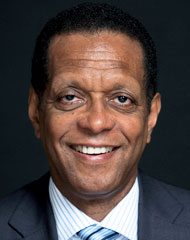
Bob Herbert-Op Ed Columnist, NYT
In any event, the G.O.P. has taken its place once again as the House majority and is vowing to do what it does best, which is make somebody miserable — in this case, President Obama. Representative Darrell Issa, the California Republican who is now chairman of the Oversight and Government Reform Committee, said recently on the Rush Limbaugh program that Mr. Obama was “one of the most corrupt presidents in modern times.” He backed off a little on Sunday, saying that what he really thinks is that Mr. Obama is presiding over “one of the most corrupt administrations.”
This is the attitude of a man who has the power of subpoena and plans to conduct hundreds of hearings into the administration’s activities.
The mantra for Mr. Issa and the rest of the newly empowered Republicans in the House, including the new Budget Committee chairman, Paul Ryan of Wisconsin, is to cut spending and shrink government. But what’s really coming are patented G.O.P. efforts to spread misery beyond Mr. Obama and the Democrats to ordinary Americans struggling in what are still very difficult times.
It was ever thus. The fundamental mission of the G.O.P. is to shovel ever more money to those who are already rich. That’s why you got all that disgracefully phony rhetoric from Republicans about attacking budget deficits and embracing austerity while at the same time they were fighting like mad people to pile up the better part of a trillion dollars in new debt by extending the Bush tax cuts.
This is a party that has mastered the art of taking from the poor and the middle class and giving to the rich. We should at least be clear about this and stop being repeatedly hoodwinked — like Charlie Brown trying to kick Lucy’s football — by G.O.P. claims of fiscal responsibility.
There’s a reason the G.O.P. reveres Ronald Reagan and it’s not because of his fiscal probity. As Garry Wills wrote in “Reagan’s America”:
“Reagan nearly tripled the deficit in his eight years, and never made a realistic proposal for cutting it. As the biographer Lou Cannon noted, it was unfair for critics to say that Reagan was trying to balance the budget on the backs of the poor, since ‘he never seriously attempted to balance the budget at all.’ ”
We’ll see and hear a lot of populist foolishness from the Republicans as 2011 and 2012 unfold, but their underlying motivation is always the same. They are about making the rich richer. Thus it was not at all surprising to read on Politico that the new head of the House Energy and Commerce Committee, Fred Upton of Michigan, had hired a former big-time lobbyist for the hospital and pharmaceuticals industries to oversee health care issues.
I remember President Bush going on television in September 2008, looking almost dazed as he said to the American people, “Our entire economy is in danger.”
Have we forgotten already who put us in such grave peril? Republicans benefit from the fact that memories are short and statutes of limitations shorter. It was the Republican leader in the House, Tom DeLay, who insisted against all reason and all the evidence of history that “nothing is more important in the face of war than cutting taxes.”
But that’s all water under the bridge. The Republicans are back in control of the House, ready to run interference for the rich as recklessly and belligerently as ever.
By: BOB HERBERT-Op-Ed Columnist, New York Times-Published January 3, 2011
Share This Blog


 Unknown Feed
- An error has occurred; the feed is probably down. Try again later.
 mykeystrokes.com
You must be logged in to post a comment.