Climate of Hate: Who Could Not Have Seen This Coming?
When you heard the terrible news from Arizona, were you completely surprised? Or were you, at some level, expecting something like this atrocity to happen?
Put me in the latter category. I’ve had a sick feeling in the pit of my stomach ever since the final stages of the 2008 campaign. I remembered the upsurge in political hatred after Bill Clinton’s election in 1992 — an upsurge that culminated in the Oklahoma City bombing. And you could see, just by watching the crowds at McCain-Palin rallies, that it was ready to happen again. The Department of Homeland Security reached the same conclusion: in April 2009 an internal report warned that right-wing extremism was on the rise, with a growing potential for violence.
Conservatives denounced that report. But there has, in fact, been a rising tide of threats and vandalism aimed at elected officials, including both Judge John Roll, who was killed Saturday, and Representative Gabrielle Giffords. One of these days, someone was bound to take it to the next level. And now someone has.
It’s true that the shooter in Arizona appears to have been mentally troubled. But that doesn’t mean that his act can or should be treated as an isolated event, having nothing to do with the national climate.
Last spring Politico.com reported on a surge in threats against members of Congress, which were already up by 300 percent. A number of the people making those threats had a history of mental illness — but something about the current state of America has been causing far more disturbed people than before to act out their illness by threatening, or actually engaging in, political violence.
And there’s not much question what has changed. As Clarence Dupnik, the sheriff responsible for dealing with the Arizona shootings, put it, it’s “the vitriolic rhetoric that we hear day in and day out from people in the radio business and some people in the TV business.” The vast majority of those who listen to that toxic rhetoric stop short of actual violence, but some, inevitably, cross that line.
It’s important to be clear here about the nature of our sickness. It’s not a general lack of “civility,” the favorite term of pundits who want to wish away fundamental policy disagreements. Politeness may be a virtue, but there’s a big difference between bad manners and calls, explicit or implicit, for violence; insults aren’t the same as incitement.
The point is that there’s room in a democracy for people who ridicule and denounce those who disagree with them; there isn’t any place for eliminationist rhetoric, for suggestions that those on the other side of a debate must be removed from that debate by whatever means necessary.
And it’s the saturation of our political discourse — and especially our airwaves — with eliminationist rhetoric that lies behind the rising tide of violence.
Where’s that toxic rhetoric coming from? Let’s not make a false pretense of balance: it’s coming, overwhelmingly, from the right. It’s hard to imagine a Democratic member of Congress urging constituents to be “armed and dangerous” without being ostracized; but Representative Michele Bachmann, who did just that, is a rising star in the G.O.P.
And there’s a huge contrast in the media. Listen to Rachel Maddow or Keith Olbermann, and you’ll hear a lot of caustic remarks and mockery aimed at Republicans. But you won’t hear jokes about shooting government officials or beheading a journalist at The Washington Post. Listen to Glenn Beck or Bill O’Reilly, and you will.
Of course, the likes of Mr. Beck and Mr. O’Reilly are responding to popular demand. Citizens of other democracies may marvel at the American psyche, at the way efforts by mildly liberal presidents to expand health coverage are met with cries of tyranny and talk of armed resistance. Still, that’s what happens whenever a Democrat occupies the White House, and there’s a market for anyone willing to stoke that anger.
But even if hate is what many want to hear, that doesn’t excuse those who pander to that desire. They should be shunned by all decent people.
Unfortunately, that hasn’t been happening: the purveyors of hate have been treated with respect, even deference, by the G.O.P. establishment. As David Frum, the former Bush speechwriter, has put it, “Republicans originally thought that Fox worked for us and now we’re discovering we work for Fox.”
So will the Arizona massacre make our discourse less toxic? It’s really up to G.O.P. leaders. Will they accept the reality of what’s happening to America, and take a stand against eliminationist rhetoric? Or will they try to dismiss the massacre as the mere act of a deranged individual, and go on as before?
If Arizona promotes some real soul-searching, it could prove a turning point. If it doesn’t, Saturday’s atrocity will be just the beginning.
By: Paul Krugman: Op-Ed Columnist, New York Times-January 10,2011
Different Congress, Same Crap: Get Ready for a GOP Rerun
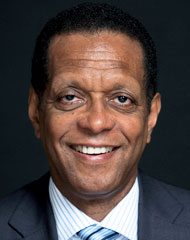
Bob Herbert-Op Ed Columnist, NYT
In any event, the G.O.P. has taken its place once again as the House majority and is vowing to do what it does best, which is make somebody miserable — in this case, President Obama. Representative Darrell Issa, the California Republican who is now chairman of the Oversight and Government Reform Committee, said recently on the Rush Limbaugh program that Mr. Obama was “one of the most corrupt presidents in modern times.” He backed off a little on Sunday, saying that what he really thinks is that Mr. Obama is presiding over “one of the most corrupt administrations.”
This is the attitude of a man who has the power of subpoena and plans to conduct hundreds of hearings into the administration’s activities.
The mantra for Mr. Issa and the rest of the newly empowered Republicans in the House, including the new Budget Committee chairman, Paul Ryan of Wisconsin, is to cut spending and shrink government. But what’s really coming are patented G.O.P. efforts to spread misery beyond Mr. Obama and the Democrats to ordinary Americans struggling in what are still very difficult times.
It was ever thus. The fundamental mission of the G.O.P. is to shovel ever more money to those who are already rich. That’s why you got all that disgracefully phony rhetoric from Republicans about attacking budget deficits and embracing austerity while at the same time they were fighting like mad people to pile up the better part of a trillion dollars in new debt by extending the Bush tax cuts.
This is a party that has mastered the art of taking from the poor and the middle class and giving to the rich. We should at least be clear about this and stop being repeatedly hoodwinked — like Charlie Brown trying to kick Lucy’s football — by G.O.P. claims of fiscal responsibility.
There’s a reason the G.O.P. reveres Ronald Reagan and it’s not because of his fiscal probity. As Garry Wills wrote in “Reagan’s America”:
“Reagan nearly tripled the deficit in his eight years, and never made a realistic proposal for cutting it. As the biographer Lou Cannon noted, it was unfair for critics to say that Reagan was trying to balance the budget on the backs of the poor, since ‘he never seriously attempted to balance the budget at all.’ ”
We’ll see and hear a lot of populist foolishness from the Republicans as 2011 and 2012 unfold, but their underlying motivation is always the same. They are about making the rich richer. Thus it was not at all surprising to read on Politico that the new head of the House Energy and Commerce Committee, Fred Upton of Michigan, had hired a former big-time lobbyist for the hospital and pharmaceuticals industries to oversee health care issues.
I remember President Bush going on television in September 2008, looking almost dazed as he said to the American people, “Our entire economy is in danger.”
Have we forgotten already who put us in such grave peril? Republicans benefit from the fact that memories are short and statutes of limitations shorter. It was the Republican leader in the House, Tom DeLay, who insisted against all reason and all the evidence of history that “nothing is more important in the face of war than cutting taxes.”
But that’s all water under the bridge. The Republicans are back in control of the House, ready to run interference for the rich as recklessly and belligerently as ever.
By: BOB HERBERT-Op-Ed Columnist, New York Times-Published January 3, 2011
What The Teaparty Wants From The Constitution
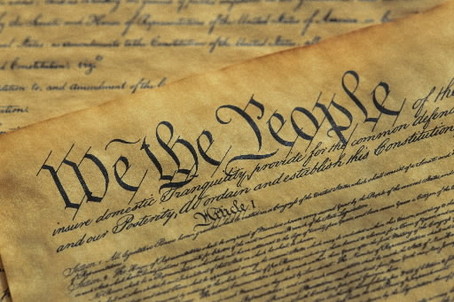
U.S. Constitution: Relevant only when it meets the needs of us "Real Americans"
I’m very curious to know what the GOP — or the tea partyers they’re presumably pandering to — think will happen when every piece of legislation requires “a statement from its sponsor outlining where in the Constitution Congress is empowered to enact such legislation.” What’s the evidence that this will make legislation more, rather than less, constitutional, for whatever your definition of the Constitution is?
Let’s take an example: Most legislation doesn’t currently include a statement of constitutional authority. But there’s one recent measure that did: Section 1501 of the Patient Protection and Affordable Care Act. That is to say, the individual mandate.
“The individual responsibility requirement provided for in this section (in this subsection referred to as the requirement) is commercial and economic in nature, and substantially affects interstate commerce,” reads the opening paragraph. Shortly thereafter, the legislation makes itself more explicit: “In United States v. South-Eastern Underwriters Association (322 U.S. 533 (1944)), the Supreme Court of the United States ruled that insurance is interstate commerce subject to Federal regulation.”
Has that statement convinced the GOP that the individual mandate is constitutional? Of course not. Currently, two judges have ruled in favor of the provision and one judge has ruled against. The split has been clean across partisan lines. The political verdicts have been little different: Sen. Chuck Grassley went from co-sponsoring an individual mandate in June of 2009 when it was still an idea connected to Republicans to condemning it as unconstitutional a few months later when it was clear that President Obama owned it and no Republicans would be joining his health-care bill.
My friends on the right don’t like to hear this, but the Constitution is not a clear document. Written more than 200 years ago, when America had 13 states and very different problems, it rarely speaks directly to the questions we ask it. The Second Amendment, for instance, says nothing about keeping a gun in the home if you’ve not signed up with a “well-regulated militia,” but interpreting the Second Amendment broadly has been important to those who want to bear arms. And so they’ve done it.
That’s their right, of course. Liberals pick and choose their moments of textual fidelity as well. But as the seemingly endless series of 5-4 splits on the Supreme Court shows, even the country’s most experienced and decorated constitutional authorities routinely disagree, and sharply, over what the text means when applied to today’s problems. To presume that people writing what they think the Constitution means — or, in some cases, want to think it means — at the bottom of every bill will change how they legislate doesn’t demonstrate a reverence for the document. It demonstrates a disengagement with it as anything more than a symbol of what you and your ideological allies believe.
In reality, the tea party — like most everyone else — is less interested in living by the Constitution than in deciding what it means to live by the Constitution. When the constitutional disclaimers at the bottom of bills suit them, they’ll respect them. When they don’t — as we’ve seen in the case of the individual mandate — they won’t.
By: Ezra Klein-Washington Post, 12/30/10: Photo credit: Todd Gipstein/National Geographic/Getty Images
Health Care Lawsuits: Separating Law From Spin

"Now if we can just fool the Courts"
If a public figure walks on water at noon, by 3 p.m. a dozen talking heads will be explaining that he can’t swim. That’s politics. But we can hope that federal judges won’t think in sound bites.
The current lawsuits challenging the Affordable Care Act raise this question insistently. I return to this lawsuit in yet another column because I believe this case will dominate both constitutional law and political discourse over at least the next 12 months–and because I believe its stakes far transcend its immediate consequences, important though they will be. I think that if our federal courts are willing to sign on to the challengers’ jejune theory of this case, not only we but our children will spend years dealing the malign consequences of the mistake. Nothing less than the ability of the United States to function as a modern nation may be at stake.
So far, in two of the pending lawsuits, opponents of the law have succeeded in spinning the judges, framing the lawsuits as posing the question whether (as Virginia argued) the federal government can “impose a penalty for what amounts to passive inactivity.”
We know the talk-radio answer to this question: Tyranny! Death panels! Black helicopters! Praise the Lord and pass the ammunition!
But the judicial answer, it seems to me, should be two-fold.
The first, and most important, answer a judge should give is, “I dunno. Find a case where the government does that and get back to me.” Because that description of the Affordable Care Act is simply inaccurate.
The second answer, which a judge shouldn’t give but a Con Law jock like me can, is, “Why ever not?”
I will get to that one later; but first, let’s deal with the canard that the Act somehow “penalizes inactivity.”
Here’s how Judge Henry Hudson put it in his decision in Cuccinelli v. Sebelius: The Act “requires that every United States citizen, other than those falling within specified exceptions, maintain a minimum level of health insurance.”
This snappy apothegm is the logical equivalent of saying that the Defense Appropriations Act “requires that every United States citizen, other than those who leave the country, engage in accepting a minimum level of protection by the United States military.” The provisions of the Health Care Act provide a benefit. The majority of Americans, who already have health coverage (and seem, by and large, to regard this coverage as worth bargaining for) will simply see improvements in their existing health care benefits, such as an end to lifetime benefit limits and the right to include older adult children on their policies. A significant number of others who are currently uninsured will become eligible for government-funded health insurance.
There will remain a small but significant number of Americans who can afford health care insurance but choose not to buy it. But contrary to the sound bite above, even they are not required to “maintain a minimum level of health insurance.” If they wish to keep their uninsured status, they may do so by paying an addition to their income tax bills–ranging from as little as $695 for an individual taxpayer to $2085 for a family of six or more. The claim that the government is “forcing individuals to buy a commercial product” is worse than spin; it is simply false.
In fact, even the choice of procuring insurance or paying a tax is put not to “every United States citizen,” or even “every United States citizen not already covered by insurance,” but only to those who earn enough income to qualify as taxpayers. “A small fraction of fewer than half of United States citizens,” though accurate, is much less thrilling to say, even for a judge, than “every citizen.”
This brings us to the contention that the act somehow regulates “inactivity.” Let’s you and I test this proposition: why don’t you just remain totally inactive in 2014, when the Act first takes effect.
Quit your job and get rid of your investments. The government will not regulate you. (True, it may offer you government-financed health care; but again, that is a benefit, not a regulation or punishment.)
But if you decide actually to work (I recommend that, by the way), you are not being “inactive.” You are taking part in commerce. The Constitution gives Congress plenary authority “to regulate commerce with foreign nations, and among the several States, and with the Indian Tribes.”
A system of regulation might easily include requiring you to pay taxes if you choose to burden commerce; willful refusal to maintain adequate health coverage for yourself and your family is such a burden. To claim otherwise doesn’t pass the straight-face test.
Conservatives like to prate about “individual responsibility” when it is a question of forcing the poor to work; asking the solvent to pay for themselves seems quite in line with these conservative values.
And as to the idea that Congress can only regulate “activity,” here again, verbal formulae are obscuring the practical truth. The Constitution does not say anything about “activity”; that’s a gloss that the Rehnquist Court put on it. Nor does it refer to “interstate commerce,” which to some (apparently including Justice Thomas) means men in knee breeches handing trinkets across state lines. The Constitution says that Congress may “regulate commerce . . . among the several states.”
Chief Justice Marshall (who was a ratifier, though not a Framer, of the Constitution) wrote in 1824 that “among” means “intermingled with,” not “between.” Marshall wrote that Congress’s commerce power reaches everything except that small set of matters “which are completely within a particular state, which do not affect other states, and with which it is not necessary to interfere, for the purpose of executing some of the general powers of the government.” Health care, and the citizen’s economic relationship with it, most assuredly affect all the states, and individual decisions about insurance are an important part of that effect–just as a farmer’s decision to raise private wheat are a part of agriculture’s effect on commerce.
I am somewhat mystified why the state plaintiffs even have standing to appear. In order for them to be injured, the Act would have to infringe some power that is reserved by the Constitution to the states. Judge Hudson placed great emphasis on an obscure 1922 precedent called Bailey v. Drexel Furniture, in which a laissez-faire majority of the Supreme Court invalidated a federal tax on products produced by child labor. The tax, the Court reasoned, was an attempt to prevent exploitation of children in factories and mills; such labor regulations were “a purely state activity.”
The Court has long since given up the idea that “labor laws” are solely state matters. But assume that in the formal sense Drexel is good law. So what? The tax, or penalty, in the Affordable Health Care Act doesn’t regulate any “purely state activity.” If it pretended to regulate commerce but was actually aimed at preventing divorce, or imposing a national zoning code, or requiring homeowners to maintain tasteful wallpaper, there might–might–be a Tenth Amendment issue. But not here: In the guise of regulating commerce, the Act regulates . . . commerce.
Here’s the nub of the objectors’ argument–it is not that this isn’t a regulation of commerce, but that the Commerce Power isn’t strong enough to regulate an entire national market. That kind of limitation on the Commerce Power finds no support in, well, the Constitution.
The doctrine under which the Act is being assailed quite simply constitutes a threat to most of the significant advances in federal law of the past 100 years: federal pension programs, national wildernesses and parks, consumer protection, environmental regulation, and most particularly statutory guarantees of civil rights.
It’s not coincidental that right now Ron Paul laments the Civil Rights Act and that Haley Barbour speaks fondly the segregated South, that anti-immigrant extremists target birthright citizenship, or that right-wingers seek to wreck the Constitution with an old-South style amendment letting states repeal federal laws. A decision to void the Act would furnish a powerful precedent for those who would “restore” a libertarian dreamland that never existed, and that for most of us would quickly become a nightmare.
The great achievement of the Framers–the one they clearly thought most important–was the creation of a national Congress with plenary powers in the spheres assigned to it. Trying to wreck Congress is warring on the Constitution.
That’s not to say that Congress can regulate commerce by unconstitutional means. But the prohibitions on means are in the Constitution, not in the fevered brain of Cuccinelli & McCollum. If a new health care act were to restrict free speech, or impose ex post facto laws, or authorize bills of attainder, or deny due process, the courts should certainly step in.
But that’s not what is at issue here.
Stripped of spin, the state plaintiffs are arguing that Congress can’t use its commerce power to actually regulate commerce. If the courts buy this nonsense, they may fatally damage the power of Congress to manage a modern commercial economy. Repairing that mistake would involve far greater sacrifices than having to pay a tax.
By: Garrett Epps- former reporter for The Washington Post-Original article-The Atlantic, December 30, 2010
A World Without an Individual Mandate: Careful What You Wish For GOP
Health economist Jon Gruber runs the numbers on a world in which the individual mandate is struck down and not replaced by anything:
-Repeal of the requirement to buy insurance would mean more people would wait until they get sick to buy insurance in the new nongroup exchanges, which would increase the average premium by 27 percent in 2019.
-Retaining the law’s insurance reforms, but repealing the subsidies as well as the requirement to purchase insurance, would further discourage people from buying insurance when they’re healthy. Premiums in 2019 would cost twice as much as projected under the law as a result.
-Retaining the law but repealing the mandate would newly cover fewer than 7 million people in 2019 rather than the 32 million projected to be newly covered by the law. Federal spending, however, would decline by only about a quarter under this scenario since the sickest and most costly uninsured are the ones most likely to gain coverage.
-Retaining only the insurance reforms in the law — repealing both the mandate and the subsidies — would not increase the number of people with insurance, leaving 55 million people uninsured in 2019.
By Ezra Klein | December 13, 2010;
Share This Blog


 Unknown Feed
- An error has occurred; the feed is probably down. Try again later.


You must be logged in to post a comment.