More Small Businesses Offering Health Care To Employees Thanks To Obamacare
The first statistics are coming in and, to the surprise of a great many, Obamacare might just be working to bring health care to working Americans precisely as promised.
The major health insurance companies around the country are reporting a significant increase in small businesses offering health care benefits to their employees.
Why?
Because the tax cut created in the new health care reform law providing small businesses with an incentive to give health benefits to employees is working.
We certainly did not expect to see this in this economy,” said Gary Claxton, who oversees an annual survey of employer health plans for the nonprofit Kaiser Family Foundation. “It’s surprising.”
How significant is the impact? While we won’t have full national numbers until small businesses file their 2010 tax returns this April, the anecdotal evidence is as meaningful as it is unexpected.
United Health Group, Inc., the nation’s largest health insurer, added 75,000 new customers working in businesses with fewer than 50 employees.
Coventry Health Care, Inc., a large provider of health insurance to small businesses, added 115,000 new workers in 2010 representing an 8% jump.
Blue Cross Blue Shield of Kansas City, the largest health insurer in the Kansas City, Mo. area, reports an astounding 58% increase in the number of small businesses purchasing coverage in their area since April, 2010-one month after the health care reform legislation became law.
“One of the biggest problems in the small-group market is affordability,” said Ron Rowe, who oversees small-group sales for the Kansas City operation for Blue Cross Blue Shied. “We looked at the tax credit and said, ‘this is perfect.”
Rowe went on to say that 38% of the businesses it is signing up had not offered health benefits before.
Whatever your particular ideology, there is simply no denying that these statistics are incredibly heartening. However, for those of you who cannot get past your opposition, even for a moment of universal good news, let’s break it down.
The primary, most enduring complaint of the opponents of the ACA has been that the law is deathly bad for small business.
Apparently, small businesses, and their employees, do not agree.
The next argument has been that the PPACA is a job killer.
If these small businesses found the new law to be so onerous, why have so many of them voluntarily taken advantage of the benefits provided in the law to give their employees these benefits? They were not mandated to do so. And to the extent that the coming mandate obligations might figure into their thinking, would you not imagine they would wait until 2014 to make a move as the rules do not go into effect until that time?
Of course, there is the nagging banter as to how Obamacare is leading us down the road to socialism.
Let it go, folks.
Private market insurance companies are experiencing significant growth because of a tax break provided by the PPACA. I may have missed the day this was discussed in economics class, but I’m pretty sure this is not a socialistic result of federal legislation.
When data like this appears, we have the opportunity to really find out who is talking smack for political benefit and who actually cares about getting affordable and available health care to America’s workers. Certainly, there will be elements of the new law that will not work out exactly as planned. That’s simply reality when it comes to any new piece of landmark legislation. But if you cannot celebrate what appears to be an important early success, you really should give some thought as to where your true interests and intents lie.
If you’re all about beating up on President Obama, you can conveniently forget this bit of data as if it never really happened. However, if your interest is to make health care available to more Americans, this should be a happy day for you – no matter what your ideological beliefs.
By: Rick Ungar, The Policy Page-Forbes, January 6, 2011
Different Congress, Same Crap: Get Ready for a GOP Rerun
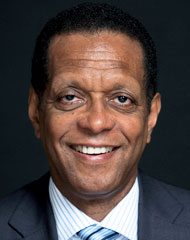
Bob Herbert-Op Ed Columnist, NYT
In any event, the G.O.P. has taken its place once again as the House majority and is vowing to do what it does best, which is make somebody miserable — in this case, President Obama. Representative Darrell Issa, the California Republican who is now chairman of the Oversight and Government Reform Committee, said recently on the Rush Limbaugh program that Mr. Obama was “one of the most corrupt presidents in modern times.” He backed off a little on Sunday, saying that what he really thinks is that Mr. Obama is presiding over “one of the most corrupt administrations.”
This is the attitude of a man who has the power of subpoena and plans to conduct hundreds of hearings into the administration’s activities.
The mantra for Mr. Issa and the rest of the newly empowered Republicans in the House, including the new Budget Committee chairman, Paul Ryan of Wisconsin, is to cut spending and shrink government. But what’s really coming are patented G.O.P. efforts to spread misery beyond Mr. Obama and the Democrats to ordinary Americans struggling in what are still very difficult times.
It was ever thus. The fundamental mission of the G.O.P. is to shovel ever more money to those who are already rich. That’s why you got all that disgracefully phony rhetoric from Republicans about attacking budget deficits and embracing austerity while at the same time they were fighting like mad people to pile up the better part of a trillion dollars in new debt by extending the Bush tax cuts.
This is a party that has mastered the art of taking from the poor and the middle class and giving to the rich. We should at least be clear about this and stop being repeatedly hoodwinked — like Charlie Brown trying to kick Lucy’s football — by G.O.P. claims of fiscal responsibility.
There’s a reason the G.O.P. reveres Ronald Reagan and it’s not because of his fiscal probity. As Garry Wills wrote in “Reagan’s America”:
“Reagan nearly tripled the deficit in his eight years, and never made a realistic proposal for cutting it. As the biographer Lou Cannon noted, it was unfair for critics to say that Reagan was trying to balance the budget on the backs of the poor, since ‘he never seriously attempted to balance the budget at all.’ ”
We’ll see and hear a lot of populist foolishness from the Republicans as 2011 and 2012 unfold, but their underlying motivation is always the same. They are about making the rich richer. Thus it was not at all surprising to read on Politico that the new head of the House Energy and Commerce Committee, Fred Upton of Michigan, had hired a former big-time lobbyist for the hospital and pharmaceuticals industries to oversee health care issues.
I remember President Bush going on television in September 2008, looking almost dazed as he said to the American people, “Our entire economy is in danger.”
Have we forgotten already who put us in such grave peril? Republicans benefit from the fact that memories are short and statutes of limitations shorter. It was the Republican leader in the House, Tom DeLay, who insisted against all reason and all the evidence of history that “nothing is more important in the face of war than cutting taxes.”
But that’s all water under the bridge. The Republicans are back in control of the House, ready to run interference for the rich as recklessly and belligerently as ever.
By: BOB HERBERT-Op-Ed Columnist, New York Times-Published January 3, 2011
Obama’s Silent Majority
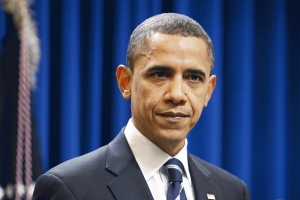
Preident Barack Obama

Preident Barack Obama
You’d never know it from cable news, but the average liberal Democrat actually likes the job the president is doing
Everyone knows that progressives have been growing increasingly disillusioned with Barack Obama since, well … even before he took office. He’s compromised too much, fought too little, sold out on one big issue after another, and fallen horribly, tragically short of the transformational goals that defined his 2008 campaign.
And now that he’s gone and cut a deal with Mitch McConnell (of all people!) to keep the Bush tax cuts in place for the wealthiest Americans for the next two years (at least), the left’s anger is louder than ever. No wonder Time’s Mark Halperin says the president’s base is “shattered.” And no wonder the media is filled with speculation about a potential challenge to the president in the 2012 Democratic primaries. Really, has there ever been a president who’s succeeded so thoroughly in taking the very people who put him in office and turning them against him?
It’s a fun topic for cable news and the blogosphere, where liberal commentators and activists routinely brand the president a Judas and threaten to support a primary challenger in 2012. And it’s a fun topic in the “mainstream media,” which takes all of this racket as confirmation that Obama is rapidly losing — or has already lost — his base.
There’s just one problem: The premise on which all of this is based is totally and completely wrong. Liberal commentators and activists and interest group leaders may be seething over Obama, but their rage has not trickled down to the Democratic voters (and, in particular, the Democratic voters who identify themselves as liberals), even though they’ve been venting their grief for the better part of two years.
As I noted earlier this week, Obama’s approval rating among Democrats has held steady at or near the 80 percent level throughout all of the turmoil of 2010. This puts him in as strong a position with his own party’s voters as any modern president has been at this same point in his presidency (with the exception of George W. Bush, whose numbers remained unusually high for well over a year after 9/11). Look closer and you’ll also find that Obama’s approval rating among Democrats is actually highest among those who call themselves liberals — an 83 percent score in the most recent round of Gallup polling, completed a few days ago. Among moderate Democrats, he clocks in at 75 percent, and among conservative Democrats, 69 percent. Again, these numbers have more or less held steady all year. To the extent Obama has a serious problem with Democrats, then, it’s with those who are on the right, not the left. This is hardly what you’d expect for a president who, according to the dominant narrative, has spent his presidency poking a stick in the left’s eye by cutting deals with conservative Democrats and Republicans.
Obama, in other words, seems to have developed his own silent majority. Rank-and-file liberal Democrats may not agree with everything he has done, but they do not share the sense of abandonment and betrayal that has defined liberal commentary throughout so much of his presidency. The party’s liberal base still very much likes him; it’s the elites who have turned on him.
The biggest reason for this disconnect, I would suggest, is that the liberal Democratic base liked Obama, both personally and ideologically, from the very beginning. Virtually from the moment he electrified the 2004 Democratic convention, liberals latched on to him as one of their own — and they haven’t (and don’t want to) let go.
This is not an unheard of phenomenon in politics, and it’s one of the reasons I’ve been so keen on comparing Obama’s political appeal to that of Ronald Reagan. Rank-and-file conservatives felt as strongly about Reagan in the 1980 campaign (and in 1976, for that matter) as liberals did about Obama in 2008. And they stayed true to him even when conservative elites concluded two years into his term that Reagan was a sellout.
Indeed, in the wake of this week’s drama over the Bush tax cuts, it’s worth recalling a similar moment in Reagan’s presidency, when congressional Democrats forced him into a tax hike in the summer of 1982. Like Obama now, Reagan had no leverage: The economy was spiraling out of control, voters were abandoning him, and Democrats were having great success (or seeming to have great success) hammering him over the exploding deficit. Thus did Reagan agree to a tax hike package that increased revenues by nearly $100 billion over the next three years — the largest tax increase in history, right-wing activists and commentators screamed. To these conservative elites, it was simply the latest act of betrayal by their one-time hero. When the GOP was drubbed in that fall’s midterms, they claimed vindication (see — not conservative enough!) and talked openly of challenging Reagan in the 1984 primaries. But rank-and-file conservative voters didn’t listen. They still liked the Gipper, still thought he was one of them, and still backed him in polling. It’s the same story today for Obama with rank-and-file liberals.
If Obama had been introduced to the Democratic base differently — that is, if they’d been suspicious and resistant to him and he’d landed in the presidency in spite of their skepticism — the objections of liberal elites might be far more damaging.
Here a parallel can be drawn to George H.W. Bush, who was introduced to the GOP’s “New Right” base in 1980 as the moderate, Gerald Ford-ish establishment Republican running against Reagan. Thus, the New Right, which essentially took control of the GOP for good with Reagan’s ’80 triumph, never really trusted Bush. Eight years of loyal service as Reagan’s V.P. was enough to win Bush the right’s benefit of the doubt in 1988, but when he “caved” as president — as he did on the S&L bailout, the 1990 tax hike, and a host of other issues — it merely brought back to the surface all of the right’s old attitudes toward him. So when the triumph of the Gulf War faded in 1991, there was room for Pat Buchanan to run to Bush’s right in the 1992 primaries. Buchanan didn’t win any states, but he did secure enough support — especially in New Hampshire — to severely embarrass the president. Obama’s history with liberals, though, is much different from Bush’s history with conservatives.
This isn’t to say that it’s impossible for Obama to lose the Democratic base; it’s just that there’s a lot more goodwill toward him among that base — and a lot more willingness to rationalize his “betrayals” as sensible pragmatism in the face of the other party’s obstructionism — than most people recognize.
At his press conference Tuesday, Obama noted that many of the “purist” liberals now blasting his tax cut deal also savaged his final healthcare compromise earlier this year, which wiped out the public option. It’s an apt comparison. And it’s worth remembering that the cries of betrayal back then did nothing to lessen rank-and-file’s assessment of Obama’s job performance — probably because the main thing they saw was that Obama, unlike every president before him, had actually gotten healthcare done.
By Steve Kornacki-Salon: Wednesday, Dec 8, 2010
Voters Are About to be Disillusioned With the GOP

The Puppet Master and his Minions
But going forward, now that they control the House and aspire to gain control of the Senate and the executive branch in the next election, Republicans will be forced to work for an actual agenda. And as Paul Waldman nicely explains in The American Prospect, this can produce a great pivot in the political climate of the country, very fast:
As a long history of public-opinion research has made clear — and as events continue to remind us — Americans are “symbolic conservatives” but “operational liberals.” In other words, they like the idea of limited government, but they also like just about everything government does. Good things happen to the party that can successfully pander to both impulses, which is why we saw so many ads from Republicans…condemning Democrats for passing a big-government health-care plan because it would … curtail the growth of Medicare.Perhaps they’re just being cautious as they get used to their new majority, but in the last week, Republicans have steadfastly refused to say what their professed desire to limit government would actually entail. Press them hard on what they want to cut, and they’ll answer “earmarks,” which would be fine were it not for the fact that a) earmarks do not appropriate new money; they merely direct money that has already been appropriated, and b) the value of all earmarks amounts to less than 1 percent of the federal budget….
If there’s one thing Republicans have been clear about, it’s their desire to repeal the Affordable Care Act. Even here, though, they don’t want to get too specific. As you’ve no doubt heard many times, a bare majority of the public opposes “health-care reform” (or “Obamacare”), while substantial majorities favor almost all the major provisions of the law. Once again, Republicans can win the vague, general argument but not the specific one. Faced with the impossibility of repealing the entire act (which Obama would veto), Republicans have said they’ll try to dismantle it piece by piece. Try that, however, and they’re suddenly attacking not “health-care reform” but those particular things people like.
That isn’t to say Republicans will inevitably be punished for attempting to repeal the ACA. Pushing repeal will only be dangerous for them if Democrats make it so. Republicans will suffer if they’re attacked aggressively for wanting to reopen the Medicare prescription-drug “doughnut hole,” for wanting to kick young people off their parents’ insurance, or for wanting to give the insurance companies the ability to deny coverage to children with pre-existing conditions. Those are all provisions of the ACA that have already gone into effect. The Democrats are hardly guaranteed to win the battle of ACA, but they have a shot if they make the right arguments.
Waldman goes on to note that House Republicans will have to write a budget resolution, and moreover, are virtually promising a budget showdown with the president, probably forcing a shutdown of the federal government. There’s no particular reason to assume that tactic will fare any better than it did when Newt Gingrich tried it back in the ’90s. But that scenario, too, will force Republicans–and attentive voters generally–to make some sheep-and-goat distinctions between government programs and services that are essential and those that are not. It’s when those two judgments begin to diverge, as they undoubtedly will, that the GOP will begin to pay a high price for consciously promising an austerity budget that somehow won’t upset their own voters. Campaigning on a Big Lie–Big Government is a terrible threat to your liberties and your pocketbook, but Big Government doesn’t involve anything that you care about, dear voter–can cause a real boomerang when the lies have to be turned into an agenda.
BY: Ed Kilgore, The New Republic, November 11, 2010
Republicans: A Party of Unemployment

Sen Orrin Hatch-"Drug test the unemployed"
From now until 2 November, the Republican party will be the party of unemployment. The logic is straightforward: the more people who are unemployed on election day, the better the prospects for Republicans in the fall election. They expect, with good cause, that voters will hold the Democrats responsible for the state of the economy. Therefore, anything that the Republicans can do to make the economy worse between now and then will help their election prospects.
While it may be bad taste to accuse a major national political party of deliberately wanting to throw people out of jobs, there is no other plausible explanation for the Republicans’ behaviour. They have balked at supporting nearly every bill that had any serious hope of creating or keeping jobs, most recently filibustering on bills that provided aid to state and local governments and extending unemployment benefits. The result of the Republicans’ actions, unless they are reversed quickly, is that hundreds of thousands more workers will be thrown out of work by the mid-terms.
The story is straightforward. Nearly every state and local government across the country is looking at large budget shortfalls for their 2011 fiscal years, most of which begin on 1 July 2010. Since they are generally required by state constitutions or local charters to balance their budgets, they will have no choice except to raise taxes and/or make large cutbacks and lay off workers to bring spending and revenue into line.
State and local governments have cut their workforce by an average of 65,000 a month over the last three months. Without substantial aid from the federal government, this pace is likely to accelerate. The Republican agenda in blocking aid to the states may add another 300,000 people to the unemployment rolls by early November.
The blocking of extended unemployment benefits promises similar dividends. As Paul Krugman rightly notes this week, unemployment benefits are not just about providing income support to those who are out of work, they also provide a boost to the economy. Since unemployed workers generally have little other than their benefits to support themselves, this is money that will almost immediately be spent. The benefits paid to workers are income to food stores and other retail outlets.
Unemployment insurance provides the sort of boost to demand that the economy desperately needs. That is why neutral parties such as the congressional budget office or economist Mark Zandi, a top adviser to John McCain’s presidential bid, always list unemployment benefits as one of the best forms of stimulus.
Republicans give two reasons for opposing benefits. First, they claim that benefits discourage people from working. Second, they object that the Democrats’ proposal will add to the national debt.
On the first point there is a considerable amount of economic research. Most indicates that in periods when the economy is operating near its capacity, more generous benefits may modestly increase the unemployment rate. However, they are less likely to have that effect now. The reason is simple: the economy does not have enough jobs. The latest data from the labour department shows that there are five unemployed workers for every job opening.
In this context, unemployment benefits may give some workers the option to remain unemployed longer to find a job that better fits their skills, but they are unlikely to affect the total number of unemployed. In other words, a $300 weekly unemployment cheque may allow an experienced teacher the luxury of looking for another teaching job, rather than being forced to grab a job at Wal-Mart.
However, if the teacher took the job at Wal-Mart, then this would simply displace a recent high-school graduate who has no other job opportunities. That might be a great turn of events in Republican-econ land, but it does not reduce the overall unemployment rate, nor does it benefit the overall economy in any obvious way.
The other argument the Republicans give is that these bills would add to the national debt. For example, the latest extension of unemployment benefits would have added $22bn to the debt by the end of 2011. This means that the debt would be $9,807,000,000 instead of $9,785,000,000 at the end of fiscal 2011, an increase of the debt-to-GDP ratio from 65.3% to 65.4%.
It is possible that Congressional Republicans, who were willing to vote for hundreds of billions of dollars of war expenditures without paying for them, or trillions of dollars of tax cuts without paying for them, are actually concerned about this sort of increase in the national debt. It is possible that this is true, but not very plausible.
The more likely explanation is that the Republicans want to block anything that can boost the economy and create jobs. Throwing people out of work may not be pretty, but politics was never pretty, and it is getting less so by the day.
Dean Baker is the co-director of the Center for Economic and Policy Research (CEPR). 2010 Guardian News and Media Limited. Published on Tuesday, July 6, 2010 by The Guardian/UK
Share This Blog


 Unknown Feed
- An error has occurred; the feed is probably down. Try again later.
 mykeystrokes.com

You must be logged in to post a comment.