Is Harry Reid Caving Or Calling The GOP Bluff?
If you can still remember the GOP position when the curtain first rose on Debt Ceiling Theater, you will recall that the Congressional Republicans had put forth two goals.
First, an agreement whereby every dollar permitted to be borrowed by a raise in the debt ceiling would be matched by a dollar of cuts in the federal budget; and Second, there could be no tax increases as a result of the process.
Senate Majority Leader Harry Reid (D-NV) is now offering up a plan that ostensibly meets the GOP demands by proposing a $2.7 trillion cut in federal spending to be matched by a like increase in the debt ceiling – with no tax increases or revenue boosts required.
That certainly sounds like a win for the GOP, doesn’t it?
Maybe it is – maybe it isn’t.
If the Republicans take the deal, they will accomplish a few important things.
For starters, in a country where few people read beyond the headlines and often believe what they are told by Fox News, a GOP declaration of victory would likely hold up – even if that victory proves to be little more than a cosmetic win.
Such a deal would also leave many on the left dispirited, believing that the President and the Democrats – by allowing the GOP to wriggle off the hook on revenue increases – will have, once again, caved to the opposition. This would threaten to split the Democrats at the worst possible time as we head into an election year.
But the devil is always in the details – and the details very much skew to the Democratic Party perspective.
Much of the cuts in the Reid plan are tied to reductions in spending on our two wars along with discretionary spending cuts. By structuring the cuts in this way, Reid is creating an incentive for the war supporters in Congress, and the President, to get out of Iraq and Afghanistan once and for all.
Accomplishing this would likely be perceived as a ‘win’ by many American voters who think it is time to bring these wars to a conclusion. Of course, those who are focused on achieving true and well defined cuts to our federal budget would likely see this maneuver as an example of budget trickery intended to create the appearance of a cut where no cut is really is going to take place if we continue our battles overseas.
More importantly from a political perspective, none of the budget reductions in the Reid proposal touch the entitlement programs that are sacrosanct to both the left and the rank-and-file members of Democratic Party, not to mention – if the polls are to be believed- Independents and many Republicans.
Finally, the Reid proposal provides a large enough raise in the debt ceiling to take us beyond the 2012 elections.
While the failure to get any revenue increases would, no doubt, be a black mark against the Democrats and the President, the Reid proposal would permit the Senate Democrats to argue that they succeeded in solving the debt ceiling crisis without impacting on entitlements – something the President was clearly ready to do in trade for revenue increases.
Preserving entitlements will make a lot of people happy and very possibly balance the anger of those who want the Democrats to hang in there until they accomplish some revenue increases by cutting corporate subsidies from the tax code and raising the rates on the wealthiest Americans.
The deal would also preserve to the Democrats the substantial political advantage they gained through the public revulsion to the Ryan budget plan and its dramatic impact on Medicare and Medicaid.
All of this puts the Republicans in a tricky spot.
If they accept Reid’s deal, they can claim a victory and go home.
But they will know that they really have won very little beyond the appearance of a win and some continued protection for the wealthy by holding off any tax increases – for now. Remember that the Bush tax cuts once again expire at the end of 2012. Should Obama win the election – and bring along some Congressional Democrats with him -the story could be very different than it was when Obama was forced to leave the Bush cuts intact in 2010 in order to protect the unemployment insurance payments so badly needed by the millions of out-of-work Americans.
Because of the questionable value of such a deal to those in the Tea Party Caucus, the group that very much appears to be in the driver’s seat these days, the Reid proposal could be a non-starter, forcing Boehner to, once again, pass up a compromise opportunity.
If Boehner is forced to say no, it would seem impossible for the Republicans to avoid blame after having passed up yet another effort on the part of the Democrats to compromise – this time by offering the GOP what they say they wanted in the first place.
You can also expect Democrats to be quick to point out that the war savings Reid is offering in his deal also show up as a budget cut in the Ryan budget – making it look all the worse for the GOP who would appear willing to claim war savings as budget cuts in their own budget but refuse to consider them valid when offered as part of a deal in this instance.
Harry Reid may be showing us that there is more to his strategy skills than what has previously met the nation’s eye.
Stay tuned. There is a long way to go.
By: Rick Ungar, The Policy Page, Forbes, July 25, 2011
In America, Being Poor Is A Criminal Offense
It takes a special kind of bully to target the most vulnerable and neediest families in society, which millionaire politicians like to argue are draining America’s treasury. I am referring to Rep. Charles Boustany (R-LA), who recently introduced a bill that would require states to implement drug testing of applicants for and recipients of the federal Temporary Assistance for Needy Families (TANF) program. This is reminiscent of Sen. Orrin Hatch’s (R-UT) failed legislation last summer to drug test the unemployed and those receiving other forms of government cash assistance, which ultimately died in the Senate. So far, Boustany’s proposal is following the same fate as Hatch’s, but around the country states are taking matters into their own hands.
In at least 30 state Legislatures across America, predominately wealthy politicians are quite impressed with themselves for considering bills that would limit the meager amount of state help given to needy families struggling to make ends meet. Many have proposed drug testing with some even extending it to recipients of other public benefits as well, such as unemployment insurance, medical assistance, and food assistance, in an attempt to add more obstacles to families’ access to desperately needed aid.
Florida’s Legislature has passed a bill that will require welfare applicants to take drug tests before they can receive state aid. Once signed into law by Republican Gov. Rick Scott, which is likely, all adult recipients of federal cash benefits will be required to pay for the drug tests, which are typically around $35. In Maine, Republican lawmakers introduced two proposals that would impose mandatory drug testing on Maine residents who are enrolled in MaineCare, the state’s Medicaid program for low-income and disabled residents. Under a similar bill that passed both the House and Senate in Missouri, recipients found to be on drugs will still be eligible for benefits only if they enter drug treatment programs, though the state wouldn’t pick up the tab for their recovery.
In Massachusetts — where about 450,000 households receive cash or food assistance — a bill introduced by state Rep. Daniel B. Winslow (R-Norfolk) would set up a program requiring those seeking benefits to disclose credit limits and assets such as homes and boats, as well as the kind of car they drive. His reasoning is “If you have two cars and a snowmobile, then you aren’t poor. If we do this, we will be able to preserve our limited resources for those who are truly in need and weed out fraud, because we know there’s fraud and we’re not looking for it.” State Rep. Daniel K. Webster (R-Pembroke) filed a budget amendment requiring the state to verify immigration status of those seeking public benefits. Webster made it clear that his proposal does not mean he dislikes poor people or immigrants, but “this is all unsustainable and the system is being abused.”
This is rather shocking because I can’t recall any Republicans or Democrats demanding that the CEO of Bank of America or JP Morgan disclose inventory of their vacation homes, private jets, and yachts before bailing them out in what amounts to corporate welfare. Nor did they insist that these CEOs submit to alcohol and drug screenings before receiving taxpayer money. No objections were made regarding the immigration status of the people running these companies or whether they happen to employ undocumented workers for cheap labor.
Some would argue that corporations are different, in that they create jobs. To that I will point out that corporations are making record profits, even as they layoff workers and pay next to nothing in Federal income taxes. And this doesn’t even begin to scratch at the surface of corporate abuse by the very entities that are soaked in taxpayer money. Just contrast these proposals with the way the rich are treated in this country with billions of dollars in subsidies and tax breaks.
This is simply an extension of a conversation that began in 1996, when President Bill Clinton and House Speaker Newt Gingrich passed bipartisan welfare reform, whose results have been tragic to say the least. The 1996 Welfare Reform Act authorized, but did not require, states to impose mandatory drug testing as a prerequisite to receiving state welfare assistance. Back then, unproven allegations of criminal behavior and drug abuse among welfare recipients were the rationales cited by those in support of the bill’s many punitive measures that were infused with race, class, and gender bias.
The majority of the proposals for drug testing require no suspicion of drug use whatsoever. Instead they rest on the assumption that the poor are inherently inclined to immoral and illegal behavior, and therefore unworthy of privacy rights as guaranteed under the Fourth Amendment. These proposals simply reaffirm the longstanding concept of the poor as intrinsically prone to and deserving of their predicament. Jordan C. Budd, in his superb analysis Pledge Your Body for Your Bread: Welfare, Drug Testing, and the Inferior Fourth Amendment, demonstrates how the drug testing of welfare recipients is part of what’s called a “poverty exception” to the Constitution, particularly the Fourth Amendment, a bias that renders much of the Constitution irrelevant at best, and hostile at worst, to the American poor.
Kaaryn Gustafson extensively documents the trend toward the criminalization of poverty. She demonstrates how, in her words “welfare applicants are treated as presumptive liars, cheaters, and thieves,” which is “rooted in the notion that the poor are latent criminals and that anyone who is not part of the paid labor force is looking for a free handout.” I would argue that given the disdain that has been shown for “entitlements” over the years, it won’t be long before this treatment extends to Social Security, Medicare, and even Financial Aid recipients.
The notion that the poor are more prone to drug use has no basis in reality. Research shows that substance use is no more prevalent among people on welfare than it is among the working population, and is not a reliable indicator of an individual’s ability to secure employment. Furthermore, imposing additional sanctions on welfare recipients will disproportionately harm children, since welfare sanctions and benefit decreases have been shown to increase the risk that children will be hospitalized and face food insecurity. In addition, analysis shows that drug testing would be immensely more expensive than the acquired savings in reduced benefits for addicts
With regard to welfare legislation, it’s beneficial to highlight where on the class ladder members of Congress stand. According to a study by the Center for Responsive Politics released late last year, nearly half of the members in congress — 261 — were millionaires, compared to about 1 percent of Americans. The study also pointed out that 55 of these congressional millionaires had an average calculated wealth in 2009 of $10 million dollars and up, with eight in the $100 million-plus range. A more recent study released in March, found that 60 percent of Senate freshman and more than 40 percent of House freshmen of the 112th congress are millionaires.
Why is this so important? Because very few of our lawmakers understand what it’s like to struggle financially. Millionaires can generally afford healthcare without grappling with unemployment, foreclosure, or an empty refrigerator. The majority of our representatives haven’t a clue what the daily lives of the people they represent are like, let alone the constant struggle of single mothers living below the poverty line. They are constantly arguing that we all must sacrifice with our pensions, our wages, our education, the security of our communities, and with the belly’s of our children, while they sit atop heavily guarded piles of money.
With the ranks of the underclass growing and the unemployment level at a staggering 9%, it’s more clear than ever that the wealth divide between “we the people” and our representatives has caused a dangerous disconnect. State and federal legislators claim to be acting fiscally responsible, but they support budgets that create unimaginably difficult circumstances for the lives of the most vulnerable people, especially children. There is no question that these newest proposals amount to class warfare, and the longer we ignore it, the more it will spread.
By: Rania Khalek, CommonDreams.org, May 14, 2011
Republican Balanced Budget Amendment: The Worst Idea In Washington
Bruce Bartlett takes a look at the Balanced Budget Amendment all 47 Republicans signed their names to and pronounces it “quite possibly the stupidest constitutional amendment I think I have ever seen. It looks like it was drafted by a couple of interns on the back of a napkin.”
I think “stupid” is the wrong word. “Dangerous” is more like it. And maybe “radical.” This isn’t just a Balanced Budget Amendment. It also includes a provision saying that tax increases would require a two-thirds majority in both houses of Congress — so, it includes a provision making it harder to balance the budget — and another saying that total spending couldn’t exceed 18 percent of GDP. No allowances are made for recessions, though allowances are made for wars. Not a single year of the Bush administration would qualify as constitutional under this amendment. Nor would a single year of the Reagan administration. The Clinton administration would’ve had exactly two years in which it wasn’t in violation.
Read that again: Every single Senate Republican has endorsed a constitutional amendment that would’ve made Ronald Reagan’s fiscal policy unconstitutional. That’s how far to the right the modern GOP has swung.
But the problem isn’t simply that the proposed amendment is extreme. It’s also unworkable. The baby boomers are retiring and health costs are rising. Unless you have a way to stop one or the other from happening — and no one does — spending as a percentage of GDP is going to have to rise. This proposal doesn’t interrupt those trends. It simply refuses to acknowledge them — or, to be more generous, it rules them unconstitutional. This is the equivalent of trying to keep your kid cute by passing a law saying he’s not allowed to grow up.
Another problem: In a recession, tax revenue plummets and GDP stops growing, but spending has to be sustained, or even increased, to a) give people unemployment insurance and Medicaid and other services they need and b) keep the economy from contracting violently. This amendments includes no provisions for recessions, meaning that when the economy contracted, the government would have to contract as well. That is to say, we’re still not out of one of the deepest recessions in American history, and every Senate Republican has co-sponsored a constitutional amendment to make future recessions worse. It’s just breathtaking.
A world in which this amendment is added to the Constitution is a world in which America effectively becomes California. It’s a world where the procedural impediments to passing budgets and raising revenues are so immense that effective fiscal management is essentially impossible; it’s a world where we can’t make public investments or sustain the safety net; it’s a world where recessions are much worse than they currently are and the government has to do more of its work off-budget through regulation and gimmickry. I would like to say something positive about this proposal, say there’s some silver lining here. But there isn’t. This is economic demagoguery, and nothing more. It’s so unrealistic that it would’ve ruled all but two of the last 30 years unconstitutional, which means it’s so unrealistic that there has not yet been a Republican president who has proven it can be done. And that doesn’t just suggest it can’t be done: It suggests that when Republicans are actually in power and have control of the budget, they know perfectly well that it shouldn’t be done. They’re just pretending otherwise for the moment.
By: Ezra Klein, The Washington Post, April 1, 2011
Punishing the Jobless
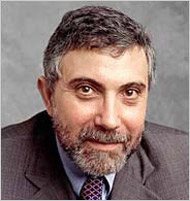
Paul Krugman-Nobel Prize Winner in Economics
There was a time when everyone took it for granted that unemployment insurance, which normally terminates after 26 weeks, would be extended in times of persistent joblessness. It was, most people agreed, the decent thing to do.
But that was then. Today, American workers face the worst job market since the Great Depression, with five job seekers for every job opening, with the average spell of unemployment now at 35 weeks. Yet the Senate went home for the holiday weekend without extending benefits. How was that possible?
The answer is that we’re facing a coalition of the heartless, the clueless and the confused. Nothing can be done about the first group, and probably not much about the second. But maybe it’s possible to clear up some of the confusion.
By the heartless, I mean Republicans who have made the cynical calculation that blocking anything President Obama tries to do — including, or perhaps especially, anything that might alleviate the nation’s economic pain — improves their chances in the midterm elections. Don’t pretend to be shocked: you know they’re out there, and make up a large share of the G.O.P. caucus.
By the clueless I mean people like Sharron Angle, the Republican candidate for senator from Nevada, who has repeatedly insisted that the unemployed are deliberately choosing to stay jobless, so that they can keep collecting benefits. A sample remark: “You can make more money on unemployment than you can going down and getting one of those jobs that is an honest job but it doesn’t pay as much. We’ve put in so much entitlement into our government that we really have spoiled our citizenry.”
Now, I don’t have the impression that unemployed Americans are spoiled; desperate seems more like it. One doubts, however, that any amount of evidence could change Ms. Angle’s view of the world — and there are, unfortunately, a lot of people in our political class just like her.
But there are also, one hopes, at least a few political players who are honestly misinformed about what unemployment benefits do — who believe, for example, that Senator Jon Kyl, Republican of Arizona, was making sense when he declared that extending benefits would make unemployment worse, because “continuing to pay people unemployment compensation is a disincentive for them to seek new work.” So let’s talk about why that belief is dead wrong.
Do unemployment benefits reduce the incentive to seek work? Yes: workers receiving unemployment benefits aren’t quite as desperate as workers without benefits, and are likely to be slightly more choosy about accepting new jobs. The operative word here is “slightly”: recent economic research suggests that the effect of unemployment benefits on worker behavior is much weaker than was previously believed. Still, it’s a real effect when the economy is doing well.
But it’s an effect that is completely irrelevant to our current situation. When the economy is booming, and lack of sufficient willing workers is limiting growth, generous unemployment benefits may keep employment lower than it would have been otherwise. But as you may have noticed, right now the economy isn’t booming — again, there are five unemployed workers for every job opening. Cutting off benefits to the unemployed will make them even more desperate for work — but they can’t take jobs that aren’t there.
Wait: there’s more. One main reason there aren’t enough jobs right now is weak consumer demand. Helping the unemployed, by putting money in the pockets of people who badly need it, helps support consumer spending. That’s why the Congressional Budget Office rates aid to the unemployed as a highly cost-effective form of economic stimulus. And unlike, say, large infrastructure projects, aid to the unemployed creates jobs quickly — while allowing that aid to lapse, which is what is happening right now, is a recipe for even weaker job growth, not in the distant future but over the next few months.
But won’t extending unemployment benefits worsen the budget deficit? Yes, slightly — but as I and others have been arguing at length, penny-pinching in the midst of a severely depressed economy is no way to deal with our long-run budget problems. And penny-pinching at the expense of the unemployed is cruel as well as misguided.
So, is there any chance that these arguments will get through? Not, I fear, to Republicans: “It is difficult to get a man to understand something,” said Upton Sinclair, “when his salary” — or, in this case, his hope of retaking Congress — “depends upon his not understanding it.” But there are also centrist Democrats who have bought into the arguments against helping the unemployed. It’s up to them to step back, realize that they have been misled — and do the right thing by passing extended benefits.
By PAUL KRUGMAN-Published: July 4, 2010 NYT Op-ED
Photo:Fred R. Conrad/The New York Times
Share This Blog


 Unknown Feed
- An error has occurred; the feed is probably down. Try again later.
 mykeystrokes.com
You must be logged in to post a comment.