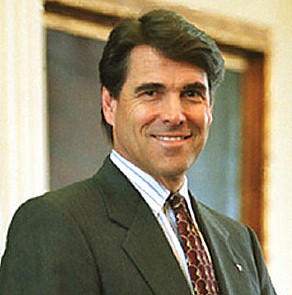
“When The Red Meat Gets Really Bloody”: A Reflection Of Actual Republican Priorities And Governing Philosophy
When I wrote about Rick Perry’s very well-received speech at CPAC representing the underlying radicalism that has become commonplace at conservative gatherings, I did so in part because we’ve all gotten too accustomed to the duplicitous game played by Republican pols who talk out of both sides of their mouths about very popular federal domestic programs like Medicare and federally guaranteed student loans. If they aren’t hinting they’d like to repeal them altogether, they’re often promising to defend them to the last ditch, like Paul Ryan so conspicuously did with respect to Medicare in 2012.
But to my surprise, at least one major Republican writer was disturbed by Perry’s rhetoric at CPAC: Commentary‘s Peter Wehner:
It is one thing – and I think very much the right thing – to argue for a more limited role for the federal government and conservative reforms of everything from entitlement programs to education, from our tax code to our immigration system to much else. It’s quite another when we have the kind of loose talk from the governor of the second most populous state in America.
I realize that some people will argue that what Perry is offering up is simply “red meat” for a conservative audience. It’s a (lazy) default language those on the right sometimes resort to in order to express their unhappiness with the size of the federal government. But words matter, Governor Perry is actually putting forth (albeit in a simplified version) a governing philosophy, and most Americans who hear it will be alarmed by it.
As a political matter, running under the banner of “Get out of the health care business! Get out of the education business!” hardly strikes me as the best way to rally people who are not now voting for the GOP in presidential elections. I’m reminded of the words of the distinguished political scientist James Q. Wilson: “Telling people who want clean air, a safe environment, fewer drug dealers, a decent retirement, and protection against catastrophic medical bills that the government ought not to do these things is wishful or suicidal politics.”
Wehner, of course, is not your typical conservative writer. In February of last year, he and WaPo columnist Michael Gerson penned one of the more serious post-2012 articles on the need for some serious rethinking of the GOP message and policy agenda, earning them a spot in Ryan Cooper’s list of “Reformish Conservatives” in the May/June 2013 issue of the Washington Monthly.
But still, with Republicans getting themselves all revved up for a big 2014 victory so long as they keep their message simple and stupid, it’s refreshing to hear at least one voice suggest there is long-term danger–or really short-term danger, since 2016 isn’t that far away–in Perry’s kind of rap. At some point, Democrats are going to figure out how to effectively make the case that the “red meat” speeches reflect actual Republican priorities far more than the “incremental reform” or even defense-of-the-status quo rhetoric GOPers aim at swing voters.
By: Ed Kilgore, Contributing Writer, Washington Monthly Political Animal, March 13, 2014
“The ‘Texas Miracle’ Fraud”: Turns Out It Involves Taxing The Poor To Help The Rich Get Richer
Remember “The Texas Miracle”? It was the story of how Rick Perry was going to be president because his state, Texas, was doing so much better than all the other states. Texas was doing so well, we were told, because it was very conservative: Low taxes, light regulation, and few pesky unions. We were supposed to compare Texas to California, which, we were told, was an apocalyptic mess because it was run by liberals.
Then we sort of stopped hearing about The Texas Miracle for a while, because Rick Perry forgot how to count and it no longer seemed like he was personally responsible for managing the economy of his vast state, but conservatives still enjoy telling themselves that Texas proves that their economic policy preferences are objectively superior to those of liberals. Except, well, maybe Texas isn’t that miraculous.
At Washington Monthly, Phillip Longman argues that Texas’ growth is fueled primarily by the energy boom and by population growth. And that population growth is not happening because people from other states are fleeing to Texas to avoid high taxes and onerous regulations, but because of immigration from Mexico and a high birthrate. More importantly (and probably obviously, to people who care about such things), the spoils of the Texas miracle have not been shared equally: Economic mobility is higher in California’s major urban areas than in those of Texas. Plus: “Texas has more minimum-wage jobs than any other state, and only Mississippi exceeds it with the most minimum-wage workers per capita.” Texas is falling behind various states in terms of per capita income.
As Longman concludes:
But regardless of its sources, population growth fuels economic growth. It swells the supply and lowers the cost of labor, while at the same time adding to the demand for new products and services. As the population of Texas swelled by more than 24 percent from 2000 to 2013, so did the demand for just about everything, from houses to highways to strip malls. And this, combined with huge new flows of oil and gas dollars, plus increased trade with Mexico, favored Texas with strong job creation numbers.
But for some, the good news on Texas continues apace. J.D. Tuccille, at the libertarian magazine Reason’s Hit & Run blog, points to a paper from the Federal Reserve Bank of Dallas showing that Texas created more high-wage jobs than low-wage ones between 2000 and 2013. Tuccille also points out that “in 2012, ’63,000 people moved from California to Texas, while 43,000 in Texas moved to California.’” (That… actually seems pretty statistically insignificant when we’re talking about the two most populous states in the union, each with more than 25 million residents, but ok, sure.)
Even if it is the case that the Texas miracle is driven primarily by a resource boom and population growth, conservatives and libertarians could still argue that Texas is booming because of their preferred policies. They support exploiting natural resources, and libertarians, at least, support open borders. To use another example, while it’s a fact that North Dakota’s economic boom is happening almost solely because North Dakota happens to be on top of tremendous amounts of very valuable natural resources that recently became easier to extract, conservatives would argue that they are the ones who support drilling that oil, damn the environmental consequences.
But here’s one important fact that Texas’ conservative and libertarian boosters reliably fail to mention (perhaps because they don’t know it): If you’re not rich, Texas is not actually a low-tax state. In fact, most Texans pay more taxes than most Californians. That seems strange and incorrect at first — Texas doesn’t even have an income tax! — but it’s true. Thanks to sales and property taxes, Texas is among the states with the ten most regressive tax systems. Texans in the bottom 60 percent of income distribution all pay higher effective tax rates than their Californian counterparts. Texas’ top one-percent are the ones enjoying the supposed low-tax utopia, paying an effective rate of 3.2 percent. The rate for the lowest 20 percent is 12.6 percent. Kevin Drum has a helpful chart.
This is not unusual for a conservative state. As the Institute on Taxation and Economic Policy says: “States praised as ‘low tax’ are often high tax states for low and middle income families.” So… is this part of the conservative policy package that we are supposed to introduce everywhere to spur growth? Slash taxes for the rich and raise taxes on… the poor and middle class? It seems like it might be difficult to campaign on that.
When “growth” is its own self-justifying goal, creating an economy that only delivers for a privileged few doesn’t really seem like a problem. Still, don’t move to Texas expecting a better life, unless you own a petrochemical refinery.
By: Alex Pareene, Salon, March 7, 2014
“Hurting Real People Who Have Real Needs”: Republicans Are Suppressing Obamacare Enrollment
Republicans have done everything they could think of to repeal, defund, undermine and otherwise disrupt Obamacare. But they’ve failed, and that’s why they’ve turned to a last-ditch strategy to stop the law and take away the rights of millions of Americans to get the health care they need.
Governors and state legislators are adopting state laws and regulations to sabotage the work of “navigators,” the community organizations that will help consumers sign up for care. We are witnessing navigator suppression, and the Republicans’ objective is simple: the harder they make it for navigators to do their jobs, the harder it will be for people to benefit from Obamacare.
Republican governors in 21 states are already denying more than 5 million people health care by refusing to expand Medicaid. Navigator suppression is another way for the Obamacare haters to pile on and limit the reach of the law.
In a new report, Health Care for America Now conducted a detailed review of the most egregious laws and regulations found in 13 selected states: Arkansas, Florida, Georgia, Iowa, Illinois, Indiana, Maine, Missouri, Montana, Ohio, Tennessee, Texas and Wisconsin. These states are home to 17 million people without health insurance who are eligible for coverage under the health care reform law–fully 41 percent of the nation’s uninsured.
The excessive requirements we found include such things as residency rules, extra fees, additional and unnecessary training requirements, superfluous certification exams, and prohibitions against navigators talking with consumers about the benefits offered by different plans. These measures constitute direct interference in the enrollment process.
For example, in Missouri, state and local officials are barred from providing any assistance to an exchange. In Florida, the Department of Health released a directive prohibiting navigators from conducting outreach at any of the county’s 67 health departments. Fortunately, two big counties, Broward and Pinellas, are ignoring the order.
And just this month, Texas Gov. Rick Perry ordered the Insurance Commissioner to write new navigator regulations that require, among other things, that navigators complete 40 hours of training in addition to the 20 hours required by the ACA and then pass a “rigorous” state exam. Perry is even trying to limit the hours of navigator operations to 8 a.m. to 5 p.m. None of these rules is going to help get people covered in Texas, which has the nation’s highest percentage of uninsured residents.
These roadblocks and restrictions have caused groups to withdraw from the program and return their navigator grants. This is why President Obama in Maryland today criticized the Republicans for creating these sorts of “roadblocks” for the “churches and charities” working as navigators to educate the public about enrollment.
The Republicans claim these laws are about protecting consumers. But Georgia’s commissioner of insurance cleared that up when he boasted on video that he was doing everything he could to be “an obstructionist” to Obamacare.
Some of the Obamacare opponents may think they’re attacking the President or the law, but mostly they’re hurting real people with real health care needs. They’re making it harder for people to buy health care. This isn’t just an abstract political debate. For people without health insurance, this is about whether or not they can get medical care and get it without going bankrupt.
In a growing number of states, navigators are turning back their grants to help consumers because of navigator suppression policies.
Cincinnati Children’s Hospital Medical Center, for example, which was planning to enroll people at three hospitals, turned back $124,000 in federal grant money because of state restrictions that went into effect this past July.
Cardon Outreach was going to educate people in Florida, Oklahoma, Pennsylvania, and Utah. It returned its $833,000 grant.
In West Virginia, the Attorney General, Patrick Morrisey, a vocal opponent of the ACA, launched a harassment campaign against one of his state’s navigators, West Virginia Parent Training and Information. Morrisey posed dozens of questions to the group about its navigator program and gave them only 14 business days to respond. Instead, the organization decided to send back its $366,000 enrollment grant.
The Lower Rio Grande Valley Development Council along the Texas border with Mexico just returned $288,000 in navigator grant funds this week in response to Perry’s attack, and four other Texas navigator groups reportedly may follow suit.
These state officials have taken their cues from members of Congress. Republicans on the House Energy and Commerce Committee sent letters to 51 groups in 11 states, including food banks, legal aid societies, and United Way organizations. The committee demanded that these groups produce reams of paperwork about their operations and schedule a briefing of the committee by Sept. 13. The only purpose of the inquiry was to interfere with the ability of these groups to prepare for enrollment. That’s sabotage, and it’s a politically motivated abuse of power.
Many of the states now going after navigators are also passing laws to suppress voter registration and make it harder for minority, low-income and elderly residents to participate in elections. Just like voter suppression, enrollment suppression is an attack on people’s right to be healthy and free from financial hardship and bankruptcy.
That’s why navigator suppression shocks the conscience: it perpetuates the systematic denial of affordable health care to huge numbers of the most vulnerable individuals in our society, especially those in minority and lower-income populations.
Thanks to Obamacare, Americans no longer have to worry about getting the health care they need. They only have to worry about the Republicans taking it away.
By: Ethan Rome, Executive Director, Health Care for America Now; Health Care for America Now Blog, September 26, 2013
“To Dude Or Not To Dude?”: Rick Perry Wants YOU To Want Him To Run For President
In San Antonio on Monday, Texas Gov. Rick Perry will share his “exciting future plans.” Not to be confused with his past plans, I guess, or his not-so-hot ones. Unfortunately, I’m pretty sure these don’t involve accepting the $90 billion or so in federal money to expand Medicaid that would insure a million more Texans in a state that’s first in job creation but second in the number of children without health insurance.
When I asked a few Texans what they figured their governor would announce, though, I did get some exciting replies: Secede from the union? Change the part in his hair? Break in some new boots? And those were the Republicans, who have nothing but praise for their longest-serving governor — just as long as they’re speaking for attribution.
Perry did succeed in turning his state’s governorship from one of the weakest in the country to one of the strongest by applying a strict personal loyalty test to those he appointed to every seat on every board.
As a result, he’s always been more feared than loved. But after his bellyflop of a presidential run, some of his power to intimidate seems to have worn off. Texas House Speaker Joe Straus — a Republican, of course — publicly criticized Perry’s remarks about Wendy Davis, the state senator who successfully filibustered an anti-abortion bill, as damaging to their party.
I think Perry was actually trying to pay Davis a compliment. ““Who are we to say,” he asked, “that children born in the worst of circumstances can’t lead successful lives? Even the woman who filibustered the Senate the other day was born into difficult circumstances. She’s the daughter of as single woman, she was a teenage mother herself. She managed to eventually graduate from Harvard Law School and serve in the Texas Senate. It’s just unfortunate that she hasn’t learned from her own example that every life must be given a chance to realize its full potential, and that every life matters.” Which I took to mean that had her single mom chosen not to have her, the world would have been deprived of her intelligence and fortitude.
I’m not surprised, however, that Texas Republicans are telling pollsters they don’t want Perry to run for president again in ’16: Just 18 percent of Republican primary voters want him to go for it, while 69 percent say they hope he doesn’t.
Even among Texans, he’s the sixth-choice Republican presidential candidate right now, after Ted Cruz, Jeb Bush, Rand Paul, Chris Christie and Paul Ryan. And though his job approval rating in the state has improved substantially lately, more still disapprove than give him a thumbs up, and 60 percent of respondents in a recent PPP poll said they do not think he should run for a fourth term as governor, either, compared to the 30 percent who say he should.
That doesn’t mean Texas is likely to turn blue any time soon, however, because it’s still an awfully conservative state — and one that’s gotten more so in recent years, with Obama taking 44 percent of the vote in ’08 and 41 percent in ’12.
Longtime Democratic consultant Marc Campos, of Houston, who calls Perry “Governor Dude,” is less sure than some others in the state about how the governor will come down on the question of “to dude or not to dude” for a fourth term. “Oops means oops,” Campos jokes, referring not only to Perry’s inability to remember the name of the third federal agency he’d vowed to cut, but also to Perry’s presidential chances if he does run again in ’16.
Yet Campos assesses his own party’s chances of taking the governorship next year no less realistically, quoting Rocco Lampone’s line in “The Godfather Part II” that shooting Hyman Roth would be “difficult, not impossible. It would have to be a hardly-any-room-for-error type of campaign,” he says, and darn well funded.
As the Dallas Morning News’s Wayne Slater points out, Davis has doubled her name ID lately, yet is still unlikely to prevail over Perry, who won by 13 points in ’10 as the least popular Republican on the ballot. Though 38 percent of Texans are Latino, turnout continues to be a problem, with Hispanics accounting for more than a third of the population, yet only about a fifth of the vote. And the recent Supreme Court decision undermining the Voting Rights Act clears the way for a Texas voter ID law that Democrats fear will further suppress turnout.
Rep. Joaquin Castro, whose twin, Julian Castro, the mayor of San Antonio, would have the best chance of besting Perry if he does run again, according to a recent poll, told me that “realistically, our window” for turning Texas blue “is eight to 12 years.”
Perry might actually speed that process along if he does decide to run for re-election, and the state’s Republican attorney general, Greg Abbott, opposes him in a primary. If that happens, Castro says, it will be expensive, brutal, and “a replay of what happened to the once-dominant Democratic Party” in Texas in the ’80s, with more infighting than punches thrown at the other party.
No one can say that Perry suffers from a lack of confidence, though, and it wouldn’t be like him to worry about that. Just before he was elected to his third term, Perry told me that walking away after only two would have been “like Van Gogh walking away when he’s two-thirds finished with a masterpiece.” On Monday, we’ll learn if he feels any brush work remains undone.
By: Melinda Henneberger, She The People, The Washington Post, July 3, 2013
Share This Blog


 Unknown Feed
- An error has occurred; the feed is probably down. Try again later.
 mykeystrokes.com