Different Congress, Same Crap: Get Ready for a GOP Rerun
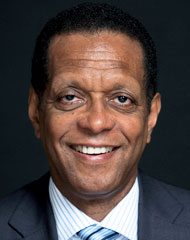
Bob Herbert-Op Ed Columnist, NYT
In any event, the G.O.P. has taken its place once again as the House majority and is vowing to do what it does best, which is make somebody miserable — in this case, President Obama. Representative Darrell Issa, the California Republican who is now chairman of the Oversight and Government Reform Committee, said recently on the Rush Limbaugh program that Mr. Obama was “one of the most corrupt presidents in modern times.” He backed off a little on Sunday, saying that what he really thinks is that Mr. Obama is presiding over “one of the most corrupt administrations.”
This is the attitude of a man who has the power of subpoena and plans to conduct hundreds of hearings into the administration’s activities.
The mantra for Mr. Issa and the rest of the newly empowered Republicans in the House, including the new Budget Committee chairman, Paul Ryan of Wisconsin, is to cut spending and shrink government. But what’s really coming are patented G.O.P. efforts to spread misery beyond Mr. Obama and the Democrats to ordinary Americans struggling in what are still very difficult times.
It was ever thus. The fundamental mission of the G.O.P. is to shovel ever more money to those who are already rich. That’s why you got all that disgracefully phony rhetoric from Republicans about attacking budget deficits and embracing austerity while at the same time they were fighting like mad people to pile up the better part of a trillion dollars in new debt by extending the Bush tax cuts.
This is a party that has mastered the art of taking from the poor and the middle class and giving to the rich. We should at least be clear about this and stop being repeatedly hoodwinked — like Charlie Brown trying to kick Lucy’s football — by G.O.P. claims of fiscal responsibility.
There’s a reason the G.O.P. reveres Ronald Reagan and it’s not because of his fiscal probity. As Garry Wills wrote in “Reagan’s America”:
“Reagan nearly tripled the deficit in his eight years, and never made a realistic proposal for cutting it. As the biographer Lou Cannon noted, it was unfair for critics to say that Reagan was trying to balance the budget on the backs of the poor, since ‘he never seriously attempted to balance the budget at all.’ ”
We’ll see and hear a lot of populist foolishness from the Republicans as 2011 and 2012 unfold, but their underlying motivation is always the same. They are about making the rich richer. Thus it was not at all surprising to read on Politico that the new head of the House Energy and Commerce Committee, Fred Upton of Michigan, had hired a former big-time lobbyist for the hospital and pharmaceuticals industries to oversee health care issues.
I remember President Bush going on television in September 2008, looking almost dazed as he said to the American people, “Our entire economy is in danger.”
Have we forgotten already who put us in such grave peril? Republicans benefit from the fact that memories are short and statutes of limitations shorter. It was the Republican leader in the House, Tom DeLay, who insisted against all reason and all the evidence of history that “nothing is more important in the face of war than cutting taxes.”
But that’s all water under the bridge. The Republicans are back in control of the House, ready to run interference for the rich as recklessly and belligerently as ever.
By: BOB HERBERT-Op-Ed Columnist, New York Times-Published January 3, 2011
John McCain & Lindsey Graham: The Mean Girls of the U.S. Senate
I have a theory about human social evolution: life doesn’t progress much after high school. This week, I can thank John McCain and Lindsey Graham for providing empirical data that supports this hypothesis.
Here’s how government should work: lawmakers ponder the great issues of the day in serious manner and then decide, according to their own beliefs and values, which policies are best for their constituents and the public. But in the past few days, we’ve seen government-by-hissy-fit, with Sens. McCain and Graham, the Batman and Robin of cranky self-proclaimed GOP mavericks, placing personal petulance ahead of the common good.
As the Senate on Saturday was in the process of repealing the “Don’t ask, don’t tell” policy that bans out-in-the-open gays and lesbians from serving in the military, McCain practically threw a tantrum on the Senate floor, decrying “this bizarro world” and denouncing senators in favor of repeal for “acting in direct repudiation of the message of the American people.” (Never mind that most polls show majority support for repealing DADT.) Looking as if steam would shoot out of his ears at any moment, McCain went on to exclaim that ending DADT would endanger “the survival of our young men and women in the military.”
Them are fighting words. But what made McCain’s over-the-top performance so bizarro itself was that only four years ago he had said that he would back repeal if military leaders endorsed it — and now the secretary of defense and the chairman of the joint chiefs of the military were supporting the change. Not only had McCain flip-flopped, he had become an angry crusader, seemingly full of rage at a policy initiative he once quasi-endorsed. How to explain this? It seemed more personal than policy — as in he really doesn’t fancy seeing a victory for President Obama, the fellow who prevented McCain from becoming BMOC.
Graham’s behavior was more outlandish. On Sunday, the South Carolina Republican said that he wouldn’t vote for the START treaty that will reduce U.S. and Russian nuclear arms because “this lame duck [congressional session] has been poisoned.” And what poisoned it? In part, Graham said, it was the passage of the “Don’t ask, don’t tell” repeal. Here was a U.S. senator saying he wouldn’t take up the critical issue of nuclear nonproliferation because he was peeved by the repeal of DADT, which sailed through on a 65-to-31 vote. Governing via tantrum?
It gets worse. The day before the Senate overturned DADT, Graham was complaining that the workload in the Senate was too much for him and he was too close to physical collapse to handle a vote on START:
It’s been a week from hell. It’s been a week where you are dealing with a lot of big issues from taxes to funding the government to special interest politics. And I’ve had some to think about START but not a lot and it’s really wearing on the body.
Poor Graham. Many Americans work more than one job just to feed their family and to keep from being tossed out of their home. Yet he was bellyaching about some end-of-the-year heavy-lifting that was occurring because the Senate, partly due to GOP obstructionism, had not finished its important business. By the way, the START treaty was signed by the United States and Russia in April; that had allowed Graham and other senators plenty of time to think about it. (Previous START pacts were ratified by the Senate after much less time for Senate consideration.) Graham was whining. Two words: man up.
And it gets worse. On Monday, the Huffington Post reported that early last week, McCain and Graham had tried to cut a deal with the White House: they offered to deliver enough GOP votes to ratify the START treaty, if Obama and the Democrats would sideline any vote on DADT. The White House said no, thanks. But this was a cynical maneuver on the senators’ part: if you don’t give us what we want (no DADT repeal), we won’t give you something you want (START ratification). Forget about the merits of the treaty. McCain and Graham, who fashion themselves serious students of national security, were engaged in playground politics concerning a nuclear arms treaty. They were willing to vote for it — only if the White House would appease them. The substance didn’t matter.
When McCain and Graham didn’t get their way, Graham groused he was too overwhelmed to deal with the treaty, and McCain tried to kill the agreement by offering an amendment that would force the United States and Russia to renegotiate the pact. The Senate rejected his amendment on Saturday. Which probably irritated the hell out of him. On Monday, Brent Scowcroft, who was national security adviser for President George H.W. Bush and who supports START ratification, accused McCain of assailing the treaty because of his anger over the repeal of DADT: “To play politics with what is in the fundamental national interest is pretty scary stuff.” I look forward to McCain yelling at Scowcroft to get off his lawn.
But McCain and Graham have not merely been grumpy old men. They have been behaving like mean girls — hatching plots, acting spoiled, wallowing in self-absorption and melodrama, and having cows when they don’t win. It’s a sorry spectacle, especially because both men in the past have tried to be reasonable adults within the Senate. Now they’re embarrassing themselves, as they flail about in a puddle of pique. The best news for them is that within days, school will be out.
By: David Corn, Washington Bureau Chief , Mother Jones Magazine; Politics Daily, December 21, 2010
PolitiFact’s Lie of the Year: ‘A government takeover of health care’
In the spring of 2009, a Republican strategist settled on a brilliant and powerful attack line for President Barack Obama’s ambitious plan to overhaul America’s health insurance system. Frank Luntz, a consultant famous for his phraseology, urged GOP leaders to call it a “government takeover.”
“Takeovers are like coups,” Luntz wrote in a 28-page memo. “They both lead to dictators and a loss of freedom.”
The line stuck. By the time the health care bill was headed toward passage in early 2010, Obama and congressional Democrats had sanded down their program, dropping the “public option” concept that was derided as too much government intrusion. The law passed in March, with new regulations, but no government-run plan.
But as Republicans smelled serious opportunity in the midterm elections, they didn’t let facts get in the way of a great punchline. And few in the press challenged their frequent assertion that under Obama, the government was going to take over the health care industry.
PolitiFact editors and reporters have chosen “government takeover of health care” as the 2010 Lie of the Year. Uttered by dozens of politicians and pundits, it played an important role in shaping public opinion about the health care plan and was a significant factor in the Democrats’ shellacking in the November elections.
Readers of PolitiFact, the St. Petersburg Times‘ independent fact-checking website, also chose it as the year’s most significant falsehood by an overwhelming margin. (Their second-place choice was Rep. Michele Bachmann’s claim that Obama was going to spend $200 million a day on a trip to India, a falsity that still sprouts.)
By selecting “government takeover’ as Lie of the Year, PolitiFact is not making a judgment on whether the health care law is good policy.
The phrase is simply not true.
Said Jonathan Oberlander, a professor of health policy at the University of North Carolina-Chapel Hill: “The label ‘government takeover” has no basis in reality, but instead reflects a political dynamic where conservatives label any increase in government authority in health care as a ‘takeover.’ ”
An inaccurate claim
“Government takeover” conjures a European approach where the government owns the hospitals and the doctors are public employees. But the law Congress passed, parts of which have already gone into effect, relies largely on the free market:
• Employers will continue to provide health insurance to the majority of Americans through private insurance companies.
• Contrary to the claim, more people will get private health coverage. The law sets up “exchanges” where private insurers will compete to provide coverage to people who don’t have it.
• The government will not seize control of hospitals or nationalize doctors.
• The law does not include the public option, a government-run insurance plan that would have competed with private insurers.
• The law gives tax credits to people who have difficulty affording insurance, so they can buy their coverage from private providers on the exchange. But here too, the approach relies on a free market with regulations, not socialized medicine.
PolitiFact reporters have studied the 906-page bill and interviewed independent health care experts. We have concluded it is inaccurate to call the plan a government takeover because it relies largely on the existing system of health coverage provided by employers.
It’s true that the law does significantly increase government regulation of health insurers. But it is, at its heart, a system that relies on private companies and the free market.
Republicans who maintain the Democratic plan is a government takeover say that characterization is justified because the plan increases federal regulation and will require Americans to buy health insurance.
But while those provisions are real, the majority of Americans will continue to get coverage from private insurers. And it will bring new business for the insurance industry: People who don”t currently have coverage will get it, for the most part, from private insurance companies.
Consider some analogies about strict government regulation. The Federal Aviation Administration imposes detailed rules on airlines. State laws require drivers to have car insurance. Regulators tell electric utilities what they can charge. Yet that heavy regulation is not described as a government takeover.
This year, PolitiFact analyzed five claims of a “government takeover of health care.” Three were rated Pants on Fire, two were rated False.
‘Can’t do it in four words’
Other news organizations have also said the claim is false.
Slate said “the proposed health care reform does not take over the system in any sense.’ In a New York Times economics blog, Princeton University professor Uwe Reinhardt, an expert in health care economics, said, “Yes, there would be a substantial government-mandated reorganization of this relatively small corner of the private health insurance market (that serves people who have been buying individual policies). But that hardly constitutes a government takeover of American health care.”
FactCheck.org, an independent fact-checking group run by the University of Pennsylvania, has debunked it several times, calling it one of the “whoppers” about health care and saying the reform plan is neither “government-run” nor a “government takeover.”
We asked incoming House Speaker John Boehner’s office why Republican leaders repeat the phrase when it has repeatedly been shown to be incorrect. Michael Steel, Boehner’s spokesman, replied, “We believe that the job-killing ObamaCare law will result in a government takeover of health care. That’s why we have pledged to repeal it, and replace it with common-sense reforms that actually lower costs.”
Analysts say health care reform is such a complicated topic that it often cannot be summarized in snappy talking points.
“If you’re going to tell the truth about something as complicated as health care and health care reform, you probably need at least four sentences,” said Maggie Mahar, author of Money-Driven Medicine: The Real Reason Health Care Costs So Much. “You can”t do it in four words.”
Mahar said the GOP simplification distorted the truth about the plan. “Doctors will not be working for the government. Hospitals will not be owned by the government,” she said. “That’s what a government takeover of health care would mean, and that’s not at all what we”re doing.”
How the line was used
If you followed the health care debate or the midterm election – even casually – it’s likely you heard “government takeover” many times.
PolitiFact sought to count how often the phrase was used in 2010 but found an accurate tally was unfeasible because it had been repeated so frequently in so many places. It was used hundreds of times during the debate over the bill and then revived during the fall campaign. A few numbers:
• The phrase appears more than 90 times on Boehner’s website, GOPLeader.gov.
• It was mentioned eight times in the 48-page Republican campaign platform “A Pledge to America” as part of their plan to “repeal and replace the government takeover of health care.”
• The Republican National Committee’s website mentions a government takeover of health care more than 200 times.
Conservative groups and tea party organizations joined the chorus. It was used by FreedomWorks, the Heritage Foundation and the Cato Institute.
The phrase proliferated in the media even after Democrats dropped the public option. In 2010 alone, “government takeover” was mentioned 28 times in the Washington Post, 77 times in Politico and 79 times on CNN. A review of TV transcripts showed “government takeover” was primarily used as a catchy sound bite, not for discussions of policy details.
In most transcripts we examined, Republican leaders used the phrase without being challenged by interviewers. For example, during Boehner’s Jan. 31 appearance on Meet the Press, Boehner said it five times. But not once was he challenged about it.
In rare cases when the point was questioned, the GOP leader would recite various regulations found in the bill and insist that they constituted a takeover. But such followups were rare.
An effective phrase
Politicians and officials in the health care industry have been warning about a “government takeover” for decades.
The phrase became widely used in the early 1990s when President Bill Clinton was trying to pass health care legislation. Then, as today, Democrats tried to debunk the popular Republican refrain.
When Obama proposed his health plan in the spring of 2009, Luntz, a Republican strategist famous for his research on effective phrases, met with focus groups to determine which messages would work best for the Republicans. He did not respond to calls and e-mails from PolitiFact asking him to discuss the phrase.
The 28-page memo he wrote after those sessions, “The Language of Healthcare 2009,” provides a rare glimpse into the art of finding words and phrases that strike a responsive chord with voters.
The memo begins with “The 10 Rules for Stopping the ‘Washington Takeover’ of Healthcare.” Rule No. 4 says people “are deathly afraid that a government takeover will lower their quality of care – so they are extremely receptive to the anti-Washington approach. It’s not an economic issue. It’s a bureaucratic issue.”
The memo is about salesmanship, not substance. It doesn’t address whether the lines are accurate. It just says they are effective and that Republicans should use them. Indeed, facing a Democratic plan that actually relied on the free market to try to bring down costs, Luntz recommended sidestepping that inconvenient fact:
“The arguments against the Democrats’ healthcare plan must center around politicians, bureaucrats and Washington … not the free market, tax incentives or competition.”
Democrats tried to combat the barrage of charges about a government takeover. The White House and House Speaker Nancy Pelosi repeatedly put out statements, but they were drowned out by a disciplined GOP that used the phrase over and over.
Democrats could never agree on their own phrases and were all over the map in their responses, said Howard Dean, former head of the Democratic National Committee.
“It was uncoordinated. Everyone had their own idea,” Dean said in an interview with PolitiFact.
“The Democrats are atrocious at messaging,” he said. “They’ve gotten worse since I left, not better. It’s just appalling. First of all, you don”t play defense when you”re doing messaging, you play offense. The Republicans have learned this well.”
Dean grudgingly admires the Republican wordsmith. “Frank Luntz has it right, he just works for the wrong side. You give very simple catch phrases that encapsulate the philosophy of the bill.”
A responsive chord
By March of this year, when Obama signed the bill into law, 53 percent of respondents in a Bloomberg poll said they agreed that “the current proposal to overhaul health care amounts to a government takeover.”
Exit polls showed the economy was the top issue for voters in the November election, but analysts said the drumbeat about the “government takeover” during the campaign helped cement the advantage for the Republicans.
Rep. Earl Blumenauer, an Oregon Democrat whose provision for Medicare end-of-life care was distorted into the charge of “death panels” (last year’s Lie of the Year), said the Republicans’ success with the phrase was a matter of repetition.
“There was a uniformity of Republican messaging that was disconnected from facts,” Blumenauer said. “The sheer discipline . . . was breathtaking.”
By: Bill Adair, Angie Drobnic Holan, PolitiFact-December 16th, 2010
Obama’s Silent Majority
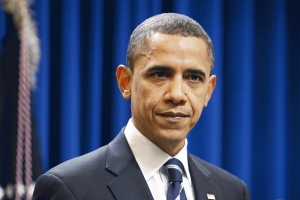
Preident Barack Obama

Preident Barack Obama
You’d never know it from cable news, but the average liberal Democrat actually likes the job the president is doing
Everyone knows that progressives have been growing increasingly disillusioned with Barack Obama since, well … even before he took office. He’s compromised too much, fought too little, sold out on one big issue after another, and fallen horribly, tragically short of the transformational goals that defined his 2008 campaign.
And now that he’s gone and cut a deal with Mitch McConnell (of all people!) to keep the Bush tax cuts in place for the wealthiest Americans for the next two years (at least), the left’s anger is louder than ever. No wonder Time’s Mark Halperin says the president’s base is “shattered.” And no wonder the media is filled with speculation about a potential challenge to the president in the 2012 Democratic primaries. Really, has there ever been a president who’s succeeded so thoroughly in taking the very people who put him in office and turning them against him?
It’s a fun topic for cable news and the blogosphere, where liberal commentators and activists routinely brand the president a Judas and threaten to support a primary challenger in 2012. And it’s a fun topic in the “mainstream media,” which takes all of this racket as confirmation that Obama is rapidly losing — or has already lost — his base.
There’s just one problem: The premise on which all of this is based is totally and completely wrong. Liberal commentators and activists and interest group leaders may be seething over Obama, but their rage has not trickled down to the Democratic voters (and, in particular, the Democratic voters who identify themselves as liberals), even though they’ve been venting their grief for the better part of two years.
As I noted earlier this week, Obama’s approval rating among Democrats has held steady at or near the 80 percent level throughout all of the turmoil of 2010. This puts him in as strong a position with his own party’s voters as any modern president has been at this same point in his presidency (with the exception of George W. Bush, whose numbers remained unusually high for well over a year after 9/11). Look closer and you’ll also find that Obama’s approval rating among Democrats is actually highest among those who call themselves liberals — an 83 percent score in the most recent round of Gallup polling, completed a few days ago. Among moderate Democrats, he clocks in at 75 percent, and among conservative Democrats, 69 percent. Again, these numbers have more or less held steady all year. To the extent Obama has a serious problem with Democrats, then, it’s with those who are on the right, not the left. This is hardly what you’d expect for a president who, according to the dominant narrative, has spent his presidency poking a stick in the left’s eye by cutting deals with conservative Democrats and Republicans.
Obama, in other words, seems to have developed his own silent majority. Rank-and-file liberal Democrats may not agree with everything he has done, but they do not share the sense of abandonment and betrayal that has defined liberal commentary throughout so much of his presidency. The party’s liberal base still very much likes him; it’s the elites who have turned on him.
The biggest reason for this disconnect, I would suggest, is that the liberal Democratic base liked Obama, both personally and ideologically, from the very beginning. Virtually from the moment he electrified the 2004 Democratic convention, liberals latched on to him as one of their own — and they haven’t (and don’t want to) let go.
This is not an unheard of phenomenon in politics, and it’s one of the reasons I’ve been so keen on comparing Obama’s political appeal to that of Ronald Reagan. Rank-and-file conservatives felt as strongly about Reagan in the 1980 campaign (and in 1976, for that matter) as liberals did about Obama in 2008. And they stayed true to him even when conservative elites concluded two years into his term that Reagan was a sellout.
Indeed, in the wake of this week’s drama over the Bush tax cuts, it’s worth recalling a similar moment in Reagan’s presidency, when congressional Democrats forced him into a tax hike in the summer of 1982. Like Obama now, Reagan had no leverage: The economy was spiraling out of control, voters were abandoning him, and Democrats were having great success (or seeming to have great success) hammering him over the exploding deficit. Thus did Reagan agree to a tax hike package that increased revenues by nearly $100 billion over the next three years — the largest tax increase in history, right-wing activists and commentators screamed. To these conservative elites, it was simply the latest act of betrayal by their one-time hero. When the GOP was drubbed in that fall’s midterms, they claimed vindication (see — not conservative enough!) and talked openly of challenging Reagan in the 1984 primaries. But rank-and-file conservative voters didn’t listen. They still liked the Gipper, still thought he was one of them, and still backed him in polling. It’s the same story today for Obama with rank-and-file liberals.
If Obama had been introduced to the Democratic base differently — that is, if they’d been suspicious and resistant to him and he’d landed in the presidency in spite of their skepticism — the objections of liberal elites might be far more damaging.
Here a parallel can be drawn to George H.W. Bush, who was introduced to the GOP’s “New Right” base in 1980 as the moderate, Gerald Ford-ish establishment Republican running against Reagan. Thus, the New Right, which essentially took control of the GOP for good with Reagan’s ’80 triumph, never really trusted Bush. Eight years of loyal service as Reagan’s V.P. was enough to win Bush the right’s benefit of the doubt in 1988, but when he “caved” as president — as he did on the S&L bailout, the 1990 tax hike, and a host of other issues — it merely brought back to the surface all of the right’s old attitudes toward him. So when the triumph of the Gulf War faded in 1991, there was room for Pat Buchanan to run to Bush’s right in the 1992 primaries. Buchanan didn’t win any states, but he did secure enough support — especially in New Hampshire — to severely embarrass the president. Obama’s history with liberals, though, is much different from Bush’s history with conservatives.
This isn’t to say that it’s impossible for Obama to lose the Democratic base; it’s just that there’s a lot more goodwill toward him among that base — and a lot more willingness to rationalize his “betrayals” as sensible pragmatism in the face of the other party’s obstructionism — than most people recognize.
At his press conference Tuesday, Obama noted that many of the “purist” liberals now blasting his tax cut deal also savaged his final healthcare compromise earlier this year, which wiped out the public option. It’s an apt comparison. And it’s worth remembering that the cries of betrayal back then did nothing to lessen rank-and-file’s assessment of Obama’s job performance — probably because the main thing they saw was that Obama, unlike every president before him, had actually gotten healthcare done.
By Steve Kornacki-Salon: Wednesday, Dec 8, 2010
Fear and Favor-A note to Tea Party activists: This is not the movie you think it is.
A note to Tea Party activists: This is not the movie you think it is. You probably imagine that you’re starring in “The Birth of a Nation,” but you’re actually just extras in a remake of “Citizen Kane.”True, there have been some changes in the plot. In the original, Kane tried to buy high political office for himself. In the new version, he just puts politicians on his payroll.
I mean that literally. As Politico recently pointed out, every major contender for the 2012 Republican presidential nomination who isn’t currently holding office and isn’t named Mitt Romney is now a paid contributor to Fox News. Now, media moguls have often promoted the careers and campaigns of politicians they believe will serve their interests. But directly cutting checks to political favorites takes it to a whole new level of blatancy.
Arguably, this shouldn’t be surprising. Modern American conservatism is, in large part, a movement shaped by billionaires and their bank accounts, and assured paychecks for the ideologically loyal are an important part of the system. Scientists willing to deny the existence of man-made climate change, economists willing to declare that tax cuts for the rich are essential to growth, strategic thinkers willing to provide rationales for wars of choice, lawyers willing to provide defenses of torture, all can count on support from a network of organizations that may seem independent on the surface but are largely financed by a handful of ultrawealthy families.
And these organizations have long provided havens for conservative political figures not currently in office. Thus when Senator Rick Santorum was defeated in 2006, he got a new job as head of the America’s Enemies program at the Ethics and Public Policy Center, a think tank that has received funding from the usual sources: the Koch brothers, the Coors family, and so on.
Now Mr. Santorum is one of those paid Fox contributors contemplating a presidential run. What’s the difference?
Well, for one thing, Fox News seems to have decided that it no longer needs to maintain even the pretense of being nonpartisan.
Nobody who was paying attention has ever doubted that Fox is, in reality, a part of the Republican political machine; but the network — with its Orwellian slogan, “fair and balanced” — has always denied the obvious. Officially, it still does. But by hiring those G.O.P. candidates, while at the same time making million-dollar contributions to the Republican Governors Association and the rabidly anti-Obama United States Chamber of Commerce, Rupert Murdoch’s News Corporation, which owns Fox, is signaling that it no longer feels the need to make any effort to keep up appearances.
Something else has changed, too: increasingly, Fox News has gone from merely supporting Republican candidates to anointing them. Christine O’Donnell, the upset winner of the G.O.P. Senate primary in Delaware, is often described as the Tea Party candidate, but given the publicity the network gave her, she could equally well be described as the Fox News candidate. Anyway, there’s not much difference: the Tea Party movement owes much of its rise to enthusiastic Fox coverage.
As the Republican political analyst David Frum put it, “Republicans originally thought that Fox worked for us, and now we are discovering we work for Fox” — literally, in the case of all those non-Mitt-Romney presidential hopefuls. It was days later, by the way, that Mr. Frum was fired by the American Enterprise Institute. Conservatives criticize Fox at their peril.
So the Ministry of Propaganda has, in effect, seized control of the Politburo. What are the implications?
Perhaps the most important thing to realize is that when billionaires put their might behind “grass roots” right-wing action, it’s not just about ideology: it’s also about business. What the Koch brothers have bought with their huge political outlays is, above all, freedom to pollute. What Mr. Murdoch is acquiring with his expanded political role is the kind of influence that lets his media empire make its own rules.
Thus in Britain, a reporter at one of Mr. Murdoch’s papers, News of the World, was caught hacking into the voice mail of prominent citizens, including members of the royal family. But Scotland Yard showed little interest in getting to the bottom of the story. Now the editor who ran the paper when the hacking was taking place is chief of communications for the Conservative government — and that government is talking about slashing the budget of the BBC, which competes with the News Corporation.
So think of those paychecks to Sarah Palin and others as smart investments. After all, if you’re a media mogul, it’s always good to have friends in high places. And the most reliable friends are the ones who know they owe it all to you.
By PAUL KRUGMAN: New York Times Op-Ed Columnist, Oct. 3, 2010
Share This Blog


 Unknown Feed
- An error has occurred; the feed is probably down. Try again later.


You must be logged in to post a comment.