“Rage Against Paul Ryan”: Perhaps He Was Moshing When He Should Have Been Listening
No musician has been more identified than Tom Morello with the uprising against the crony capitalism of Wall Street speculators and Washington pawns like Paul Ryan.
Morello, the Grammy Award—winning guitarist with Rage Against the Machine and Audioslave who has earned an international following with his musically and politically charged performances as the Nightwatchman, followed the wave of protests that swept Egypt and other Mideast countries at the start of 2011.
A Woody Guthrie-inspired advocate of mass protests, rallies, marches and in-the-streets campaigning for economic and social justice, Morello loved the reports from Cairo. And he kept up with each new report from Tahrir Square.
Then, one night, he and his wife were watching the protests, and he saw something odd. Snow.
It doesn’t snow in Cairo.
But it does in Madison, Wisconsin.
“I was watching the demonstrations in Cairo with my then-pregnant wife,” Morello says. “The report went from 100,000 people on the streets of Cairo to 100,000 people on the streets of Madison. And I remember saying, What the hell is going on? Where did this come from?”
When he heard it was a union struggle that had brought masses of Wisconsinites to the streets in winter, Morello wanted to grab his guitar and fly immediately from his home in Los Angeles to Madison.
He wasn’t at all sure his wife would approve. But, Morello recalls, she was two steps ahead of him. “She said: ‘Our sons are going to be union men. You’ve got to go.’ ”
Morello went, with a crew of fellow musicians that included The Street Dogs and legendary MC5 guitarist Wayne Kramer, to Madison and on to the Occupy Wall Street protests against corporate corruption and political abuses that have concentrated power in the hands of the new-generation robber barons who have occupied the top one percent of American business and political life.
So you can imagine Tom Morello’s response when the New York Times reported that newly minted Republican vice presidential candidate Paul Ryan “lists Rage Against the Machine, which sings about the greed of oil companies and whose Web site praises the anti-corporate Occupy Wall Street movement, among his favorite bands.”
Ryan’s a bit of a metalhead, with a taste for Led Zeppelin, Metallica and—as he told CNN—“a lot of grunge” bands that are not frequently identified with the extreme social conservatism and the free-market economic theories of Austrian economists. He a kid growing up in Janesville, Wisconsin, he listened to radio rockers like John “Sly” Sylvester, who has since become a Wisconsin talk-radio legend and one of Ryan’s edgiest critics.
Rage has for years ranked high on Ryan’s playlist. The congressman says he really likes the music—which he plays loud while working through his daily ninety-minute exercise regime—if not necessarily the seminal band’s “fight the power” lyrics.
Morello, for his part, does not really like Ryan.
“Paul Ryan,” Morello explained in a blistering statement he wrote for Rolling Stone, “is the embodiment of the machine our music rages against.”
Morello’s no Democratic apparatchik. He’s been more than willing to criticize the policies of President Obama.
But he’s raging against Ryan.
“Paul Ryan’s love of Rage Against the Machine is amusing, because he is the embodiment of the machine that our music has been raging against for two decades. Charles Manson loved the Beatles but didn’t understand them. Governor Chris Christie loves Bruce Springsteen but doesn’t understand him. And Paul Ryan is clueless about his favorite band, Rage Against the Machine.,” Morello writes. “Ryan claims that he likes Rage’s sound, but not the lyrics. Well, I don’t care for Paul Ryan’s sound or his lyrics. He can like whatever bands he wants, but his guiding vision of shifting revenue more radically to the one percent is antithetical to the message of Rage.”
The guitarist who has a long history of radical activism and radical songwriting asks: “I wonder what Ryan’s favorite Rage song is? Is it the one where we condemn the genocide of Native Americans? The one lambasting American imperialism? Our cover of “Fuck the Police”? Or is it the one where we call on the people to seize the means of production? So many excellent choices to jam out to at Young Republican meetings!”
“Don’t mistake me,” Morello continues, “I clearly see that Ryan has a whole lotta ‘rage’ in him: A rage against women, a rage against immigrants, a rage against workers, a rage against gays, a rage against the poor, a rage against the environment. Basically the only thing he’s not raging against is the privileged elite he’s groveling in front of for campaign contributions.
The Morello, who’s got Woody Guthrie’s eye for the teaching moment, observes:
You see, the super rich must rationalize having more than they could ever spend while millions of children in the U.S. go to bed hungry every night. So, when they look themselves in the mirror, they convince themselves that “Those people are undeserving. They’re…lesser.” Some of these guys on the extreme right are more cynical than Paul Ryan, but he seems to really believe in this stuff. This unbridled rage against those who have the least is a cornerstone of the Romney-Ryan ticket.
But Rage’s music affects people in different ways. Some tune out what the band stands for and concentrate on the moshing and throwing elbows in the pit. For others, Rage has changed their minds and their lives. Many activists around the world, including organizers of the global occupy movement, were radicalized by Rage Against the Machine and work tirelessly for a more humane and just planet. Perhaps Paul Ryan was moshing when he should have been listening.
Perhaps Paul Ryan should put that in his iPod and play it.
By” John Nichols, The Nation, August 17, 2012
“Mitt Digs In Deeper”: Drip-Drip-Drip On Tax Returns Raises A Lot More Questions Than It Answers
I have no idea who is advising Mitt Romney on how to handle questions about his history of paying or not paying taxes. But whoever it is should probably get fired.
Perhaps Harry Reid’s taunts about hearing from a reliable source that Romney stiffed Uncle Sam entirely over the last decade had an impact after all. Otherwise why would he go out of his way to let it be known he paid “no less” than a 13% tax rate during the years for which he is refusing to release his returns?
I mean, 13% is not a high rate for a guy with Mitt’s wealth; certainly nothing approaching the allegedly confiscatory rates the poor job-creators of America are toiling under, making them wonder each and every day if it’s time to Go Gault. And the number raises the rather obvious question: 13% of what? Total income? Adjusted Gross Income? Taxable income? Ezra Klein suggests it may be that last measurement, which may be the only one under which he can claim a double-digit tax burden.
If he intends to gut it out and never release his tax returns, he might be better off just saying “It’s none of your damn business, and if I’d done anything wrong, the IRS would have locked me in leg-irons by now.” This drip-drip-drip of undocumented assertions raises a lot more questions than it answers.
Mitt reminds me of a guy I once knew who was asked in a job interview about his religious practices, which were somewhere between non-existent and hey-I-listen-to-Christmas-music! Instead of admitting that, he kept making excuses to the interviewer (who pretty much thought everyone should be forced to go to church weekly) about his busy schedule and good intentions and so on and so forth. He didn’t get the job, but talked about the interview, and soon gained the nickname of “Digger.” Mitt’s a “digger,” too.
By: Ed Kilgore, Contributing Writer, Washington Monthly Political Animal, August 16, 2012
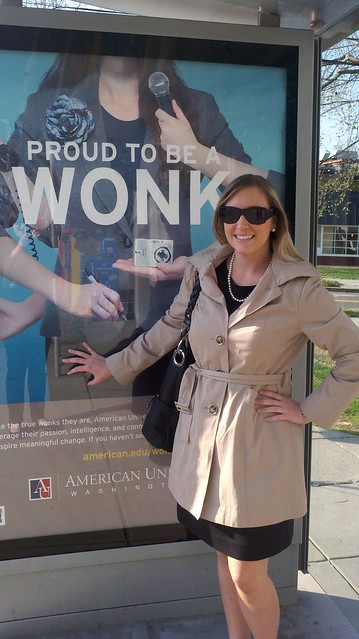
“Mitt’s Non-Power Power Point”: Romney’s Whiteboard Presentation Proves “Wonk” Is a Meaningless Word
Mitt Romney and Paul Ryan have been celebrated as a team that might not be the most charismatic, but who are details-oriented number-crunchers who care deeply about policy—i.e., wonks. The w-word is a favorite faux-self-deprecating term of Washington people who are pretty sure they’re pretty smart. With Romney’s choice of Ryan, “wonk” is everywhere.
When The Wall Street Journal editorialized in favor of Ryan, they dismissed worries that he’s “too young, too wonky, too, you know, serious.” After his pick, he was described as “Jack Kemp wonky,” “a policy wonk,” “the Republican wonk star,” “a fit 42-year-old policy wonk,” and “the best of a policy wonk.” Ryan was a perfect match with Romney because “two wonks bonded during the Wisconsin primary,” a Republican strategist told National Journal. Romney and Ryan played up this idea in their first interview as a team with CBS’s Bob Scheiffer. Romney said, “This is a man who’s also very analytical. He’s a policy guy. People know him as a policy guy. That’s one of the reasons he has such respect on both sides of the aisle. I’m a policy guy, believe it or not. I love policy.” That “believe it or not” suggests there might be some doubt. You’d be right to have it after watching his whiteboard presentation on Medicare Thursday.
Romney has a reputation for loving data, as expressed through his love of PowerPoint. The PowerPoint presentation and the whiteboard are supposed to signal smart data-driven analysis. But the whole point is to actually show the data. Romney did not do that today, as you can see in this video posted by Politico’s Alexander Burns. Romney divided up a whiteboard into two columns and two rows, showing how current seniors and the next generation of seniors would be affected under his and President Obama’s proposals. He did this because Democrats are attacking him for Ryan’s old plan to turn Medicare into a voucher program and his new plan to make the vouchers an option. Democrats have also screamed bloody murder over Romney’s attacks that Obama will cut $716 billion from Medicare, when Ryan’s plan keeps those cuts, and the cuts affect how much providers are paid, not what health services old folks receive. But Romney’s counter-counter-counter attack did not address those attacks. Instead, he reiterated his claim about the $716 billion. As for the next generation of seniors? Under Obama, Romney wrote “bankrupt.” Under Romney, Romney wrote “solvent.” Well, that explains everything.
Just because a campaign’s talking points were written on a thing used to show details doesn’t mean actual details were shown. The Romney campaign has been careful to avoid getting too deep into the details of the candidate’s economic proposals, because they want to make the election a referrendum on President Obama. But refusing to dip into the details is not the sign of a wonk, it’s the opposite. This was most apparent when Fox News’ Brit Hume pressed Ryan on when his plan would balance the budget. Ryan tried to get out of answering by saying he didn’t want to “get wonky on you” before admitting he didn’t know, because the numbers have not been crunched.
Hume: “I get that. What about balance?”
Ryan: “I don’t know exactly what the balance is. I don’t want to get wonky on you, but we haven’t run the numbers on that specific plan. The plan we offer in the House balances the budget. I’d put a contrast. President Obama, never once, ever, has offered a plan to ever balance the budget. The United States Senate, they haven’t even balanced, they haven’t passed a budget in three years.”
Hume: “I understand that. But your own budget, that you —
Ryan: “You are talking about the House budget?”
Hume: “I’m talking about the House budget. Your budget will be a political issue in this campaign.”
Ryan: “The House budget doesn’t balance until the 2030s under the current measurement of the CBO (Congressional Budget Office) baseline.”
By: Elspeth Reeve, The Atlantic, August 16, 2012
“When Fact Checking Fails”: Can Journalists Stand Up To A Candidate’s Lies?
I’ve made my case that Mitt Romney just might be the most dishonest presidential candidate in modern history, but the question is, what should we do about it? Or more specifically, what should reporters do about it? One of the worst things about “objective” he said/she said coverage is that it basically gives candidates permission to lie by removing any kind of disincentive they might feel for not telling the truth. After all, candidates are (mostly) rational actors, and if lying isn’t accompanied by any kind of punishment, they’re going to do it as long as it works.
I’m not sure that Mitt Romney’s Medicare lies are actually producing a positive effect other than tickling the Republican base deep down in the secret corner of its id, but he’s certainly sticking with it. All of which led Prospect alum Garance Franke-Ruta to suggest one possible solution:
Fact-checking was a great development in accountability journalism — but perhaps it’s time for a new approach. It’s no longer enough to outsource the fact-checking to the fact-checkers in a news environment where every story lives an independent life on the social Web and there’s no guarantee the reader of any given report will ever see a bundled version of the news or the relevant fact-checking column, which could have been published months earlier. One-off fact-checking is no match for the repeated lie.
Objective news outlets had to deal with this last cycle, too. Remember the huge controversy over how to cover the allegations that Obama was a Muslim without just publicizing the smear — or suggesting that there is anything wrong with being Muslim?
The solution now as then lies in repeated boilerplate, either inserted by editors who back-stop their writers, or by writers who save it as B-matter (background or pre-written text) so they don’t have to come up with a new way of saying something every single time they file. Basic, simple, brief factual boilerplate can save an article from becoming a crutch for one campaign or the other; can save time; and can give readers a fuller understanding of the campaigns, even if they haven’t had time to read deep dives on complex topics.
“Obama, who is a Christian” was the macro of the 2008 cycle in reporting on the “Barack Obama is a Muslim” smears. Also widely used: “the false allegation that Obama is Muslim.” Such careful writing may not have done much to disabuse nearly a fifth of Americans of the idea that Obama is a Muslim — national newspaper stories can influence elite opinion while barely making a dent on widely held views in a nation of more than 300 million — but they provided readers with an accurate sense of the facts while learning about a politically significant campaign development.
I agree with Garance up to a point. There’s nothing wrong with fact-checking as a journalistic enterprise, but if its purpose is to stop lies, it’s not working. Let me excerpt a post I wrote about this last November, where I asked whether fact-checking works:
The first is, does it change politicians’ behavior? Is a candidate who gets called out for a lie in a fact check going to stop saying it? I posed that question to Bill Adair, who runs PolitiFact, when I interviewed him for a story about this topic that never actually found its way into print (long story). Adair’s response was that changing politicians’ behavior isn’t his job; he and his organization put their best assessment of the facts on the record, and then whatever happens next is basically out of their hands.
One could design a study to determine whether lies are less likely to be repeated once the fact checkers have judged them harshly, but no one that I know of has done it. The consensus from people I’ve talked to about this seems to be that it depends on who the liar is. The narrower their constituency, the more likely they are to continue on unashamed even after being called out for lying. Michele Bachmann doesn’t really care if PolitiFact says one of her claims is bogus. Mitt Romney, on the other hand, is more concerned about his reputation and therefore more likely to stop saying something once it has been called a lie.
Ha! Well, I guess that’s in the past now. But the next question is, if journalists were actually saying, over and over whenever they reported on Romney’s welfare attack, something like, “Romney repeated his false allegation that the Obama administration has ended work requirements (in fact, the work requirements remain in place)…” would that make Mitt stop saying it? It might, and it would certainly be better than the way they’re handling it now. But the truth is that to really stop a lie in its tracks, the lie itself has to be the topic of stand-alone news stories. Once he sees headlines reading, “Romney Repeating False Accusation On Stump,” with the story full of people condemning him for it, then he’ll stop. Because at that point, he’ll begin to worry that the next round of stories will have headlines like “Romney’s Truth Troubles: Republican Nominee Can’t Seem to Stick to Facts.” Those stories won’t just be about the particular lie in question, they’ll be about Mitt’s character and what kind of pathology pushes him to keep lying. Those are the kind of stories Al Gore got in 2000 (unfairly, but that’s its own story).
Making a story out of the lie itself would require journalists to get pissed off enough to take a stand. But you know what? They should be pissed off. Romney is using them as a conduit for his deception, because he knows they don’t have the guts to say no.
By: Paul Waldman, Contributing Editor, The American Prospect, August 16, 2012
“Purpose Driven Lies”: Crocodile Tears From The Koch Brothers
They may say otherwise, but the evidence is clear: Republicans had no interest in Obama’s success.
The latest campaign from Americans for Prosperity—the Koch-funded conservative group—is a $7 million ad buy meant to highlight the disappointment of various Obama supporters. The commercial, which runs for one minute, will air on broadcast and cable in 11 battleground states: Colorado, Florida, Iowa, Minnesota, Nevada, New Mexico, North Carolina, Ohio, Pennsylvania, Virginia, and Wisconsin. CNN has a few excerpts:
“I had hoped that the new president would bring new jobs–not major layoffs, not people going through major foreclosures on their homes,” one woman says in the ad.
Another voter adds: “He said he was going to cut the deficit in his first term. I’ve seen zero interest in reducing spending. He inherited a bad situation, but he made it worse.”
Piling on, a third voter says: “I still believe in hope and change. I just don’t think Obama is the way to go for that.”
At the Washington Post, Greg Sargent calls this an “emerging GOP tactic for dealing with Obama’s personal popularity.” He paraphrases, “We didn’t want Obama to fail; we shared his high hopes for his presidency; but …”
If Republicans go this route, I hope reporters take a page from Michael Grunwald, who details GOP obstruction of the stimulus in his just-released book The New New Deal, and reveals the extent to which the GOP never intended to work with Obama, regardless of what he did. This anecdote is typical of how Republicans approached Obama from the beginning of his administration:
In early January, the House Republican leadership team held a retreat at an Annapolis inn. Pete Sessions, the new campaign chair, opened his presentation with the political equivalent of an existential question:
“If the purpose of the Majority is to Govern…What is Our Purpose?” […]
“The Purpose of the Minority is to become the Majority.”
The team’s goal would not be promoting Republican policies, or stopping Democratic policies, or even making Democratic bills less offensive to Republicans. Its goal would be taking the gavel back from Speaker Pelosi.
“That is the entire Conference’s Mission,” Sessions wrote.
Grunwald shows how Republicans developed a strategy of maximum obstruction before Obama even took office, and stuck to it throughout the first two years of his presidency. As this election unfolds, conservatives will try to mournfully attack Obama, as if they wanted him to succeed.
They’re lying.
By: Jamelle Bouie, The American Prospect, August 15, 2012
Share This Blog


 Unknown Feed
- An error has occurred; the feed is probably down. Try again later.
 mykeystrokes.com