“The Great Pretenders”: GOP Deficit Hypocrisy
Republicans love to harp on deficit reduction when a Democratic president releases a budget. But when they’re in power themselves, they couldn’t care less.
Now we are treated to the semiannual spectacle of watching Republicans pretend they care about the deficit. They will hammer at this repeatedly as discussion progresses on the president’s budget budget, which projects a deficit of more than $1 trillion for this year and $901 billion for next. Obama and the Democrats generally have a history of quaking when this deficit talk starts up. But the best thing they can do now is stick to their guns and quote Dick Cheney: “Deficits don’t matter.” Growth matters. And for growth, we need investment.
First, the Republican hypocrisy. I hope you are aware by now that they don’t actually care about deficits. They just care about money being spent on things they don’t like, which outside of overpriced ships the Navy probably doesn’t need and more reinforced steel for the border fence includes pretty much everything. If, say, instead of seeking to spend more money for transportation, Barack Obama had proposed cutting the top marginal tax rate down to 8 percent, well, that would have had a completely disastrous impact on future deficits. But you wouldn’t have seen Republicans complaining about that, because the rich deserve more of their money back.
You also didn’t see Republicans complaining about deficits when George W. Bush was running them up. Oh, a few did. But the protests were infrequent and mousy. By and large, Republicans shuffled along. It is astonishing, isn’t it, to think back on the prescription-drug benefit from 2003. An unfunded, roughly $500 billion expansion of socialized medicine (Medicare), and Tom DeLay kept the floor open for three extra hours so that the small number of Republicans who tried to take the Republican position on this could be browbeaten into voting with the White House. That episode, engineered by DeLay, was as close as we’ve come to legislative fascism in this country in a long, long time, both in the sense of the strong-arm tactics used and in the way it posited that day is night and black is white.
Of course, in 2003 the deficit was “just” $374 billion. This, remember, was only two years after Bush took office, met by a surplus of $237 billion. So he added $611 billion to the deficit in two short years, by diddling around with indefensible tax cuts for the wealthy (remember how they goosed the economy? Didn’t think so) and passing the aforementioned Medicare expansion to shore up the senior vote. Admittedly, Obama outpaced Bush. He added $1 trillion in a year. But we all know why. Well, some of us know why. The economy was going to die, and it needed money. Wall Street and the banks didn’t have it, so the government had to supply it.
The only problem with this was that it didn’t supply enough. I’ve started reading Noam Scheiber’s The Escape Arti$ts, his new book about the Obama economic team’s successes and failures. Scheiber writes that Christina Romer, the administration’s first chief economist, got all the numbers on the economy from the Fed and other reputable sources and set out to determine how much federal intervention, free of political considerations, would be appropriate to prop up the collapsing economy. The number she and her staff settled on—$1.8 trillion—was so high that she didn’t even dare mention it at meetings. Obama, of course, did less than half that, which was the maximum that was politically possible.
After the heavy artillery fire he took for that, Obama decided he had to placate the deficit hawks, at least rhetorically, and so he did that for a while. But that collapsed, partly because the Republicans wouldn’t consider tax increases as part of the mix, and partly because he and the White House eventually figured out that trying to be moderate on these issues was both bad substance and lousy politics. It’s bad substance because, as much as it infuriates some people, government spending helps keep us afloat in hard times. And cutting that spending causes harm. For example, we are down about 610,000 government employees from the day Obama took office. Most of those are at the state and local level, and while it’s hard to say how many are a result of the drastic cuts in federal aid to states, certainly many layoffs stem from budget cuts. Those cuts reduce the deficit, but they add directly to the jobless rolls. Is that what we’ve needed for these past two years? Obviously not.
And it’s bad politics because, as the White House now seems to grasp, it’s time to draw contrasts, and the public is largely on Obama’s side. People kinda-sorta say they care about the deficit, but they don’t, really, in large numbers. And to the extent that they do care, they’d rather raise taxes on the wealthy than cut programs.
When the economy gets better, the deficit will start to heal itself. If the economy is truly picking up in the way the January jobs numbers suggest—and if unemployment goes down to around 8 percent by the end of the year—we’ll be poised for a recovery that will add jobs and tax revenue. At least, that is, until the next Republican president comes along and slashes taxes on multimillionaires, blowing another huge hole in the deficit (Mitt Romney’s hole, for example, would be $600 billion in 2015 alone). If Romney is actually elected, the same Republicans who are going to spend the next few months nattering about Obama’s irresponsibility will be marveling at President Romney’s courage.
But Obama standing firm against the deficit hypocrites will render a Romney presidency even more unlikely than it already is. Republicans use deficit politics to scare Democrats, and Democrats often respond exactly as Republicans hope. It’s time they stopped being afraid.
By: Michael Tomasky, The Daily Beast, February 14, 2012
With Truants And Teabaggers In Congress, How Do We Stop The Next Shutdown Threat?
I began work as chief of staff to Vice President Al Gore on Nov. 13, 1995, one day before the first of two government shutdowns that year. I arrived to find a stack of furlough forms on my desk; I spent the day introducing myself to new colleagues . . . and laying them off. Throughout the building unease was palpable: People had bills to pay, and junior White House staffers had little cushion in their bank accounts.
Too many in government faced, and narrowly escaped, that same fate last week. The prospect of future shutdowns still looms, and the pain from a shutdown of any duration would be widespread. Effects of the 1995 shutdown included a halt in toxic cleanups at more than 600 sites; delays in deploying hundreds of new border agents and processing more than 200,000 passports; and closure of more than 300 parks, with losses to the tourism economy.
How did we get to the brink? And what lessons can we apply from the past to ensure this scenario doesn’t arise again?
There would be no political winners in a shutdown. Many Democrats recall the 1995 shutdown as a pivotal point in the Clinton presidency — the moment when his political comeback was cinched and the GOP began its slide to defeat in 1996. But the truth is more complicated. President Bill Clinton’s approval ratings fell during the shutdown and rose again only after the government reopened. The GOP’s political debacle stemmed in large part from Newt Gingrich’s comment that the shutdown was “payback” for a bad seat on Air Force One — a remark that former representative Tom DeLay later described as causing “the whole moral tone of the shutdown [to be] lost.” While Democrats emerged from this confrontation with a strong hand, there is no guarantee that a future crisis will end well. Undisciplined mistakes could foil their party as easily as the GOP.
Republicans would approach the next juncture in an even weaker position. Recent events showed that some learned from the severe political fallout from the 1995 shutdown, but others still believe the real mistake was compromising with Clinton to end the standoff. House Speaker John Boehner said last week that “there’s no daylight between the Tea Party and me,” just a day after Tea Party protesters chanted “shut it down, shut it down” near his office. And this deal didn’t make it less likely the speaker will reach one next time.
President Obama won this round, navigating difficult currents to take command of the situation and protecting nascent economic growth.
But this economy will continue to be far more fragile than the one Clinton managed during the confrontation in 1995, so simply putting this crisis behind us isn’t enough.
To lessen the odds of a repeat when the current year’s appropriations inevitably remain unfinished this fall, the president should do four things.
First, he has to continue to drive home — as he has in recent days — what the American people have at stake in a government shutdown. Obama must seize the moment, as Clinton did in 1996, to prepare for future confrontations; highlighting the Tea Party’s lusty cheering for a shutdown underscores both an ideological zeal that is indifferent to a shutdown’s real-world effects, and a contrast that can shape the governing and political dynamic for the final two years of his term.
Second, he should use this reprieve to direct his advisers to reexamine the basic legal framework for any future government shutdown: a January 1981 memo from outgoing Attorney General Ben Civiletti, and a subsequent directive from the Office of Management and Budget, that created the dichotomy that sends most federal workers home in a shutdown, except those whose activities are deemed “essential.” The attorney general could preemptively broaden the list of activities considered essential, substantially lessening the stakes in future standoffs. A 1990 amendment to the relevant federal statute narrowed room for creative interpretation of the law, but in the 1995 shutdown Clinton authorized 50,000 workers to return to their jobs, saying that their processing of Social Security and veterans benefit applications was “essential” to avoid a soaring backlog. A similar expansion of the definition of “essential activities” would minimize the portion of the government that could be held hostage in a future stalemate.
Third, he can explore the path employed to end the U.S. government shutdown in January 1996 — which ended not with a year-long agreement to fund the government (that didn’t come until April) but with a continuing resolution that included language categorizing all activities by federal workers as essential, allowing them to return to work even when funding expired. Putting such a measure in place now, in advance of the next crisis period, would ensure that workers remain on the job even when future battles over policy riders and spending levels rage.
Finally, the president should use the momentum gained in this confrontation to press for enactment of an automatic continuing resolution that would keep the entire federal government functioning at the prior year’s spending level when no other funding plan is in place. Congress has passed the regular appropriations bills on time in fewer than 10 of the past 60 years; the odds of success this year are remote. Tolerating unmanaged uncertainty about government funding is like walking around Washington in April without an umbrella: You will get wet; the only question is when.
President Obama averted disaster this time. But steps must be explored to prevent such near misses in the future.
By: Ron Klain, Opinion Writer, The Washington Post, April 8, 2011
Different Congress, Same Crap: Get Ready for a GOP Rerun
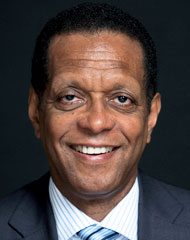
Bob Herbert-Op Ed Columnist, NYT
In any event, the G.O.P. has taken its place once again as the House majority and is vowing to do what it does best, which is make somebody miserable — in this case, President Obama. Representative Darrell Issa, the California Republican who is now chairman of the Oversight and Government Reform Committee, said recently on the Rush Limbaugh program that Mr. Obama was “one of the most corrupt presidents in modern times.” He backed off a little on Sunday, saying that what he really thinks is that Mr. Obama is presiding over “one of the most corrupt administrations.”
This is the attitude of a man who has the power of subpoena and plans to conduct hundreds of hearings into the administration’s activities.
The mantra for Mr. Issa and the rest of the newly empowered Republicans in the House, including the new Budget Committee chairman, Paul Ryan of Wisconsin, is to cut spending and shrink government. But what’s really coming are patented G.O.P. efforts to spread misery beyond Mr. Obama and the Democrats to ordinary Americans struggling in what are still very difficult times.
It was ever thus. The fundamental mission of the G.O.P. is to shovel ever more money to those who are already rich. That’s why you got all that disgracefully phony rhetoric from Republicans about attacking budget deficits and embracing austerity while at the same time they were fighting like mad people to pile up the better part of a trillion dollars in new debt by extending the Bush tax cuts.
This is a party that has mastered the art of taking from the poor and the middle class and giving to the rich. We should at least be clear about this and stop being repeatedly hoodwinked — like Charlie Brown trying to kick Lucy’s football — by G.O.P. claims of fiscal responsibility.
There’s a reason the G.O.P. reveres Ronald Reagan and it’s not because of his fiscal probity. As Garry Wills wrote in “Reagan’s America”:
“Reagan nearly tripled the deficit in his eight years, and never made a realistic proposal for cutting it. As the biographer Lou Cannon noted, it was unfair for critics to say that Reagan was trying to balance the budget on the backs of the poor, since ‘he never seriously attempted to balance the budget at all.’ ”
We’ll see and hear a lot of populist foolishness from the Republicans as 2011 and 2012 unfold, but their underlying motivation is always the same. They are about making the rich richer. Thus it was not at all surprising to read on Politico that the new head of the House Energy and Commerce Committee, Fred Upton of Michigan, had hired a former big-time lobbyist for the hospital and pharmaceuticals industries to oversee health care issues.
I remember President Bush going on television in September 2008, looking almost dazed as he said to the American people, “Our entire economy is in danger.”
Have we forgotten already who put us in such grave peril? Republicans benefit from the fact that memories are short and statutes of limitations shorter. It was the Republican leader in the House, Tom DeLay, who insisted against all reason and all the evidence of history that “nothing is more important in the face of war than cutting taxes.”
But that’s all water under the bridge. The Republicans are back in control of the House, ready to run interference for the rich as recklessly and belligerently as ever.
By: BOB HERBERT-Op-Ed Columnist, New York Times-Published January 3, 2011
Share This Blog


 Unknown Feed
- An error has occurred; the feed is probably down. Try again later.
 mykeystrokes.com
You must be logged in to post a comment.