Closing Arguments-The Day of Reckoning
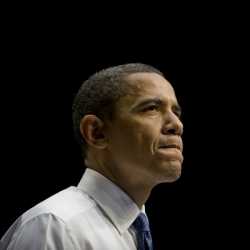
President Obama making the final arguments for Health Reform
My Saturday began on the West lawn of Capitol Hill, where conservative activists were mounting one final, desperate effort to block health care reform. They came by the thousands, carrying flags and pushing strollers, in a demonstration of genuine grassroots fervor. They chanted “Kill the Bill,” over and over again, in a vaguely menacing tone that, perhaps, foretold a bit of ugliness to come.
But the most remarkable thing about the demonstration was how little it had to do with health care. The signs said “Stop socialism,” “A government of laws, not men,” “Respect our constitution–preserve our republic.” Nobody talked about death panels. Instead, one speaker–a Chicago radio host, I believe–attacked the First Lady’s obesity initiative. “Michelle, keep your hands off my kids’ lunchbox!” Yet another protest sign seemed to capture the mood perfectly: “This isn’t about health care. This is about control.”
A few hours later, inside the Capitol complex, President Obama urged House Democrats to do precisely what the protesters feared: Pass health care reform. It was not the first time he’d given such a speech. Just before the House voted on its initial reform bill in November, he’d come to Capitol Hill. And, broadly speaking, his intent had been the same: To embolden the Democrats by making them enthusiastic about the cause, demonstrating his own commitment to it, and making clear the political virtues of success.
But, like the protesters, this time Obama seemed to dwell less on health care and more on the significance of the moment. He invoked Lincoln, and the importance of fighting for principle. And then he invoked the legacy of the New Deal and Great Society, reminding members that their purpose in office was not to win elections–it was to make life better for their constituents. His closing argument was not about policy or politics. It was about posterity. And it was good.
For the last week or so, ever since it’s become apparent a climactic vote on health care was approaching, I’ve also been thinking about closing arguments. For most of the past year–and, really, it’s been far more than a year–the argument has been most practical. What would the bill do? What wouldn’t it do? And it’s easy enough to make the case for reform on those grounds.
As readers of this space know, I like to think of reform as achieving three broad goals: Making sure anybody can get an affordable insurance policy, shoring up everybody’s coverage so that it provides real economic security, and transforming medical care in order to make it both more effective and less expensive. Those arguments got a lot stronger this week, when the Congressional Budget Office determined that the final reform package–including both the Senate’s health care bill and the proposed amendments to it–would provide coverage to 32 million additional people, strengthen the baseline for coverage, and reduce the federal deficit over time.
But there’s another argument for health care reform, one that is at once more subtle and more sweeping. The disturbing part of our health care system is the financial and physical suffering it causes. But the unjust part of our health care system is the way it distributes that suffering. There are things all of us can do to stay healthy–we can eat right, we can exercise, we can avoid excessive risks. But even when we do the right things, we remain vulnerable.
You can have the perfect diet, jog three miles every day, and wake up one morning to discover you have cancer. So now you face mortal peril. And if, on top of everything else, you can’t pay your medical bills, you face financial ruin, as well.
Chance, of course, is part of life. Americans, in particular, seem to accept that. But every now and then, we have decided that need for such expansion–that there was, even now, the kind of common vulnerability to chance that required the sorts of initiatives we had enacted in the past. It happened with the New Deal, when we created the modern welfare state, and then again with the Great Society, when we expanded it.
The signature programs of these eras, Social Security and Medicare, work because they address a vulnerability we all share. Everybody is at risk of getting old; and everybody is at risk of misfortune, physical and financial, when that happens. To protect against that misfortune–to insure against that misfortune–all of us contribute. We all give, in the form of financial contributions; and we all get, in the form of financial security. Together, quite literally, we are stronger than when we are apart.
The conservatives protesting on the Capitol lawn Saturday see things differently. Health care reform isn’t about contributing money for the sake of their own security; it’s about having their money taken for the sake of somebody else’s security. When they hear stories of people left bankrupt or sick because of uninsurance, they are more likely to see a lack of personal responsibility and virtue than a lack of good fortune. As my colleague Jonathan Chait has observed, theirs is an extreme version of a view common (although surely not universal) on the right: That individuals can fend for themselves, as long as they are responsible and as long as the government gets out of the way.
There’s obviously a balance to be struck between these two world views. But, broadly speaking, conservative ideas about responsibility and vulnerability have dominated political discussion for most of the last four decades. That will change on Sunday, if health care reform passes. The bill before Congress may be flawed. And the process that produced it may be severely flawed. But it is, nevertheless, an expression of the idea that we–as as society–are not prepared to let people continue to suffer such dire consequences just because they’re unlucky.
A few hours after Obama was speaking, the Capitol had nearly cleared out. Leadership staff were meeting in House Speaker Pelosi’s office while a few stray congressmen were giving floor speeches to a nearly empty chamber. By and large, though, members had scattered–a tell-tale sign that Pelosi was confident. If she’d still needed to do serious arm-twisting, she’d have held a series of votes to keep members on the Hill.
I walked the length of the building and then out to the east lawn where the conservative protesters, who spent the day visiting (and, on a few occasions, haranguing) House Democrats, had reconvened. The crowd was more subdued now. It was smaller, too–hundreds instead of thousands. The setting sun behind the capitol dome cast a long shadow over them, as night approached. But a new dawn would come soon enough. And with it, perhaps, a new era.
By: Jonathan Cohn-Senior Editor-The New Republic-March 21, 2010
For the GOP, Fear is Always the Answer in Thwarting Health Care Reform
With the Congressional Budget Office’s report out, detailing that health care reform will trim the deficit over the next 10 years by $138 billion, Republican resistance to this bill has gone from annoying to downright illogical, and I mean birther-style illogical. It is no longer about cost or policy issues, it is simply an obvious attempt to kill this presidency and damn the citizens in the process.
The Congressional Budget Office’s methods or neutrality on issues have never been questioned until now. It seems that now because reality doesn’t coincide with the Republicans desire to block health care reform, the CBO is playing a shell game.
“Only in Washington, D.C. can people announce they are spending a trillion dollars and reducing the national deficit,” said Mike Pence., R-Indiana, on The Dylan Ratigan show. “The American people know this is growing the government. It’s only going to increase the deficit, increase the debt…This massive government plan, with the CBO report withstanding, is not fooling anyone.”
Then, on the conservative Web site, Redstate.com: “The natural reaction by most Americans to the unofficial and preliminary claim that the $2.5 trillion ObamaCare bill is revenue-neutral is, well, B.S. (There is a card game with the same name.) The second natural reaction is the realization that ObamaCare must cut the guts out of Medicare and raise taxes through the roof.”
What is even more strange and really disappointing is that this “non-logic” appears to be working. Even with the CBO report, Americans are evenly divided on health care reform. Even with the proof that it will reduce, not add to the deficit, recent polling indicates only a slight improvement for passage of the bill. Why? Fear.
These are uncertain times. Jobs are disappearing. The banks are doubling down on fees while demanding more in terms of credit, down payments and collateral. The American Automotive industry is effectively existing only through taxpayer subsidies. Even Toyota—who not so long ago was considered “the standard” in the industry—appears to maybe knowingly have put its customers at risk to save a few bucks.
FOX News has been on a mission for the last year to discredit and derail this administration by misinforming and enraging its viewers. America is at a tipping point. Within the next decade, Caucasians will no longer be the majority. In the next decade, Blacks will no longer be the largest minority in this country. Within the next decade, America loses its prominence as the wealthiest nation to China. In the last 10 years, we have endured terrorism. We are currently engaged in two wars and still in the middle of the most debilitating recession in more than 20 years. These are uncertain times and Americans are fearful.
Past efforts to overhaul the nation’s health care system looked different. The process to reaching the legislation was different. The folks supporting it were different. The folks opposing reform were different. The one common denominator in this effort and every past effort: Fear.
“It’s really a case of deja vu,” Jonathan Oberlander, a political scientist at the University of North Carolina at Chapel Hill said. “You hear in today’s debate echoes of the past that extend all the way to the early part of the 20th century. And I think the reason that people use fear again and again is that it’s effective. It’s worked to stop health reform in the past. And so they’re going to try and use it in the present.”
The very first time in 1915 when America attempted to change its health care system, it was defeated by tying those attempts to our greatest international treat of the time: The German Empire.
Fear was used again in the next effort of the late 1940s. This time the American Medical Association told citizens if the nation adopted national health insurance, the Red army would be marching up and down the streets. Then even later when former President Bill Clinton tried passing health care reform, the health care industry was firmly in place. Their lobbying influence in Congress was apparent and their might in terms of influencing public opinion by flooding the television with misleading advertisements was informidable. Remember Harry and Louise?
This time around it’s the same. They’ve gone back to the well of fear with the death panels claim, fear of big government, fear of socialism, fear of rationing. Then they targeted the politicians themselves, with the fear of losing their next election. Today, the GOP upped the ante of this fear campaign, by telling Democrats that if they vote for reform, and lose their next election, he will personally block them from future governmental appointments. Once again, the obstacle to change is fear.
Fear is something you cannot reason with. You cannot refute. You cannot combat. It’s this primal instinct that, once aroused, simply takes over your brain, rendering you incapable of either reason or logic. A lot of people are pointing to the points where health care reform falls short. Others are pointing to how the president has come up short in terms of selling reform to America and Congress.
Me? I’m just wondering if this will finally be the year that fear no longer works.
By: Devona Walker- TheLoop21.com’s senior financial/political reporter and blogger-March 19, 2010
Americans Can Speak for Themselves on Federal Health-Care Reform
Have you voted on any of the Democratic health-care-reform plans? Me neither.
No such vote was ever taken. But with coordination that the Rockettes would envy, Republicans insist that “the American people have spoken” on the matter, and they want the proposals killed.
House Republican Leader John Boehner: “The American people have spoken, loudly and clearly: They do not want Washington Democrats’ government takeover of health care.”
Senate Republican Leader Mitch McConnell: “The American people do not want this bill to pass.”
Republican National Committee Chairman Michael Steele: “The American people have spoken. The White House hasn’t heard their message.”
Quite a coincidence, these guys saying the same thing on the same day. No matter. What they’re saying is nonsense.
All politicians try, but Republicans excel, at creating a fantasy public always marching behind their baton. What the GOP leaders lack in veracity, they make up for in confidence.
They base their public mind-reading on polls showing displeasure with the Democrats’ reform legislation (or what the public thinks is in it). They ignore polls that don’t.
Some Americans are unhappy with the lack of a public option in the Senate bill, others with its inclusion in the House version. Many already have their government-guaranteed health coverage and don’t want to share.
Almost everyone detests the “Cornhusker kickback,” a special deal arranged by Nebraska’s Democratic senator, Ben Nelson.
And how does one count strong opinions by those who don’t have the foggiest idea what’s really in the bills — but who are taking their talking orders from partisan yakkers?
It’s worth noting that President Obama’s proposal, based on the Senate bill, does not include a public option. It eliminates the Cornhusker kickback. It eases up on the controversial tax on so-called Cadillac health plans. And in an appeal to older voters, it does away with the Medicare drug benefit’s “doughnut hole.”
The public option has been the most demagogued item in the entire health-care debate — not because it’s a bad, or even radical, idea but because the deep-pocketed insurance industry opposes it.
Republicans have been portraying it, a government-run insurance plan to compete with private options, as a socialist Satan intent on destroying the American Way. The public option has been burning at their stake for so long, it’s a wonder there’s even an ash left of support for it. But a recent Newsweek poll has 50 percent of Americans still favoring a public option and 48 percent opposed. That the administration refused to strenuously defend a cost-saving device that always enjoyed widespread backing is something I’ll never understand (and may never forgive). Nonetheless, health-care reform must pass, with or without the public option.
The last time “the American people” came close to officially speaking on this subject was in November 2008, when they elected a Democratic president and expanded the Democratic majorities in both the House and the Senate.
It’s mind-boggling that any sophisticated analyst would attribute Republican Scott Brown’s surprise victory in the Massachusetts special senatorial election to public rejection of government-guaranteed health care. As a Massachusetts state senator, Brown voted for a universal coverage plan that’s a lot less conservative than what’s on deck in Washington.
The Newsweek poll also asked for feelings about the job that Obama and Republicans and Democrats in Congress were doing on health care reform. Some 52 percent disapproved of Obama’s performance, 61 percent disapproved of the congressional Democrats’, and 63 percent disapproved of the congressional Republicans’.
No one is walking away from this with an Academy Award, but what’s coming out of Republican leaders’ mouths clearly isn’t what’s coming out of the American people’s. The people will speak definitively on Nov. 2.
By: Froma Harrop-Syndicated Columnist-The Seattle Times-Feb 25, 2010 3:54 pm
Share This Blog


 Unknown Feed
- An error has occurred; the feed is probably down. Try again later.
 mykeystrokes.com
You must be logged in to post a comment.