The Ideological Fantasies Of Inequality Deniers
Rising income inequality, like climate change, is an ideologically inconvenient issue for conservatives. They would prefer not to discuss it altogether. If forced to discuss it, they will generally either deny its existence or simply carry on as if it doesn’t exist.
The underlying facts, like the facts of climate change, are stark. Over the last few decades, income growth for most Americans has slowed to a crawl, while income for the very rich has exploded. That’s a reversal of the three decades following World War II, when all income groups got richer, with the poor and middle class rising at a faster rate than the rich. Crucially, the Congressional Budget Office’s new analysis shows that changes in government policy over this period have made inequality worse. (In CBO-speak: “The equalizing effect of transfers and taxes on household income was smaller in 2007 than it had been in 1979.”)
We’re not having a debate about how to reverse or even stop the growth of inequality. Nobody has a real plan to do that. The Democratic plan is to slightly arrest the growth of inequality by hiking taxes on the rich a few percentage points, so as to minimize the need to cut the social safety net. The Republican plan is to slash taxes for the rich and programs for the poor, thereby massively increasing inequality.
That is a hard position to defend in the context of exploding inequality, and conservatives would rather not defend it. Instead the right’s response has been to persistently deny or ignore the facts. Rick Perry, pressed by a reporter to explain why he was proposing a tax plan that would widen income inequality further, replied, “I don’t care about that.” The Wall Street Journal editorial page today dismissed the Tax Policy Center, whose calculations persistently show the ways in which various Republican tax proposals would widen inequality, as “liberal.” It didn’t even pretend to dispute the substance of the calculations. Eric Cantor gave a speech about income inequality centering on stories about how his grandmother worked hard and pulled herself up by the bootstraps in the old days. It was a nice speech if you like stories about plucky grandmothers. It failed to grasp the central dilemma, which is that it was a lot easier for poor people to move up sixty years ago, when tax rates on the rich happened to be far higher, than it is today.
Ah, but here comes Paul Ryan, fawned over in the media as “the GOP‘s strongest policy wonk,” to take the issue head on in a speech before the Heritage Foundation, hyped in advance by conservatives as a definitive statement of right-wing thought. Ryan’s speech is the portrait of a mind in the grips of an ideological fantasy, refusing to confront inconvenient facts.
Ryan establishes the tone of his argument by accusing President Obama of attacking “straw men,” and then proceeds to build a series of his own straw men, beginning in the very same sentence:
[Obama] is going from town to town, impugning the motives of Republicans, setting up straw men and scapegoats, and engaging in intellectually lazy arguments, as he tries to build support for punitive tax hikes on job creators. … he has launched his second campaign by preying on the emotions of fear, envy, and resentment. …Also according to the President’s logic, spending restraint is incompatible with a strong, well-functioning safety net.
Right, so Obama favors “punitive” tax rates, he promotes resentment of the rich, and he opposes any spending restraint whatsoever. Ryan produces no evidence to support these statements, because none exists. In reality, Obama never attacks the rich, he constantly insists that he respects economic success and merely wants to lessen the burden of budget cuts on the most vulnerable, and he agreed to reduce spending by more than a trillion dollars just this last summer. Ryan repeatedly accuses Obama of favoring “equality of outcome,” which is absurd.
Here is the closest Ryan comes to addressing Obama’s actual argument, which is that requiring somewhat higher taxes on the rich will reduce the scale of cuts required on programs for the poor and middle class:
The President has been talking a lot about math lately. He’s been saying that “If we’re not willing to ask those who’ve done extraordinarily well to help America close the deficit… the math says… we’ve got to put the entire burden on the middle class and the poor.”This is really a stunning assertion from the President. When you look at the actual math, you quickly realize that the way out of this mess is to combine economic growth with reasonable, responsible spending restraint. Yet neither of these things factors into the President’s zero-sum logic.
It’s “stunning,” says Ryan, because it relies on zero-sum math. More tax hikes on the rich means less spending cuts. Ryan finds this stunning because he believes in supply-side fairy tales in which cutting taxes for the rich will produce enormous growth. Never mind that the last two presidential administrations have disproved the supply-side theory about as conclusively as a real world experiment can do. (Bill Clinton raised taxes on the rich, conservatives predicted disaster, and instead we experienced a long boom; George W. Bush lowered taxes on the rich, conservatives predicted a huge boom, and instead we got an weak recovery with no income growth for anybody save the very rich.)
Ryan likewise assails Obama’s calculations by trying to persuade his audience that there’s really not much money to be raised by taxing the rich:
And his math is no better on the tax side. Let’s say we took all the income from those the President calls “rich” — those making $250,000 or more. A 100 percent tax rate on their total annual income would only fund the government for six months. Just six months!
Uh, has anybody told Ryan that there are only twelve months in a year? Because six of twelve months is not a trivial percentage. Another way to put this is that the richest 1 percent of taxpayers earn 17 percent of the nation’s income, and federal spending accounts for a little over 20 percent. Obviously, taking all the income from the top 1 percent would be a terrible idea, but taxing a decent chunk of their income clearly can get you pretty far.
Ryan likewise insists that the debate over rich investors who pay lower tax rates than the middle class is contrived:
Obama quotes Reagan as saying that bus drivers shouldn’t pay a higher effective tax rate than millionaires. Well, that’s a no-brainer. Nobody disagrees with that.
Nobody disagrees with that? How about Paul Ryan? His tax plan from 2010 would exempt all investment income from taxes, meaning that large segments of the rich would pay nothing at all. The average federal tax rate on households earning more than a million dollars a year, under Ryan’s plan, would be well under 13 percent, compared with a 19.5 percent average federal tax rate for households earning $50,000 to $75,000 a year.
Ryan concludes his speech with a ringing endorsement of equality of opportunity, which he contrasts with the stagnant, European-style class-bound society that Democrats crave to replicate:
Telling Americans they are stuck in their current station in life, that they are victims of circumstances beyond their control, and that government’s role is to help them cope with it — well, that’s not who we are. That’s not what we do.Our Founding Fathers rejected this mentality. In societies marked by class structure, an elite class made up of rich and powerful patrons supplies the needs of a large client underclass that toils, but cannot own. The unfairness of closed societies is the kindling for class warfare, where the interests of “capital” and “labor” are perpetually in conflict. What one class wins, the other loses.
The legacy of this tradition can still be seen in Europe today: Top-heavy welfare states have replaced the traditional aristocracies, and masses of the long-term unemployed are locked into the new lower class. …Whether we are a nation that still believes in equality of opportunity, or whether we are moving away from that, and towards an insistence on equality of outcome.
It’s a compelling vision. Unfortunately, Ryan’s understanding of reality is a complete inversion of actual reality. “Equality of opportunity” bears no relation to the reality of the American economy or any economy. Parents can benefit their children by giving them money, better schools, better home environments, tutoring, camp, and other advantages. Opportunity is overwhelmingly unequal. One result is that rich kids perform far better in school than poor kids. But that is not the only result. Poor kids who beat the odds and get high test scores are less likely to complete college than rich kids with middling or even low test scores. Poor kids who beat those odds and graduate from college are still less likely to grow up to be rich than rich kids who did not graduate from college. I’m not sure if there’s a perfect solution, but pretty sure Ryan’s plan to slash Pell Grants is not going to help.
Ryan’s decision to cite Europe as a place where people can’t move beyond their birth station is especially unfortunate. In fact, social mobility in Europe is higher than in the United States, a fact even Rick Santorum has acknowledged.
The way to understand Ryan is that he’s deeply influenced by the theories of Ayn Rand, who believed that the root of all evil lay in attempts to alter the wealth distribution created by the free marketplace. Rand may have been a deranged cult leader, but she did live at a time when the fear of the poor devouring the rich had an actual real-world basis. She escaped communist Russia for the United States, Franklin Roosevelt — while not a reprise of the communists, as she mistakenly believed — really did denounce the rich and impose confiscatory tax rates. The world of Rand’s imagination bore a slight resemblance to the world she inhabited, but it bears no resemblance to the contemporary United States.
Ryan cannot process the realities of this world because they are so at odds with the imagined world of his ideology. After his speech, he was asked about the CBO’s report on inequality, and he brushed it off, falling back on Rand-esque lingo the virtuous rich (“takers”) and parasitic poor (“makers”):
“Let’s not focus on redistribution, let’s focus on upward mobility,” he said. “If these studies are used as justification for erecting new and more barriers for making it harder for people to rise, all that will do is reduce our prosperity in this country.”“We’re coming close to a tipping point in America where we might have a net majority of takers versus makers in society and that could become very dangerous if it sets in as a permanent condition.
Don’t confuse Paul Ryan with the facts. If studies run up against Ryan’s ideology, then the studies must give way.
By: Jonathan Chait, Daily Intel, New York Magazine, October 26, 2011
Different Congress, Same Crap: Get Ready for a GOP Rerun
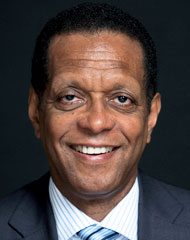
Bob Herbert-Op Ed Columnist, NYT
In any event, the G.O.P. has taken its place once again as the House majority and is vowing to do what it does best, which is make somebody miserable — in this case, President Obama. Representative Darrell Issa, the California Republican who is now chairman of the Oversight and Government Reform Committee, said recently on the Rush Limbaugh program that Mr. Obama was “one of the most corrupt presidents in modern times.” He backed off a little on Sunday, saying that what he really thinks is that Mr. Obama is presiding over “one of the most corrupt administrations.”
This is the attitude of a man who has the power of subpoena and plans to conduct hundreds of hearings into the administration’s activities.
The mantra for Mr. Issa and the rest of the newly empowered Republicans in the House, including the new Budget Committee chairman, Paul Ryan of Wisconsin, is to cut spending and shrink government. But what’s really coming are patented G.O.P. efforts to spread misery beyond Mr. Obama and the Democrats to ordinary Americans struggling in what are still very difficult times.
It was ever thus. The fundamental mission of the G.O.P. is to shovel ever more money to those who are already rich. That’s why you got all that disgracefully phony rhetoric from Republicans about attacking budget deficits and embracing austerity while at the same time they were fighting like mad people to pile up the better part of a trillion dollars in new debt by extending the Bush tax cuts.
This is a party that has mastered the art of taking from the poor and the middle class and giving to the rich. We should at least be clear about this and stop being repeatedly hoodwinked — like Charlie Brown trying to kick Lucy’s football — by G.O.P. claims of fiscal responsibility.
There’s a reason the G.O.P. reveres Ronald Reagan and it’s not because of his fiscal probity. As Garry Wills wrote in “Reagan’s America”:
“Reagan nearly tripled the deficit in his eight years, and never made a realistic proposal for cutting it. As the biographer Lou Cannon noted, it was unfair for critics to say that Reagan was trying to balance the budget on the backs of the poor, since ‘he never seriously attempted to balance the budget at all.’ ”
We’ll see and hear a lot of populist foolishness from the Republicans as 2011 and 2012 unfold, but their underlying motivation is always the same. They are about making the rich richer. Thus it was not at all surprising to read on Politico that the new head of the House Energy and Commerce Committee, Fred Upton of Michigan, had hired a former big-time lobbyist for the hospital and pharmaceuticals industries to oversee health care issues.
I remember President Bush going on television in September 2008, looking almost dazed as he said to the American people, “Our entire economy is in danger.”
Have we forgotten already who put us in such grave peril? Republicans benefit from the fact that memories are short and statutes of limitations shorter. It was the Republican leader in the House, Tom DeLay, who insisted against all reason and all the evidence of history that “nothing is more important in the face of war than cutting taxes.”
But that’s all water under the bridge. The Republicans are back in control of the House, ready to run interference for the rich as recklessly and belligerently as ever.
By: BOB HERBERT-Op-Ed Columnist, New York Times-Published January 3, 2011
Health Care and Freedom

Rep Marsha Blackburn, (R-TN) argues that health reform will make Americans "less free".
“Today is the death of freedom as a cause for celebration,” Rep. Marsha Blackburn just said as she opened the House Republicans’ argument against the health-care bill. Her stem-winder was quick and clean. This bill, she argued, will make Americas less free.
There is a tendency to think this sort of inane hyperbole an innovation of our polarized age. But it isn’t. When Medicare was being considered, the American Medical Association hired Ronald Reagan to record a record housewives could play for their friends. It was called Operation: Coffee Cup, and you can read the text here.
Reagan was a more graceful speaker than Blackburn, but his point was much the same. Kill the bill. “If you don’t do this and if I don’t do it,” he said, “one of these days you and I are going to spend our sunset years telling our children and our children’s children, what it once was like in America when men were free.”
Well, the bill passed. And moments ago, Rep. Paul Ryan was on the floor of the House, bellowing against Democrats who would dare propose “across-the-board cuts to Medicare.” This is breathless opportunism from Ryan — he has proposed far deeper across-the-board cuts to Medicare, and is making arguments against the Democrats’ bill that would be far more potent and accurate if aimed at his own — but leave that aside for a moment. The GOP’s embrace of the program that Ronald Reagan fought, and that Newt Gingrich sought to let “whither on the vine,” is based on the lived experience seniors have had with the bill: It has made them more, rather than less, free.
Blackburn’s introduction aside, people do not “celebrate” the freedom to not be able to afford lifesaving medical care. They don’t want the freedom to weigh whether to pay rent or take their feverish child to the emergency room. They don’t like the freedom to lose their job and then be told by insurers that they’re ineligible for coverage because they were born with a heart arrhythmia.
When faced with the passage of programs that would deliver people from these awful circumstances, the Republicans adopt a very narrow and cruel definition of the word “freedom.” But when faced with the existence of programs like Medicare, and the recognition that their constituents depend on those programs to live lives free of unnecessary fear and illness, they abandon their earlier beliefs, forget their dire warnings and, when convenient, defend these government protections aggressively. There’s nothing much to be done about that. It is, after all, a free country. But Americans should feel free to ignore these discredited hysterics.
By: Ezra Klein-Washington Post | March 21, 2010; 3:02 PM ET
Share This Blog


 Unknown Feed
- An error has occurred; the feed is probably down. Try again later.
 mykeystrokes.com
You must be logged in to post a comment.