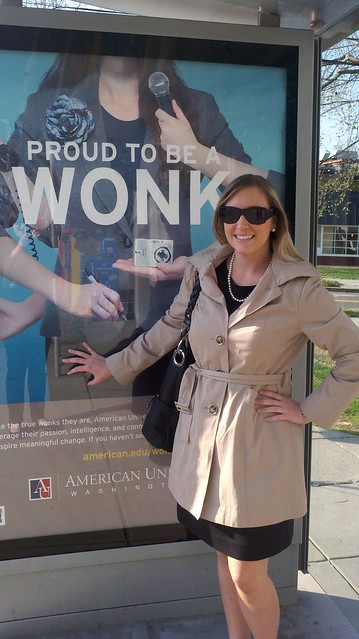
“Mitt’s Non-Power Power Point”: Romney’s Whiteboard Presentation Proves “Wonk” Is a Meaningless Word
Mitt Romney and Paul Ryan have been celebrated as a team that might not be the most charismatic, but who are details-oriented number-crunchers who care deeply about policy—i.e., wonks. The w-word is a favorite faux-self-deprecating term of Washington people who are pretty sure they’re pretty smart. With Romney’s choice of Ryan, “wonk” is everywhere.
When The Wall Street Journal editorialized in favor of Ryan, they dismissed worries that he’s “too young, too wonky, too, you know, serious.” After his pick, he was described as “Jack Kemp wonky,” “a policy wonk,” “the Republican wonk star,” “a fit 42-year-old policy wonk,” and “the best of a policy wonk.” Ryan was a perfect match with Romney because “two wonks bonded during the Wisconsin primary,” a Republican strategist told National Journal. Romney and Ryan played up this idea in their first interview as a team with CBS’s Bob Scheiffer. Romney said, “This is a man who’s also very analytical. He’s a policy guy. People know him as a policy guy. That’s one of the reasons he has such respect on both sides of the aisle. I’m a policy guy, believe it or not. I love policy.” That “believe it or not” suggests there might be some doubt. You’d be right to have it after watching his whiteboard presentation on Medicare Thursday.
Romney has a reputation for loving data, as expressed through his love of PowerPoint. The PowerPoint presentation and the whiteboard are supposed to signal smart data-driven analysis. But the whole point is to actually show the data. Romney did not do that today, as you can see in this video posted by Politico’s Alexander Burns. Romney divided up a whiteboard into two columns and two rows, showing how current seniors and the next generation of seniors would be affected under his and President Obama’s proposals. He did this because Democrats are attacking him for Ryan’s old plan to turn Medicare into a voucher program and his new plan to make the vouchers an option. Democrats have also screamed bloody murder over Romney’s attacks that Obama will cut $716 billion from Medicare, when Ryan’s plan keeps those cuts, and the cuts affect how much providers are paid, not what health services old folks receive. But Romney’s counter-counter-counter attack did not address those attacks. Instead, he reiterated his claim about the $716 billion. As for the next generation of seniors? Under Obama, Romney wrote “bankrupt.” Under Romney, Romney wrote “solvent.” Well, that explains everything.
Just because a campaign’s talking points were written on a thing used to show details doesn’t mean actual details were shown. The Romney campaign has been careful to avoid getting too deep into the details of the candidate’s economic proposals, because they want to make the election a referrendum on President Obama. But refusing to dip into the details is not the sign of a wonk, it’s the opposite. This was most apparent when Fox News’ Brit Hume pressed Ryan on when his plan would balance the budget. Ryan tried to get out of answering by saying he didn’t want to “get wonky on you” before admitting he didn’t know, because the numbers have not been crunched.
Hume: “I get that. What about balance?”
Ryan: “I don’t know exactly what the balance is. I don’t want to get wonky on you, but we haven’t run the numbers on that specific plan. The plan we offer in the House balances the budget. I’d put a contrast. President Obama, never once, ever, has offered a plan to ever balance the budget. The United States Senate, they haven’t even balanced, they haven’t passed a budget in three years.”
Hume: “I understand that. But your own budget, that you —
Ryan: “You are talking about the House budget?”
Hume: “I’m talking about the House budget. Your budget will be a political issue in this campaign.”
Ryan: “The House budget doesn’t balance until the 2030s under the current measurement of the CBO (Congressional Budget Office) baseline.”
By: Elspeth Reeve, The Atlantic, August 16, 2012
“When Fact Checking Fails”: Can Journalists Stand Up To A Candidate’s Lies?
I’ve made my case that Mitt Romney just might be the most dishonest presidential candidate in modern history, but the question is, what should we do about it? Or more specifically, what should reporters do about it? One of the worst things about “objective” he said/she said coverage is that it basically gives candidates permission to lie by removing any kind of disincentive they might feel for not telling the truth. After all, candidates are (mostly) rational actors, and if lying isn’t accompanied by any kind of punishment, they’re going to do it as long as it works.
I’m not sure that Mitt Romney’s Medicare lies are actually producing a positive effect other than tickling the Republican base deep down in the secret corner of its id, but he’s certainly sticking with it. All of which led Prospect alum Garance Franke-Ruta to suggest one possible solution:
Fact-checking was a great development in accountability journalism — but perhaps it’s time for a new approach. It’s no longer enough to outsource the fact-checking to the fact-checkers in a news environment where every story lives an independent life on the social Web and there’s no guarantee the reader of any given report will ever see a bundled version of the news or the relevant fact-checking column, which could have been published months earlier. One-off fact-checking is no match for the repeated lie.
Objective news outlets had to deal with this last cycle, too. Remember the huge controversy over how to cover the allegations that Obama was a Muslim without just publicizing the smear — or suggesting that there is anything wrong with being Muslim?
The solution now as then lies in repeated boilerplate, either inserted by editors who back-stop their writers, or by writers who save it as B-matter (background or pre-written text) so they don’t have to come up with a new way of saying something every single time they file. Basic, simple, brief factual boilerplate can save an article from becoming a crutch for one campaign or the other; can save time; and can give readers a fuller understanding of the campaigns, even if they haven’t had time to read deep dives on complex topics.
“Obama, who is a Christian” was the macro of the 2008 cycle in reporting on the “Barack Obama is a Muslim” smears. Also widely used: “the false allegation that Obama is Muslim.” Such careful writing may not have done much to disabuse nearly a fifth of Americans of the idea that Obama is a Muslim — national newspaper stories can influence elite opinion while barely making a dent on widely held views in a nation of more than 300 million — but they provided readers with an accurate sense of the facts while learning about a politically significant campaign development.
I agree with Garance up to a point. There’s nothing wrong with fact-checking as a journalistic enterprise, but if its purpose is to stop lies, it’s not working. Let me excerpt a post I wrote about this last November, where I asked whether fact-checking works:
The first is, does it change politicians’ behavior? Is a candidate who gets called out for a lie in a fact check going to stop saying it? I posed that question to Bill Adair, who runs PolitiFact, when I interviewed him for a story about this topic that never actually found its way into print (long story). Adair’s response was that changing politicians’ behavior isn’t his job; he and his organization put their best assessment of the facts on the record, and then whatever happens next is basically out of their hands.
One could design a study to determine whether lies are less likely to be repeated once the fact checkers have judged them harshly, but no one that I know of has done it. The consensus from people I’ve talked to about this seems to be that it depends on who the liar is. The narrower their constituency, the more likely they are to continue on unashamed even after being called out for lying. Michele Bachmann doesn’t really care if PolitiFact says one of her claims is bogus. Mitt Romney, on the other hand, is more concerned about his reputation and therefore more likely to stop saying something once it has been called a lie.
Ha! Well, I guess that’s in the past now. But the next question is, if journalists were actually saying, over and over whenever they reported on Romney’s welfare attack, something like, “Romney repeated his false allegation that the Obama administration has ended work requirements (in fact, the work requirements remain in place)…” would that make Mitt stop saying it? It might, and it would certainly be better than the way they’re handling it now. But the truth is that to really stop a lie in its tracks, the lie itself has to be the topic of stand-alone news stories. Once he sees headlines reading, “Romney Repeating False Accusation On Stump,” with the story full of people condemning him for it, then he’ll stop. Because at that point, he’ll begin to worry that the next round of stories will have headlines like “Romney’s Truth Troubles: Republican Nominee Can’t Seem to Stick to Facts.” Those stories won’t just be about the particular lie in question, they’ll be about Mitt’s character and what kind of pathology pushes him to keep lying. Those are the kind of stories Al Gore got in 2000 (unfairly, but that’s its own story).
Making a story out of the lie itself would require journalists to get pissed off enough to take a stand. But you know what? They should be pissed off. Romney is using them as a conduit for his deception, because he knows they don’t have the guts to say no.
By: Paul Waldman, Contributing Editor, The American Prospect, August 16, 2012
“Selfishness As Virtue”: The Narcissistic Politics Of Paul Ryan And The Servicing Of The Super-Rich Generation Of Termites
Often labeled a “reformer” for his determination to privatize Medicare and Social Security, Paul Ryan on closer inspection appears to be simply another Republican politician – like his new patron Mitt Romney – whose first priority is his own self-interest.
Both the ideology and the legislation he champions prove that he is utterly sincere in his admiration of Ayn Rand, the kooky libertarian author who elaborated her philosophy in a book candidly titled The Virtue of Selfishness. (The flavor of this 1964 essay collection can be gleaned from its original title, The Fascist New Frontier. Its first draft included a Rand screed that compared President John F. Kennedy with Nazi dictator Adolf Hitler.)
Ryan is a millionaire – one of the most affluent members of Congress – chiefly owing to a series of inheritances from his own family and the family of his wife, an Oklahoma heiress. And like Romney, he would certainly benefit from the tax proposals in the “Ryan budget,” which provides even greater benefits for wealthy families like his own than the Bush budgets that he supported during the past decade. The Romney-Ryan ticket’s chief policy preoccupation, in fact, is cutting their own taxes yet again while gutting government functions that serve the middle class (while raising taxes on them).
But the self-serving short-sightedness epitomized by Ryan’s ideas extends well beyond cutting taxes for himself and people like him. Consider his voting record on energy and environmental issues, where he has been a faithful servant of Big Oil and “skeptic” of climate change caused by carbon emissions.
That record happens to coincide perfectly with the interests of his wife Janna and her father, a lawyer representing oil and gas interests. Ryan and his wife have already inherited millions of dollars from a trust established by her family; and they own shares in several companies leasing property in Oklahoma and Texas to energy firms that benefit from taxpayer subsidies protected in Ryan’s budget. Although Ryan occasionally complains about “corporate welfare,” he and Romney both oppose any reduction in the multi-billion-dollar tax breaks enjoyed by the oil and gas industry.
As for Ryan’s own inherited wealth, it is money that mostly came from the huge construction company established by his great-grandfather in the 19th century. Ryan Incorporated’s success grew from the construction of railroads, then highways, airports, bridges and other basic public infrastructure – in short, from government contracts. (Its website proudly outlines the company history and notes that today “the Company performs residential, commercial, industrial and power site work, landfill construction and capping and full-service golf course building/remodeling for both public and private customers.”
But while Ryan benefited personally from more than a century of construction that helped to create American society and a prosperous middle class, his budget serves only the super-rich generation of termites who would allow U.S. infrastructure to crumble, rather than provide sufficient resources to maintain and modernize it. Should the Ryan budget ever become law, very little or no federal money will remain available in future decades for such basic purposes of government. That is fine with him, evidently because Ryan’s own fortunes are no longer tied to the family construction business. (His cousins who still run the company would be wise to vote for anyone but him.)
Then there is Ryan’s longtime obsession with abolishing Social Security as a public insurance system, which first drew attention to him during the Bush administration in 2005. The Bush White House suffered political disaster by pursuing a privatization plan as he urged them to do. Strangely, while Ryan is decades away from retirement age, he has already collected Social Security in the form of survivor benefits. For two years he received a check every month, following the tragic early death of his father when the future Congressman was only 16 years old.
Thanks to Social Security, Ryan was able to save money for college – a story similar to that of Senator Al Franken’s wife Franni, who lost her father at an early age and attended college thanks to federal survivor benefits. But while Franni Franken’s experience ensured that she and her husband became staunch defenders of Social Security, Ryan is eager to deprive future orphans of the guaranteed support that he received.
If selfishness is truly a virtue, then Ryan is without peer. His ideas comprise a taxonomy of narcissistic public policy – from taxes to climate change, infrastructure, and social insurance — that would surely gratify his idol.
By: Joe Conason, The National Memo, August 15, 2012
“Ann Romney’s Inconvenient Facts”: Other Than tax Returns, “There’s Nothing We’re Hiding”
As a rule, family members of candidates shouldn’t be considered political players, but once those family members become campaign surrogates and enter the political sphere making partisan arguments, there’s nothing inappropriate about scrutinizing their comments.
Take Ann Romney’s latest defense of her husband’s secrecy, for example.
Ann Romney sat down with NBC’s Natalie Morales and when the subject turned to the still-hidden tax returns, the Republican became quite agitated. Romney insisted that her husband’s campaign has done “what’s legally required of us,” which is true, but fails to meet accepted norms, standards, and expectations.
She added, “There’s going to be no more tax releases given.” I assume that means outside of the 2011 returns Mitt Romney has promised to release, but has not yet disclosed, though Ann Romney didn’t elaborate.
She went on to say, “There’s nothing we’re hiding.” Except the tax returns, the tax rates paid, and the explanation for the Swiss bank account, the shell corporation in Bermuda, and the cash in the Cayman Islands. Other than hiding all of that, they’re not hiding anything.
And why will the Romneys refuse all additional calls for disclosure, even from Republicans? According to Ann Romney, it’s because Democrats might use the materials to make Mitt Romney look bad.
I continue to marvel at this deeply odd argument. As Dahlia Lithwick and Raymond Vasvari recently explained, “[Romney] isn’t actually claiming that his opponents will lie. He’s claiming he’s entitled to hide the truth because it could be used against him…. These are tax returns. Factual documents. No different than, say, a birth certificate. But the GOP’s argument that inconvenient facts can be withheld from public scrutiny simply because they can be used for mean purposes is a radical idea in a democracy.”
And yet, this radical idea is now the Romneys’ only talking point on the issue.
By: Steve Benen, The Maddow Blog, August 15, 2012
“Unconnected To A Concern With The Truth”: Mitt Romney’s Implausible Bid For The High Road
Politics is tough, and most politicians—including President Obama—are willing to bend the truth to win an election. But there’s a difference between the small distortions of all campaigns, and the brazen dishonesty we’re seeing from Romney. In a 48-hour period, Mitt Romney has doubled-down on the false charge that Obama has ended work requirements for welfare, lied about the Affordable Care Act’s Medicare cost savings, and kicked up a storm over comments made by Vice President Joe Biden. That last one is noteworthy for the sheer chutzpah of Romney’s complaint.
During an event in Danville, Virginia (pronounced Dan-vul) with African-American supporters of the president, Biden deployed somewhat unfortunate language in attacking Romney’s promised repeal of financial reform:
“Romney wants to let the — he said the first 100 days — he’s gonna let the big banks once again write their own rules. Unchain Wall Street,” Biden said at an event in Danville, Va. “They gonna put y’all back in chains.”
“Unchain” was a reference to Paul Ryan’s promise to “unshackle” the economy by repealing financial regulations and health care reform. And while Biden’s message is clear, it’s probably wise to avoid an allusion to slavery when talking to an audience of black people. Even still, it’s not a huge deal.
Wrong.
Team Romney wasted no time in jumping on the vice president’s rhetoric. “Well, there’s going to be folks across the country that will try and take that as some kind of code word that is going to suggest that the Republicans are trying to be racial in their programs,” said former New Hampshire governor John Sununu. Yesterday evening, while campaigning in Ohio, Romney referenced Biden’s remarks, attacking the Obama campaign for its “divisive” campaign:
“This is what an angry and desperate presidency looks like. President Obama knows better, promised better, and America deserves better,” Romney told a roaring crowd of about 5,000 supporters in Chillicothe. “His campaign strategy is to smash America apart and then try to cobble together 51 percent of the pieces. If an American president wins that way, we all lose.”
Romney added, “Mr. President, take your campaign of division and anger and hate back to Chicago and let us get about rebuilding and reuniting America.”
It’s hard to take this seriously. As I said earlier, Romney began this week with two huge whoppers. In an ad called “Long History,” Romney repeats the charge that Obama has ended welfare’s work requirements, “On July 12th, Obama quietly ended work requirements for welfare. You wouldn’t have to work, and wouldn’t have to train for a job.” Romney used this line last week, and was promptly denounced for his mendacity, and not just from the usual collection of fact-checkers; both Ron Haskins (who built welfare reform) and Bill Clinton (who signed it) weighed in to dispute Romney’s claim, which Clinton called “not true.”
The most disgraceful thing about Romney’s welfare attack—which he continues to use—is that it’s an obvious ploy to associate Obama with “handouts.” Welfare is one of the most racialized issues in American politics, and Romney’s attacks are a clear callback to the “welfare queens” and “young bucks” that punctuated Ronald Reagan’s rhetoric. It’s only a little more subtle than Newt Gingrich’s declaration that Obama is a “food stamp” president, and serves a similar purpose: to erode Obama’s standing among white voters who reflexively oppose anything that might hand benefits to the “undeserving.”
The same idea (and goal) underlies Romney’s attacks on the Medicare savings in the Affordable Care Act—“The money you paid for guaranteed health care is now going to a massive government program, that’s not for you.” With the backdrop of a white senior, the message of this ad is plain to see: Obama is giving your tax dollars to minorities.
(Since this is bound to inspire protest from readers, I will point you in the direction of research detailing the tight connection between racial attitudes and support for government programs.)
This is why it’s hard to stomach Romney’s complaints about “anger” and “divisiveness”; they come less than two days after he has renewed his attempt to split white voters from Obama with tired tropes about the undeserving poor. And when you look at the whole of his general-election campaign—which includes regular attacks on Obama’s fictional “apology tour,” and routine lies about his job-creation record—there’s no way in which Romney is in a position to take the high road.
Philosopher Harry Frankfurt famously defined “bullshit” as a statement made without regard to its truth value. Whether it’s true or false is irrelevant—the point is to persuade. “[B]ullshitters seek to convey a certain impression of themselves without being concerned about whether anything at all is true.”
If this doesn’t describe Mitt Romney, I’m not sure what does.
By: Jamelle Bouie, The American Prospect, August 15, 2012
Share This Blog


 Unknown Feed
- An error has occurred; the feed is probably down. Try again later.
 mykeystrokes.com