“Getting Mad For All The Wrong Reasons”: Madness Is Simply The Status Quo For Republicans
Nearly a week later, the Affordable Care Act’s opponents are still furious that the employer-mandate provision that conservatives opposed won’t be implemented on schedule. But there’s a reason that sentence might seem unusual to you — if Republicans don’t like the employer mandate, why are they outraged that the mandate won’t exist until 2015 at the earliest?
The answer is simple, but unsatisfying: Republicans are mad for all the wrong reasons. Brian Beutler had a good piece on this the other day, noting that Obamacare’s detractors are, ironically, disappointed that “a problematic provision won’t be taking effect right away.” Republicans don’t want a health care system that works effectively; they want a system that doesn’t work effectively so they can complain about it. The White House’s decision last week satisfies GOP policy goals, such as they are, but interferes with the GOP’s rhetorical goals, which the right obviously sees as more important.
[I]t doesn’t take much reading between the lines to recognize what’s really going on. Republicans are still committed to the far-fetched objective of repealing Obamacare, and as such have effectively vowed not to work with the administration to fix any of its dysfunctional provisions. To the contrary, the GOP is committed to creating implementation problems where they can, and to making sure existing problems are never fixed, to make the whole program a liability for Democrats.
By delaying the employer mandate, the Obama administration unilaterally sidestepped the GOP’s strategy. And Republicans aren’t happy about it.
Keep in mind, Republican policymakers could, right now, sit down with Democrats to explore scrapping the employer mandate and replacing it with some other policy alternative. But that would require governing, and post-policy nihilists that dominate Republican politics in 2013 aren’t even open to that possibility.
We’re left with a dynamic that the political establishment still finds difficult to fully grasp: GOP officials could make the federal health care system better and more to their liking, but they see no value in that. They’d rather sabotage it, regardless of the real-world consequences. They could help get rid of a mandate they oppose, but they’d rather keep the policy they hate in the hopes it won’t work, people will feel adverse consequences, and there will be new fodder for 30-second attack ads a year from now.
Some people pursue public service to build things, and some pursue public service because they just want to watch the things burn.
This dovetails nicely with news that Republican leaders have urged the NFL, MLB, NBA, NHL, PGA, and NASCAR not to partner with Washington on informing the public about health care benefits Americans are legally entitled to. Kevin Drum had a terrific rant on this.
But not. Conservatives remain so spittle-flecked angry about [Obamacare] that they can’t even abide the thought of a sports league helping to run a public education campaign that reduces confusion about who’s entitled to what. Even now, they desperately want it to fail. And they’re going to do everything they can to help it fail, even if that means screwing over their own constituents. It’s a temper tantrum possibly unequalled in American political history.
And it’s revolting.
I’ve made a conscious effort to read conservative commentary on this, trying to understand their rationale for such callousness and recklessness. Their argument, in effect, seems to be this: Republicans hate the law, so of course they want it to fail and will continue to do whatever they can to ensure their preferred outcome. If there are elements of Obamacare that need fixing, why should the GOP agree to help clean up the mess? Families may suffer if the system collapses, but it’ll clear the way, eventually, for a superior Republican reform plan.
I don’t doubt that the right finds this line of thought coherent and persuasive, but their sincerity doesn’t make it any less ridiculous. First, there is no precedent for elected federal American officials acting to deliberately sabotage federal law, hurting millions of people on purpose out of partisan spite. That’s just madness, but it’s currently the status quo.
Second, if GOP policymakers were even remotely serious about governing, they could — get this — achieve policy goals they like. This employer mandate is a terrific example of the sort of provision Democrats would gladly trade away, if only they had someone to trade with. Republicans could, in other words, score policy victories if they just try.
People forget this, but shortly before Obamacare became law, several GOP leaders said they agreed with “80 percent” of the Democratic plan — and that was before the public option was scuttled, which means in the end, Republicans agreed with more than 80 percent of the law. GOP officials could move it even closer to their preferred vision if they’d only take public policy seriously for a short while.
As for someday replacing the Affordable Care Act with a far-right, Republican-friendly alternative, we’ve been waiting for years for a half-way-credible GOP plan, and there’s a good reason one has never materialized: they really don’t give a darn. They saw the old, dysfunctional mess — the one the public demanded be reformed; the one that cost too much and covered too few — and said it was good enough to leave in place indefinitely.
The most generous thing I can say about their approach is that it’s fundamentally unserious about helping anyone. The least generous thing I can say is probably inappropriate for a family-friendly blog.
By: Steve Benen, The Maddow Blog, July 8, 2013
“The GOP Has It Backwards”: Republicans Want To Tax Students And Not Polluters
A basic economic principle is government ought to tax what we want to discourage, and not tax what we want to encourage.
For example, if we want less carbon dioxide in the atmosphere, we should tax carbon polluters. On the other hand, if we want more students from lower-income families to be able to afford college, we shouldn’t put a tax on student loans.
Sounds pretty simple, doesn’t it? Unfortunately, congressional Republicans are intent on doing exactly the opposite.
Earlier this year the Republican-led House passed a bill pegging student-loan interest rates to the yield on the 10-year Treasury note, plus 2.5 percentage points. “I have very little tolerance for people who tell me that they graduate with $200,000 of debt or even $80,000 of debt because there’s no reason for that,” Rep. Virginia Foxx (R-NC), the co-sponsor of the GOP bill, said.
Republicans estimate this will bring in around $3.7 billion of extra revenue, which will help pay down the federal debt.
In other words, it’s a tax — and one that hits lower-income students and their families. Which is why several leading Democrats, including Senate Majority Whip Dick Durbin, oppose it. “Let’s make sure we don’t charge so much in interest that the students are actually paying a tax to reduce the deficit,” he argues.
(Republicans claim the President’s plan is almost the same as their own. Not true. Obama’s plan would lead to lower rates, limit repayments to 10 percent of a borrower’s discretionary income, and fix the rate for the life of the loan.)
Meanwhile, a growing number of Republicans have signed a pledge – sponsored by the multi-billionaire Koch brothers — to oppose any climate-change legislation that might raise government revenues by taxing polluters.
Officially known as the “No Climate Tax Pledge,” its signers promise to “oppose any legislation relating to climate change that includes a net increase in government revenue.”
By now 411 current office holders nationwide have signed on, including the entire GOP House leadership, a third of the members of the House as a whole, and a quarter of U.S. senators.
The New Yorker’s Jane Mayer reports that two successive efforts to control greenhouse-gas emissions by implementing cap-and-trade energy bills have died in the Senate, the latter specifically targeted by A.F.P.’s pledge
Why are Republicans willing to impose a tax on students and not on polluters? Don’t look for high principle.
Big private banks stand to make a bundle on student loans if rates on government loans are raised. They have thrown their money at both parties but been particularly generous to the GOP. A 2012 report by the nonpartisan Public Campaign shows that since 2000, the student loan industry has spent more than $50 million on lobbying.
Meanwhile, the Koch brothers – whose companies are among America’s 20 worst air-polluters –have long been intent on blocking a carbon tax or a cap-and-trade system. And they, too, have been donating generously to Republicans to do their bidding.
We should be taxing polluters and not taxing students. The GOP has it backwards because its patrons want it that way.
By: Robert Reich, Robert Reich Blog, July 6, 2013
“Listening To The Radicals”: The GOP’s Future, Move Right And Move White
It’s an eternal verity of American politics: the Republicans are the party of big business. Democrats since Franklin Roosevelt have sneered it as a putdown, to which many Republicans respond with no shame, yes, we are, the business of America is business. And business, in Washington, means chiefly the United States Chamber of Commerce and the National Association of Manufacturers, the two beefiest business lobbies in the city. But funny thing—the chamber and NAM support the Senate immigration bill that the House Republicans are going to kill. In addition, some prominent evangelical groups are pro-reform, too. Which makes me wonder: if the Republicans are no longer listening to these people, then to whom precisely are they listening, and what does that tell us about what kind of party this is becoming?
The chamber, NAM, and the evangelical groups have been in on the immigration discussions from the start. A great deal of the hard work here was done by congressional negotiators in conjunction with the chamber and the AFL-CIO, working through different categories of workers (high-skill, low-skill, guest) and arriving at language and numbers that suited all the interests at the table. Each of these groups has done the kind of outreach to its members that is vital in the case of big and controversial legislation like this. The Evangelical Immigration Table, a project of World Relief (which is an arm of the National Association of Evangelicals), persuaded pastors across the country to support reform.
There was a time in this country when the linked arms of those three groups would unquestionably have been joined by most Republicans on Capitol Hill. But that was long ago. Now the GOP is a different animal altogether.
And so the Chamber of Commerce—the Chamber of Commerce!—is a bunch of sell-outs. This isn’t the first time, by the way, that the chamber and the GOP have been at odds. The chamber has long supported substantial public spending on infrastructure. You might have thought that the fact that the chamber was for it would bring Republicans along. But these Republicans don’t listen to the chamber.
Instead, they are listening to the Tea Party. Back in 2010, the press tried to tell you that Tea Party people just cared about economics, but that’s dead wrong. As Theda Skocpol and Vanessa Williamson showed in their book The Tea Party and the Remaking of Republican Conservatism, immigration is a huge issue to Tea Partiers, and along precisely the immigrants-are-freeloaders lines you’d expect. Remember when Mitt Romney’s attack on Rick Perry over immigration worked so well? This is why.
And more disturbingly they’re listening to the likes of Peter Brimelow and Steve Sailer, two crackpot haters of nonwhite immigrants who’ve been at it for a couple of decades now. Now I can’t say for sure of course how many Republicans are reading their unhinged website, where one contributor recently dismissed the Evangelical Immigration Table as “Soros-funded,” an imprecation that in right-wing circles is about as ominous as you get and is meant to be read as “can’t be trusted.” But I can say this: the defeat in the House of immigration reform, on the explicit political grounds that “we” (the GOP) don’t “need” Latinos and can win in the future by just riling up the white vote—which is in fact the argument now—represents a mainstreaming of Brimelow and Sailer that would have been totally unimaginable a decade ago.
Business groups, like everyone I talk to who is pro-reform, hold out hope. But it’s a shaky kind of hope, as evidenced by one conversation I had yesterday with a source close to business groups. This person thought the odds of success in the House were “about 30 to 70.” Later in the conversation, he termed himself “optimistic.” If that counts as optimism, that tells us something. The key thing, this person said of the House Republicans, is “just getting them in the room” with senators in a conference committee.
He did correctly identify the hard part. But getting to the conference stage means that the House has to have passed its own bill, and one containing a path to citizenship that isn’t strewn with poison pills that make it impossible for the other side to support. And that’s the huge if.
What we are watching here is absolutely historic. The process by which the GOP has gone from “we must get right with Latinos” to “who needs ’em” has been … well, not quite astonishing. Depressingly unsurprising, actually. But amazing all the same. If immigration is killed for the reasons stated, then the Republican Party has consciously made the decision to become a quasi-nationalist party. They’ll probably never sink to the level of a Le Pen or a Haider (I added that “probably” upon re-reading; you never quite know with these people). But they will have killed immigration reform twice in six years, opposing not just the usual suspects like La Raza but America’s top corporate interest groups. And they will have staked out their bet for their future: move right and move white. And this will be the year it all took hold.
By: Michael Tomasky, The Daily Beast, July 3, 2013
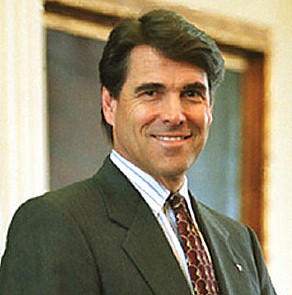
“To Dude Or Not To Dude?”: Rick Perry Wants YOU To Want Him To Run For President
In San Antonio on Monday, Texas Gov. Rick Perry will share his “exciting future plans.” Not to be confused with his past plans, I guess, or his not-so-hot ones. Unfortunately, I’m pretty sure these don’t involve accepting the $90 billion or so in federal money to expand Medicaid that would insure a million more Texans in a state that’s first in job creation but second in the number of children without health insurance.
When I asked a few Texans what they figured their governor would announce, though, I did get some exciting replies: Secede from the union? Change the part in his hair? Break in some new boots? And those were the Republicans, who have nothing but praise for their longest-serving governor — just as long as they’re speaking for attribution.
Perry did succeed in turning his state’s governorship from one of the weakest in the country to one of the strongest by applying a strict personal loyalty test to those he appointed to every seat on every board.
As a result, he’s always been more feared than loved. But after his bellyflop of a presidential run, some of his power to intimidate seems to have worn off. Texas House Speaker Joe Straus — a Republican, of course — publicly criticized Perry’s remarks about Wendy Davis, the state senator who successfully filibustered an anti-abortion bill, as damaging to their party.
I think Perry was actually trying to pay Davis a compliment. ““Who are we to say,” he asked, “that children born in the worst of circumstances can’t lead successful lives? Even the woman who filibustered the Senate the other day was born into difficult circumstances. She’s the daughter of as single woman, she was a teenage mother herself. She managed to eventually graduate from Harvard Law School and serve in the Texas Senate. It’s just unfortunate that she hasn’t learned from her own example that every life must be given a chance to realize its full potential, and that every life matters.” Which I took to mean that had her single mom chosen not to have her, the world would have been deprived of her intelligence and fortitude.
I’m not surprised, however, that Texas Republicans are telling pollsters they don’t want Perry to run for president again in ’16: Just 18 percent of Republican primary voters want him to go for it, while 69 percent say they hope he doesn’t.
Even among Texans, he’s the sixth-choice Republican presidential candidate right now, after Ted Cruz, Jeb Bush, Rand Paul, Chris Christie and Paul Ryan. And though his job approval rating in the state has improved substantially lately, more still disapprove than give him a thumbs up, and 60 percent of respondents in a recent PPP poll said they do not think he should run for a fourth term as governor, either, compared to the 30 percent who say he should.
That doesn’t mean Texas is likely to turn blue any time soon, however, because it’s still an awfully conservative state — and one that’s gotten more so in recent years, with Obama taking 44 percent of the vote in ’08 and 41 percent in ’12.
Longtime Democratic consultant Marc Campos, of Houston, who calls Perry “Governor Dude,” is less sure than some others in the state about how the governor will come down on the question of “to dude or not to dude” for a fourth term. “Oops means oops,” Campos jokes, referring not only to Perry’s inability to remember the name of the third federal agency he’d vowed to cut, but also to Perry’s presidential chances if he does run again in ’16.
Yet Campos assesses his own party’s chances of taking the governorship next year no less realistically, quoting Rocco Lampone’s line in “The Godfather Part II” that shooting Hyman Roth would be “difficult, not impossible. It would have to be a hardly-any-room-for-error type of campaign,” he says, and darn well funded.
As the Dallas Morning News’s Wayne Slater points out, Davis has doubled her name ID lately, yet is still unlikely to prevail over Perry, who won by 13 points in ’10 as the least popular Republican on the ballot. Though 38 percent of Texans are Latino, turnout continues to be a problem, with Hispanics accounting for more than a third of the population, yet only about a fifth of the vote. And the recent Supreme Court decision undermining the Voting Rights Act clears the way for a Texas voter ID law that Democrats fear will further suppress turnout.
Rep. Joaquin Castro, whose twin, Julian Castro, the mayor of San Antonio, would have the best chance of besting Perry if he does run again, according to a recent poll, told me that “realistically, our window” for turning Texas blue “is eight to 12 years.”
Perry might actually speed that process along if he does decide to run for re-election, and the state’s Republican attorney general, Greg Abbott, opposes him in a primary. If that happens, Castro says, it will be expensive, brutal, and “a replay of what happened to the once-dominant Democratic Party” in Texas in the ’80s, with more infighting than punches thrown at the other party.
No one can say that Perry suffers from a lack of confidence, though, and it wouldn’t be like him to worry about that. Just before he was elected to his third term, Perry told me that walking away after only two would have been “like Van Gogh walking away when he’s two-thirds finished with a masterpiece.” On Monday, we’ll learn if he feels any brush work remains undone.
By: Melinda Henneberger, She The People, The Washington Post, July 3, 2013
“The Right Likes Massive Programs”: GOP Small Government Fetish Is Selective Garbage
The delicate immigration reform negotiations in the Senate were supposed to pass a bill that allowed undocumented immigrants to earn American citizenship — because that is the entire point of doing immigration reform, for reformers. It is also, apparently, supposed to make the process, and America’s immigration system in general, as inconvenient as possible — for conservatives who wish to see immigrants punished for their border crossing — without making the process so punitive that liberals could no longer support the bill.
Late in June, two Republicans, Sens. Bob Corker (Tenn.) and John Hoeven (N.D.), inserted an amendment into the Senate bill to strengthen security at the American border with Mexico. No Democrats opposed the measure in a “test vote” before the Senate’s passage of the larger bill. The amendment’s proposals are referred to as a “border surge,” because “surges” are a great thing in Washington ever since “the surge worked” became a very popular catchphrase for a while. (Washington is full of very simple-minded people, on the whole.) So we will “surge” the border, just like we “surged” Iraq, and, like Iraq, we will Win the War, against Mexico and Mexicans.
Basically the “border surge” is a very expensive new expansion of a massive government program, only it’s the sort that conservatives like because it involves detaining people instead of giving them healthcare or something. The “surge” is a massive military buildup along the border, involving 700 miles of fencing, 20,000 new border agents, and more drones, perhaps even ones fitted with “nonlethal weapons,” for the Border Protection Agency to loan out to various other law-enforcement agencies. It will install, at various points along the border, an exciting array of new infrastructure and equipment of the sort usually not seen outside of actual war zones. Many lucky communities will soon have multiple new “fixed towers,” dozens of “fixed camera systems (with relocation capability), which include remote video surveillance systems” and “mobile surveillance systems, which include mobile video surveillance systems, agent-portable surveillance systems, and mobile surveillance capability systems,” and hundreds of new “unattended ground sensors, including seismic, imaging, and infrared.” Chuck Schumer described the entire deal as “a breathtaking show of force.” Even actual border-patrol agents are sort of confused by the proposal, which will double their ranks. “I’m not sure where this idea came from, but we didn’t support it, and we didn’t ask for it,” their union vice president told the National Review.
The whole thing will cost $38 billion. Fun fact! House Republicans recently attempted to cut $20 billion from the federal budget for food stamps. The measure failed when many Republicans decided the cuts weren’t large enough. But there is always money for new unattended ground sensors!
This week, two things happened as a result of the Corker-Hoeven “border surge” amendment. First, the Congressional Budget Office “scored” it. The CBO found that it will be expensive. Second, it found that under the proposal, illegal immigration “would be reduced by between one-third and one-half compared with the projected net inflow under current law.” Success! This, honestly, seems like one of those findings that the CBO just sort of made up. There will be … half as much illegal immigration, we guess. “CBO once again vindicated immigration reform,” Chuck Schumer said.
Second, Rep. Filemon Vela, a Democrat from Texas, quit the Congressional Hispanic Caucus, after the caucus failed to do anything to stop the amendment from passing. He posted an explanatory message on his Facebook wall, saying:
I grew up on the border, and until recently, border towns in Mexico and the United States shared a common economic and cultural vitality. Now we have border fences, and they don’t work. They harm the environment, inconvenience everyone and promote fear between neighbors.
And: “Mexico is a friend, neighbor and one of our top three trading partners. The US-Mexico border should not remind us of places like East Berlin, West Berlin, North Korea and South Korea.”
(As Molly Ball reports, Vela’s decision came after two immigrant advocacy groups turned against the Senate bill for its inclusion of the Corker-Hoeven proposal.)
The best hope for getting something that resembles the Senate bill through the House is with a great deal of Democratic support. This probably isn’t a great time for the bill to start dropping liberals. Especially if the House ends up passing something after all, and then security is “beefed up” even more in conference with the Senate. (“Let’s say, 100,000 new agents, plus maybe some tanks, and also the drones can talk now.”)
Still, it looks like the price for a legal route to security for millions of undocumented Americans is the total militarization of vast swaths of the country at great expense, simply so that some conservatives feel we’re being sufficiently “tough.”
By: Alex Pareene, Salon, July 5, 2013
Share This Blog


 Unknown Feed
- An error has occurred; the feed is probably down. Try again later.
 mykeystrokes.com