A Silent Rebuke Of “The War On Terrorism”
In a measured East Room address late yesterday, President Obama announced the death of Osama bin Laden and took a somber look back at Sept. 11, 2001, a tragically beautiful day on the East Coast. A “cloudless sky” set the scene for nearly three thousand deaths and two fallen towers by the time it was done.
Listening for what the president didn’t say in speaking to the nation, I came away impressed with his choice of words. He deftly left out three of them: “war on terror.” Cutting that phrase out of the political lexicon is a graceful, silent rebuke to its authors. Never has that been seen in a clearer light as last night. It’s far from just semantic.
Even in his winning mode, Obama disowned that particular dog of war—and did not let “terror” bark. Good for him, good for the nation, good for the world. President George W. Bush and his dark side, Dick Cheney, used this vague construct constantly and carelessly from day one, while the ruins of September 11 were still smoking.
Waging a “war on terror” made the American people estranged from each other and made the whole world seem like a more dangerous place. Our initial unity after the September 11 attacks dissolved in a sea of stress and anxiety. The “war on terror” ran counter to our can-do spirit because, we heard, there was nothing we could do to fight terrorism, but go shopping. So much for sacrifices. Lots of dark acts were committed in the name of the “war on terror,” often literally in the dark and far from where we live.
As citizens, we have no full reckoning of what the “war on terror” was used to justify, no receipt for its cost in lives, U.S. treasury dollars, and our fallen place in the world community. Sunday’s late-night speech indicated Obama has given this matter serious thought and its fair due. He’s sending out signals to friends and foes alike that the Wild West doesn’t live at the White House anymore, not even on a day when he achieved Bush’s fondest dream as president. In more specific language, he simply spoke of our “war against al-Qaeda.” How sweet it was to watch and to hear his well-chosen words that steered clear of “with us or against us,” “dead or alive,” or bragging about being the greatest nation. Gloating does not become a president.
Speaking of Bush, his official statement indicated he knew “war on terror” is no longer acceptable in policy parleys, so he changed it to “fight against terrorism.” Do they have enough crow down there in Texas for him?
Save some for the prince of darkness, too.
By: Jamie Stiehm, U. S. News and World Report, May 2, 2011
“I’m Not A Politician So Let Me Be Perfectly Clear”: Raise America’s Taxes!
President Obama in his speech on Wednesday confronted a topic that is harder to address seriously in public than sex or flatulence: America needs higher taxes.
That ugly truth looms over today’s budget battles, but politicians have mostly preferred to run from reality. Mr. Obama’s speech was excellent not only for its content but also because he didn’t insult our intelligence.
There is no single reason for today’s budget mess, but it’s worth remembering that the last time our budget was in the black was in the Clinton administration. That’s a broad hint that one sensible way to overcome our difficulties would be to revert to tax rates more or less as they were under President Clinton. That single step would solve three-quarters of the deficit for the next five years or so.
Paradoxically, nothing makes the need for a tax increase more clear than the Republican budget proposal crafted by Representative Paul Ryan. The Republicans propose slashing spending far more than the public would probably accept — even dismantling Medicare — and rely on economic assumptions that are not merely rosy, but preposterous.
Yet even so, the Republican plan shows continuing budget deficits until the 2030s. In short, we can’t plausibly slash our way back to solid fiscal ground. We need more revenue.
Kudos to Mr. Obama for boldly stating that truth in his speech — even if he did focus only on taxes for the very wealthiest. I also thought he was right to say that we need spending cuts — including in our defense budget. Mr. Obama didn’t say so, but the United States accounts for almost as much military spending as the entire rest of the world put together.
As I see it, there are three fallacies common in today’s budget discussions:
• Republicans are the party of responsible financial stewardship, struggling to put America on a sound footing.
In truth, both parties have been wildly irresponsible, but in cycles. Democrats were more irresponsible in the 1960s, the two parties both seemed care-free in the ’70s and ’80s, and since then the Republicans have been staggeringly reckless.
After the Clinton administration began paying down America’s debt, Republicans passed the Bush tax cuts, waded into a trillion-dollar war in Iraq, and approved an unfunded prescription medicine benefit — all by borrowing from China. Then-Vice President Dick Cheney scoffed that “deficits don’t matter.”
This borrow-and-spend Republican history makes it galling when Republicans now assert that deficits are the only thing that matter — and call for drastic spending cuts, two-thirds of which would harm low-income and moderate-income Americans, according to the Center on Budget and Policy Priorities. To pay for tax cuts heaped largely on the wealthiest Americans, Republicans in effect would gut Medicare and slash jobs programs, family planning and college scholarships. Instead of spreading opportunity, federal policy would cap it.
• Low tax rates are essential to create incentives for economic growth: a tax increase would stifle the economy.
It’s true that, in general, higher taxes tend to reduce incentives. But this seems a weak effect, often overwhelmed by other factors.
Were Americans really lazier in the 1950s, when marginal tax rates peaked at more than 90 percent? Are people in high-tax states like Massachusetts more lackadaisical than folks in a state like Florida that has no personal income tax at all?
Tax increases can also send a message of prudence that stimulates economic growth. The Clinton tax increase of 1993 was followed by a golden period of high growth, while the Bush tax cuts were followed by an anemic economy.
• We can’t afford Medicare.
It’s true that America faces a basic problem with rapidly rising health care costs. But the Republican plan does nothing serious to address health care spending, other than stop paying bills. Indeed, Medicare is cheaper to administer than private health insurance (2 percent to 6 percent administrative costs, depending on who does the math, compared with about 12 percent for private plans). So the Republican plan might add to health care spending rather than curb it.
The real challenge is to control health care inflation. Nobody is certain how to do that, but the Obama health care law is testing some plausible ideas. These include rigorous research on which procedures work and which don’t. Why pay for surgery on enlarged prostates if certain kinds of patients turn out to be better with no treatment at all?
Ever since Walter Mondale publicly committed hara-kiri in 1984 by telling voters that he would raise their taxes, politicians have run from fiscal reality. As baby boomers age and require Social Security and Medicare, escapism will no longer suffice. We need to have a frank national discussion of painful steps ahead, and since I’m not a politician, let me be perfectly clear: raise my taxes!
By: Nicholas Kristof, The New York Times, April 13, 2011
The “Deficit Problem” Isn’t Financial: It’s Political
The federal budget deficit and its cumulative cousin, the national debt, are much more political and media phenomena than they are financial. Which isn’t to say that they don’t exist. Obviously, they do. But they have been invested with apocalyptic significance mainly for political purposes: to scare people and to coerce them into reducing the size and the scope of government.
The truth is that massive deficits are almost exclusively a Republican creation. But Republicans were conspicuously silent in the decades of their big run-up, when the deficits were providing the hollow illusion of easy prosperity. The other truth is that it is only deficits that can get the economy out of the ditch that Republicans left it in when Bush slunk out of office.
But as Republican Senate leader Mitch McConnell has said, “Our first priority is to make sure Obama is a one-term president.” That is the real reason Republicans are born-again fiscal fundamentalists: deficits are the only thing that might actually turn the economy around and that is exactly what the Republicans are so intent on avoiding.
The first tip-off about the fake hysteria surrounding the deficits is that all the Chicken Littles crying the end of the world were silent when the real run-up was being conducted. Look at the history.
Ronald Reagan inherited a national debt of $1 trillion. He cut taxes on the rich and exploded government spending so that in just twelve years, by the end of the Bush I administration, the debt had quadrupled to $4 trillion.
Where were the Nervous Nellies back then? And Republicans have apotheosized Reagan into some kind of secular saint, a totally schizophrenic adulation if we are to believe their current hair-on-fire shtick about the toxicity of debt.
Bill Clinton reversed Reagan’s supply side economics. He raised taxes on the wealthy and cut government spending to the lowest percent of GDP in 40 years. As a result, he paid down the deficit every year he was in office, even delivering a budgetary surplus in each of his last three years. He handed a $136 billion surplus to George W. Bush in 2001.
If Republicans were truly sincere about their putative religious aversion to deficits, they would idolize Clinton, who paid them down, and demonize Reagan who ran them up. It says everything about their honesty that they do exactly the opposite.
Bush II, of course, returned to the same voodoo economics that Reagan and his father had embraced. He aggressively cut taxes on the rich (his “base” as he called them) and exploded government spending. He ran deficits every single year of his presidency, doubling the national debt in only eight years.
Again, where were the Heraldic voices of doom when their country really needed them? They were nowhere to be found. In fact, Bush’s vice president, Dick Cheney, brushed off Treasury secretary Paul O’Neil’s concerns about the hemorrhage with his famous dictum, “Deficits don’t matter. Reagan proved that.” Remember?
So, the choice to get all apoplectic about government borrowing is exactly that — a choice, and a political one at that. It is a choice Republicans conveniently never invoke when the deficits are their own, as they almost always are. Again, look at the history.
A Republican has occupied the White House for 28 of the last 42 years and never once in all of those years did any one of them ever produce a single balanced budget. Not once. They are financial phonies. Fiscal frauds.
And how ironic is it that these same Cassandras who are prophesying the end of the world are just as adamant that Bush’s tax cuts for the very rich must be preserved at all costs. Over the next ten years, those tax cuts will cost the government $700 billion in lost revenues, a seven hundred billion dollar, dollar-for-dollar increase in the deficit.
So, they can’t have it both ways. If the deficits do, in fact, pose an existential threat to the republic, then the government had better bring in more revenues from whatever source it can. But it looks like the deficits aren’t quite so onerous that we should bring in revenues from the only source that could actually pay them, the very rich. Funny thing, huh?
It is this duplicity on both history and policy that so clearly betrays Republican hypocrisy. They’re not interested in reducing deficits. They’re interested in reducing the size, the scope, and the efficacy of government, for government is the only agent left in the country with the capacity to stand up to the big corporations, to stop their sociopathic looting of the economy and their suicidal predations on the environment.
Republicans are also determined to undermine, even destroy, anyone who stands in the way of their agenda. Scott Walker, governor of Wisconsin, is the archetypal poster-child for this role.
Wisconsin’s legislative fiscal analyst had reported that the state had a $120 million surplus before the governor gave $140 million in tax breaks to corporations. So now, being shocked — SHOCKED — to discover a deficit, Walker claims he needs to dismantle public sector unions.
It’s like that iconic parable describing chutzpah: the child who kills his parents and then throws himself on the mercy of the court because he’s an orphan. But wait! It actually gets worse. The unions responded with substantial give-backs to help control the state government’s costs. Walker’s response? He’s not interested.
You see, the deficit is not, in fact, the problem. It’s just the fiscal train wreck that Republicans, from Wisconsin to Washington, have engineered to justify dismantling the social safety net and breaking the resistance of those people who will not submit themselves to living as serfs.
Finally, beyond the sham of their real history, beyond two-faced policies, there is the simple, conveniently overlooked matter of economics itself.
Ninety percent of the Obama deficits can be traced directly to actions of the Bush administration that carry over to the present. These include two sets of tax cuts for the rich, two seemingly unending wars, a $600 billion give-away to the pharmaceutical industry, and The Greatest Economic Collapse Since the Great Depression. That is what Obama inherited from Bush, together with a $1.3 trillion deficit. Again, look at the data.
Bush’s Great Recession started in December 2007, 13 months before Obama took office. In January 2009 when Obama was sworn in, the economy was losing 780,000 jobs a month. A month later, in February 2009, he pushed through a $787 billion stimulus package. Job losses bottomed out two months later, in April, and by November the economy was not only not losing jobs any more, it was creating them.
Did the turn-around require deficits? Of course it did! The economy had imploded and Bush was only too happy to toss the turd to his successor. And where else was the impetus going to come from to actually re-start demand? The alternative would have been an accelerating death spiral into complete economic collapse. We did that once under the tutelage of Republican economics. It was called The Great Depression.
Now, to be sure, the current recovery is fragile. Eight million jobs were lost in the Bush Recession. They haven’t been replaced. Eight trillion dollars of home equity was destroyed and it may not be replaced for decades. Fifty million people are living in poverty. Consumer spending makes up some 70% of the economy. So, as long as consumers are so battered, spending is going to be weak.
And businesses are certainly not taking up the slack. Though their balance sheets are glutted with some $2 trillion made from shifting jobs to China, investment in the U.S. economy as a percent of GDP is at 12%, the lowest it’s been in the last 40 years.
Are Obama’s policies beyond reproach? Not by a long shot. He should have pushed for a much larger stimulus package and not caved to Republican demands to extend the Bush tax cuts. He shouldn’t have gone along with Bush’s larcenous give-aways to the banks and should have done much more to constrain the soaring costs of health care which are the real source of the economy’s debt problems.
But right now it is federal government spending that is keeping the economy afloat, the more so as states and cities, which cannot run deficits, are cutting their spending. In fact, the surest way to sink the economy would be to pull the plug on federal government spending. Which says more about the real motives of the latter-day deficit hawks than all of their insufferably strident sanctimony combined.
Yes, in the long run, the debts will have to be repaid. But the best way to assure that that can happen is to get the economy moving again, to get people working and paying taxes, just like Roosevelt did the last time Republicans drove it over a cliff. But rebuilding is going to require some deficit spending, at least in the short run.
Republicans don’t abhor deficits. They love them. That is the real “money-where-your-mouth-is” truth that all of their pious posturing cannot disguise. Their own history couldn’t be more persuasive on that point. What they abhor is deficit spending that will help the economy on a Democrat’s watch. Their aversion to deficits isn’t economic, it’s political. And their motives aren’t exemplary. They’re despicable.
By: Robert Freeman, CommonDreams.org, originally posted February 27, 2011
Convenient Amnesia: House Republicans and The EPA
House Republicans are vigorously denouncing the Environmental Protection Agency as a rogue agency engaged in a borderline-illegal effort to regulate greenhouse gases. If anyone believes this to be a principled position, it is useful to recall that under President George W. Bush, the E.P.A. argued for very similar policies, based on the same reading of its responsibilities.
This reminder comes courtesy of Representative Henry Waxman, a California Democrat, who released a personal letter written by Mr. Bush’s E.P.A administrator, Stephen Johnson, imploring the president to allow his agency to begin regulating carbon dioxide, the main greenhouse gas. The letter was written in January 2008, only a month after the Office of Management and Budget — almost certainly under orders from Vice President Dick Cheney — had rebuffed a similar request.
Mr. Johnson reminded the president that the Supreme Court had said in 2007 that the federal government was required to regulate carbon dioxide if it endangered public health. He said that he had been persuaded that it did threaten public health and that both the law and the “latest science of climate change” had left him no choice but to issue a formal “endangerment finding.”
Mr. Johnson then outlined what he called a “prudent” plan for a multiyear reduction in emissions from vehicles and large industrial sources like power plants and refineries. So far as is known, he never got a reply.
That left the job of controlling carbon dioxide to Lisa Jackson, President Obama’s E.P.A. administrator. She issued an endangerment finding in 2009, and last year presented a plan for regulating emissions that closely resembles Mr. Johnson’s. That historical parallel did not deter Republicans from spending two hours on Wednesday grilling Ms. Jackson for “regulatory overreach.”
It is also worth recalling that the “cap and trade” proposal for controlling greenhouse gas emissions, so maligned by Republicans these days, was first proposed by President George H. W. Bush in 1990 to control acid rain. Partisan amnesia may play well with some voters, but it is disastrous public policy.
By: Editorial-The New York Times Opinion Pages, February 12, 2011
Different Congress, Same Crap: Get Ready for a GOP Rerun
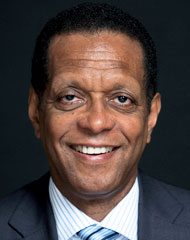
Bob Herbert-Op Ed Columnist, NYT
In any event, the G.O.P. has taken its place once again as the House majority and is vowing to do what it does best, which is make somebody miserable — in this case, President Obama. Representative Darrell Issa, the California Republican who is now chairman of the Oversight and Government Reform Committee, said recently on the Rush Limbaugh program that Mr. Obama was “one of the most corrupt presidents in modern times.” He backed off a little on Sunday, saying that what he really thinks is that Mr. Obama is presiding over “one of the most corrupt administrations.”
This is the attitude of a man who has the power of subpoena and plans to conduct hundreds of hearings into the administration’s activities.
The mantra for Mr. Issa and the rest of the newly empowered Republicans in the House, including the new Budget Committee chairman, Paul Ryan of Wisconsin, is to cut spending and shrink government. But what’s really coming are patented G.O.P. efforts to spread misery beyond Mr. Obama and the Democrats to ordinary Americans struggling in what are still very difficult times.
It was ever thus. The fundamental mission of the G.O.P. is to shovel ever more money to those who are already rich. That’s why you got all that disgracefully phony rhetoric from Republicans about attacking budget deficits and embracing austerity while at the same time they were fighting like mad people to pile up the better part of a trillion dollars in new debt by extending the Bush tax cuts.
This is a party that has mastered the art of taking from the poor and the middle class and giving to the rich. We should at least be clear about this and stop being repeatedly hoodwinked — like Charlie Brown trying to kick Lucy’s football — by G.O.P. claims of fiscal responsibility.
There’s a reason the G.O.P. reveres Ronald Reagan and it’s not because of his fiscal probity. As Garry Wills wrote in “Reagan’s America”:
“Reagan nearly tripled the deficit in his eight years, and never made a realistic proposal for cutting it. As the biographer Lou Cannon noted, it was unfair for critics to say that Reagan was trying to balance the budget on the backs of the poor, since ‘he never seriously attempted to balance the budget at all.’ ”
We’ll see and hear a lot of populist foolishness from the Republicans as 2011 and 2012 unfold, but their underlying motivation is always the same. They are about making the rich richer. Thus it was not at all surprising to read on Politico that the new head of the House Energy and Commerce Committee, Fred Upton of Michigan, had hired a former big-time lobbyist for the hospital and pharmaceuticals industries to oversee health care issues.
I remember President Bush going on television in September 2008, looking almost dazed as he said to the American people, “Our entire economy is in danger.”
Have we forgotten already who put us in such grave peril? Republicans benefit from the fact that memories are short and statutes of limitations shorter. It was the Republican leader in the House, Tom DeLay, who insisted against all reason and all the evidence of history that “nothing is more important in the face of war than cutting taxes.”
But that’s all water under the bridge. The Republicans are back in control of the House, ready to run interference for the rich as recklessly and belligerently as ever.
By: BOB HERBERT-Op-Ed Columnist, New York Times-Published January 3, 2011
Share This Blog


 Unknown Feed
- An error has occurred; the feed is probably down. Try again later.
 mykeystrokes.com
You must be logged in to post a comment.