Obama’s Silent Majority
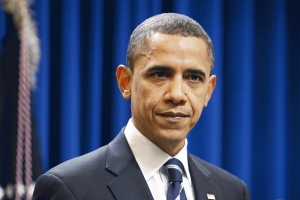
Preident Barack Obama

Preident Barack Obama
You’d never know it from cable news, but the average liberal Democrat actually likes the job the president is doing
Everyone knows that progressives have been growing increasingly disillusioned with Barack Obama since, well … even before he took office. He’s compromised too much, fought too little, sold out on one big issue after another, and fallen horribly, tragically short of the transformational goals that defined his 2008 campaign.
And now that he’s gone and cut a deal with Mitch McConnell (of all people!) to keep the Bush tax cuts in place for the wealthiest Americans for the next two years (at least), the left’s anger is louder than ever. No wonder Time’s Mark Halperin says the president’s base is “shattered.” And no wonder the media is filled with speculation about a potential challenge to the president in the 2012 Democratic primaries. Really, has there ever been a president who’s succeeded so thoroughly in taking the very people who put him in office and turning them against him?
It’s a fun topic for cable news and the blogosphere, where liberal commentators and activists routinely brand the president a Judas and threaten to support a primary challenger in 2012. And it’s a fun topic in the “mainstream media,” which takes all of this racket as confirmation that Obama is rapidly losing — or has already lost — his base.
There’s just one problem: The premise on which all of this is based is totally and completely wrong. Liberal commentators and activists and interest group leaders may be seething over Obama, but their rage has not trickled down to the Democratic voters (and, in particular, the Democratic voters who identify themselves as liberals), even though they’ve been venting their grief for the better part of two years.
As I noted earlier this week, Obama’s approval rating among Democrats has held steady at or near the 80 percent level throughout all of the turmoil of 2010. This puts him in as strong a position with his own party’s voters as any modern president has been at this same point in his presidency (with the exception of George W. Bush, whose numbers remained unusually high for well over a year after 9/11). Look closer and you’ll also find that Obama’s approval rating among Democrats is actually highest among those who call themselves liberals — an 83 percent score in the most recent round of Gallup polling, completed a few days ago. Among moderate Democrats, he clocks in at 75 percent, and among conservative Democrats, 69 percent. Again, these numbers have more or less held steady all year. To the extent Obama has a serious problem with Democrats, then, it’s with those who are on the right, not the left. This is hardly what you’d expect for a president who, according to the dominant narrative, has spent his presidency poking a stick in the left’s eye by cutting deals with conservative Democrats and Republicans.
Obama, in other words, seems to have developed his own silent majority. Rank-and-file liberal Democrats may not agree with everything he has done, but they do not share the sense of abandonment and betrayal that has defined liberal commentary throughout so much of his presidency. The party’s liberal base still very much likes him; it’s the elites who have turned on him.
The biggest reason for this disconnect, I would suggest, is that the liberal Democratic base liked Obama, both personally and ideologically, from the very beginning. Virtually from the moment he electrified the 2004 Democratic convention, liberals latched on to him as one of their own — and they haven’t (and don’t want to) let go.
This is not an unheard of phenomenon in politics, and it’s one of the reasons I’ve been so keen on comparing Obama’s political appeal to that of Ronald Reagan. Rank-and-file conservatives felt as strongly about Reagan in the 1980 campaign (and in 1976, for that matter) as liberals did about Obama in 2008. And they stayed true to him even when conservative elites concluded two years into his term that Reagan was a sellout.
Indeed, in the wake of this week’s drama over the Bush tax cuts, it’s worth recalling a similar moment in Reagan’s presidency, when congressional Democrats forced him into a tax hike in the summer of 1982. Like Obama now, Reagan had no leverage: The economy was spiraling out of control, voters were abandoning him, and Democrats were having great success (or seeming to have great success) hammering him over the exploding deficit. Thus did Reagan agree to a tax hike package that increased revenues by nearly $100 billion over the next three years — the largest tax increase in history, right-wing activists and commentators screamed. To these conservative elites, it was simply the latest act of betrayal by their one-time hero. When the GOP was drubbed in that fall’s midterms, they claimed vindication (see — not conservative enough!) and talked openly of challenging Reagan in the 1984 primaries. But rank-and-file conservative voters didn’t listen. They still liked the Gipper, still thought he was one of them, and still backed him in polling. It’s the same story today for Obama with rank-and-file liberals.
If Obama had been introduced to the Democratic base differently — that is, if they’d been suspicious and resistant to him and he’d landed in the presidency in spite of their skepticism — the objections of liberal elites might be far more damaging.
Here a parallel can be drawn to George H.W. Bush, who was introduced to the GOP’s “New Right” base in 1980 as the moderate, Gerald Ford-ish establishment Republican running against Reagan. Thus, the New Right, which essentially took control of the GOP for good with Reagan’s ’80 triumph, never really trusted Bush. Eight years of loyal service as Reagan’s V.P. was enough to win Bush the right’s benefit of the doubt in 1988, but when he “caved” as president — as he did on the S&L bailout, the 1990 tax hike, and a host of other issues — it merely brought back to the surface all of the right’s old attitudes toward him. So when the triumph of the Gulf War faded in 1991, there was room for Pat Buchanan to run to Bush’s right in the 1992 primaries. Buchanan didn’t win any states, but he did secure enough support — especially in New Hampshire — to severely embarrass the president. Obama’s history with liberals, though, is much different from Bush’s history with conservatives.
This isn’t to say that it’s impossible for Obama to lose the Democratic base; it’s just that there’s a lot more goodwill toward him among that base — and a lot more willingness to rationalize his “betrayals” as sensible pragmatism in the face of the other party’s obstructionism — than most people recognize.
At his press conference Tuesday, Obama noted that many of the “purist” liberals now blasting his tax cut deal also savaged his final healthcare compromise earlier this year, which wiped out the public option. It’s an apt comparison. And it’s worth remembering that the cries of betrayal back then did nothing to lessen rank-and-file’s assessment of Obama’s job performance — probably because the main thing they saw was that Obama, unlike every president before him, had actually gotten healthcare done.
By Steve Kornacki-Salon: Wednesday, Dec 8, 2010
How To Fight The Tax Cut Wars
The next big fight in Congress revolves around extending the Bush tax cuts. Unlike issues like climate change or stimulus, where the public does not accept the Democrats’ basic analysis of the problem, on the tax cuts the Democrats hold the whip hand. The question is whether they emerge with a political win, a public policy win, or both.
Let’s review a few basic facts about the Bush tax cuts. When Republicans took control of government in 2001, their top priority was reducing tax rates on high income earners. Since tax cuts for the rich were unpopular, they had to pair those cuts with middle-class tax cuts in order to make them politically salable. That’s how they pressured Democrats into supporting them. By packaging the whole thing together, they could accuse Democrats of opposing tax cuts for the middle class if they voted no.
Now, ten years later — and what a decade of bountiful economic growth we’ve enjoyed with the energies of investors and entrepreneurs finally unleashed from restrictive Clinton-era tax rates! — the Bush tax cuts are scheduled to expire. Republicans want to extend the whole thing. Democrats just want to extend the parts that benefit people who earn less than $250,000 a year.
Now, here’s the underlying dynamic. Raising taxes on the middle class is unpopular. But raising taxes on the rich is wildly popular. The truth is that neither party cares very much about the portion of the Bush tax cuts that benefit the middle class. Republicans just threw that in to sell the upper-bracket tax cuts, which is what they care about. Democrats might prefer a more progressive tax code with lower middle-class taxes, but most of them would rather have the revenue instead. But Democrats promised not to raise taxes on people earning less than $250,000 a year — a promise they felt they had to make in order to win. And they can’t break that promise without suffering political consequences.
Republicans, on the other hand, don’t want to pass an extension of the middle-class Bush tax cuts without the upper-bracket tax cuts. That would leave the federal tax code more progressive than it was under Bill Clinton — you’d have a combination of Clinton-era tax rates on the rich and Bush-era tax rates on the middle class. Conservatives have been fretting about such a result for more than a year, warning ominously about a country in which half the population pays no income tax. (They’d still pay other taxes, but the central Republican goal is to minimize the progressivity of the tax code.)
So we’re down to a game of chicken. Here’s why the Democrats hold the whip hand. They can pass an extension of the middle-class Bush tax cuts through the House. If Republicans let the bill pass, then they’ve lost their leverage to extend the unpopular Bush upper-income tax cuts. If they filibuster it, then Democrats can blame them for raising taxes on middle-class Americans. It would let Democrats out of their pledge. (Hey, they tried to keep the middle-class tax cuts.) Then nothing would pass, and we’d instantly revert to Clinton-era rates across the board.
What kind of effect would that have on the deficit? A huge one:
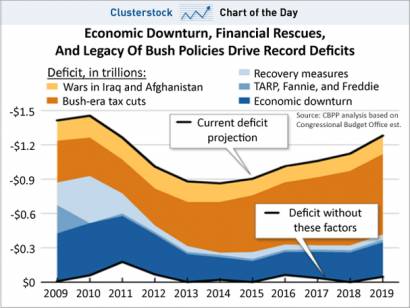
That dark orange stripe is the portion of the deficit attributable to the Bush tax cuts. That would be wiped out. Ending the tax cuts would basically solve the medium-term deficit problem.
The key factor here is that, just as Republicans got to frame the debate in 2001 by combining the tax cuts into an up or down vote, Democrats can frame the debate now by separating the policies Republicans pretend to care about from the ones they actually care about. Republicans want to have a vote on the whole collection of Bush-era tax cuts. Democrats shouldn’t give it to them. You hold a separate vote on the middle class portion and dare them to oppose it.
This seems to be the plan:
“The Senate will move first, and it will be a test to see whether Republicans filibuster” to block the bill in a bid to also win tax cuts for higher earners, said Rep. Chris Van Hollen of Maryland, head of the House Democrats’ re-election effort.
“If you can’t get it out of the Senate, then you take it to the election,” Mr. Van Hollen said in a recent interview. “You say to the American people that Republicans want to continue to hold middle-class tax relief hostage for an extension of tax breaks for [the well-to-do]. That will be the debate.”
Republicans have followed a strategy of opposing nearly everything the Democrats do. It’s worked very well. But the peculiar dynamic of this debate puts the Republicans in a position where they can’t win, and obstructing the Democrats is probably their worst move.
By: Jonathan Chait, Senior Editor, The New Republic-July 26, 2010
The GOP’s Astonishing Hypocrisy on Health Care and ‘reconciliation’
For those who feared that Barack Obama did not have any Lyndon Johnson in him, the president’s determination to press ahead and get health-care reform done in the face of Republican intransigence came as something of a relief.
Obama’s critics have regularly accused him of not being as tough or wily or forceful as LBJ was in pushing through civil rights and the social programs of his Great Society. Obama seemed willing to let Congress go its own way and was so anxious to look bipartisan that he wouldn’t even take his own side in arguments with Republicans.
Those days are over. On Wednesday, the president made clear what he wants in a health care bill, and he urged Congress to pass it by the most expeditious means available.
He was also clear on what bipartisanship should mean — and what it can’t mean. Democrats, who happen to be in the majority, have already added Republican ideas to their proposals. Obama said he was open to four more that came up during the health-care summit.
What he’s unwilling to do, and rightly, is to give the minority veto power over a bill that has deliberately and painfully worked its way through the regular legislative process.
Republicans, however, don’t want to talk much about the substance of health care. They want to discuss process, turn “reconciliation” into a four-letter word, and maintain that Democrats are just “ramming through” a health bill.
It is all, I am sorry to say, one big lie — or, if you’re sensitive, an astonishing exercise in hypocrisy.
All of the Republican claims were helpfully gathered in one place by Sen. Orrin Hatch, R-Utah, in an op-ed in Tuesday’s Washington Post. Right off, the piece was wrong on a core fact. Hatch accused the Democrats of trying to, yes, “ram through the Senate a multitrillion-dollar health-care bill.”
No. The health-care bill passed the Senate last December with 60 votes under the normal process. The only thing that would pass under a simple majority vote would be a series of amendments that fit comfortably under the “reconciliation” rules established to deal with money issues.
Near the very end of his article, Hatch concedes that reconciliation would be used for “only parts” of the bill. But then why didn’t he say that in the first place?
Hatch grandly cites “America’s Founders” as wanting the Senate to be about “deliberation.” But the Founders said nothing in the Constitution about the filibuster, let alone “reconciliation.” Judging from what they put in the actual document, the Founders would be appalled at the idea that every major bill should need the votes of three-fifths of the Senate to pass.
Hatch quotes Sens. Robert Byrd and Kent Conrad, both Democrats, as opposing the use of reconciliation on health care. What he doesn’t say is that Byrd’s comment from a year ago was about passing the entire bill under reconciliation, which no one is proposing to do. As for Conrad, he made clear to The Washington Post’s Ezra Klein this week that it’s perfectly appropriate to use reconciliation “to improve or perfect the package,” which is exactly what Obama is suggesting.
Hatch said that reconciliation should not be used for “substantive legislation” unless the legislation has “significant bipartisan support.”
But surely the 2001 and 2003 Bush tax cuts, which were passed under reconciliation and increased the deficit by $1.7 trillion during his presidency, were “substantive legislation.” The 2003 dividends tax cut could muster only 50 votes. Vice President Dick Cheney had to break the tie. Talk about “ramming through.”
The underlying “principle” here seems to be that it’s fine to pass tax cuts for the wealthy on narrow votes but an outrage to use reconciliation to help middle-income and poor people get health insurance.
I’m disappointed in Hatch, co-sponsor of two of my favorite bills in recent years. One created the State Children’s Health Insurance Program. The other, signed last year by Obama, broadly expanded service opportunities. Hatch worked on both with his dear friend, the late Edward M. Kennedy, after whom the service bill was named.
It was Kennedy, you’ll recall, who insisted that health care was “a fundamental right and not a privilege.” That’s why it’s not just legitimate to use reconciliation to complete the work on health reform. It would be immoral to do otherwise and thereby let a phony argument about process get in the way of health coverage for 30 million Americans.
E. J. Dionne, Jr-Syndicated Columnist-March 4, 2010
Share This Blog


 Unknown Feed
- An error has occurred; the feed is probably down. Try again later.
 mykeystrokes.com

You must be logged in to post a comment.