Why We Need the Minimum Coverage Mandate
A district court judge in Virginia ruled on December 13 that the “minimum coverage” requirement in the Affordable Care Act is unconstitutional. The opinion is clearly at odds with other rulings in Virginia and in Michigan, where courts upheld the law.
Judges may disagree, but there’s a consensus among legal and economic scholars that this requirement to purchase health insurance is essential to making health insurance available and affordable to everyone, without regard to health status or “pre-existing conditions.” Without this provision, the law is unworkable and the consumer protections it provides become unenforceable. As the issue wends its way through the courts, it is useful to review why this requirement is in the law and the valuable protections we have to lose if it’s eviscerated.
Today, limited affordable coverage in the small business and individual markets reflects the fact that purchasing health insurance is totally voluntary. Given that health insurance is expensive relative to family or small business incomes, people are reluctant to purchase protection unless and until they need health care. If people who need health care come to dominate an insurer’s policyholders, then insurance can no longer spread or “pool” risk—collect premium dollars from a broadly healthy group of purchasers to distribute to the minority among them who need costly care. For this reason, health insurers do everything they can to screen out or deny protection to people with care needs. The Affordable Care Act ended those practices.
Opponents of the Affordable Care Act claim we can change this behavior without a requirement that people buy health insurance, and simply prohibit insurers from denying health insurance based on pre-existing conditions. But states have tried and failed in this approach. Several states tried what are called “community rating reforms”—requiring health insurers to offer policies within a given area at the same price to all persons without medical underwriting. The result: dramatic increases in insurance prices and a rapidly shrinking insurance market. In other words, the markets failed.
The lesson—incorporated in the Affordable Care Act—is that effective insurance markets require not only requirements on insurers, but requirements that people buy insurance along with subsidies to make insurance affordable. All three legs of this three-legged stool are critical to effective health insurance.
What happens if requirement to purchase coverage is removed as Judge Henry Hudson ruled? One of us has estimated the effects using a microsimulation model similar to that used by the Congressional Budget Office to estimate the Affordable Care Act’s effects. The results are striking. Eliminating the minimum coverage provision would increase the average individual premium by 27 percent in 2019 and reduce the expansion of insurance coverage by three-quarters, from 60 percent to 12 percent of the 55 million people uninsured in 2019.
Removing the mandate would at the same time dramatically alter the “bang for the buck” in federal spending. While removing the mandate cuts the legislation’s coverage gains by more than 75 percent, it would reduce the spending by less than a quarter—as subsidies are increased to cover the higher premiums for the more modest number of the sicker uninsured who are most likely to participate.
Judge Hudson’s decision may be good politics but the policy implications will be devastating for millions of Americans. His decision jeopardizes putting affordable coverage out of reach for those who cannot find it now, especially those with pre-existing conditions. The Affordable Care Act seeks to improve our nation’s health system; Judge Hudson’s decision makes it worse.
By: Jonathan Gruber and Judy Feder-Jonathan Gruber is a professor of economics at the Massachusetts Institute of Technology and Judy Feder is a Senior Fellow at the Center for American Progress; Center For American Progress-December 14, 2010
Individual Mandate: Cutting Off Your Policies to Spite Your Opponents
To step outside the latest Supreme Court case, it’s worth remarking on the long-term damage conservatives are doing their cause by focusing their fire on the individual mandate.
The political case for their strategy is clear: The individual mandate, like most taxes, is unpopular. In fact, it’s one of the only unpopular elements of the whole bill. But it’s also one of very few ways to have a health-care system where everyone has coverage but private insurers dominate. In the long run, it may be the only way. That’s why Republicans originally thought up the idea, and why it’s mainly been associated with a Republican health-care bill. Mitt Romney, Chuck Grassley, Orrin Hatch, Bob Dole, Judd Gregg and Mike Crapo are just a few of the prominent Republicans who’ve cosponsored legislation with individual mandates.
More internationally, you may have heard of the conservative affection for Singapore’s health-care system. Here’s how the journal of the American Enterprise Institute describes Singapore’s structure in a gushing article: “In Singapore’s system, the primary role of government is to require people to save in order to meet medical expenses they don’t expect.” Another term for the government forcing you to put money into a vehicle that helps protect you from a health-care crisis is, well, an individual mandate.
Switzerland and the Netherlands also use individual mandates to sustain universal health-care systems that are less centralized than single-payer arrangements. It’s a pretty common device. But if Republicans get it ruled unconstitutional in America, they’d be wise to ask themselves what other options they have: After all, the constitutionality of Medicare is not in question, and that’s really the other model we could eventually trend toward. As Matt Miller put it in a column a few months back:
Conservatives, either from confusion, or for the sheer fun of taking a political bite out of Democrats, are fighting the one measure that’s essential if private insurance is to retain its central role in American health care … [But] be careful what you wish for. By fighting the mandate needed to make private insurance solutions work, and doing nothing to ease the health cost burden on everyday Americans, you’ll hasten the day when the public throws up its hands and says, “Just give us single-payer and price controls.” Don’t think the anti-government wave this fall won’t reverse itself on health care if the most private sector-oriented health care system on earth keeps delivering the world’s costliest, most inefficient care.
By Ezra Klein | December 13, 2010
The Impact of Health Reform on Health System Spending
The health reform legislation passed in March 2010 will introduce a range of payment and delivery system changes designed to achieve a significant slowing of health care cost growth. Most assessments of the new reform law have focused only on the federal budgetary impact. This updated analysis projects the effect of national reform on total national health expenditures and the insurance premiums that American families would likely pay. We estimate that, on net, the combination of provisions in the new law will reduce health care spending by $590 billion over 2010–2019 and lower premiums by nearly $2,000 per family. Moreover, the annual growth rate in national health expenditures could be slowed from 6.3 percent to 5.7 percent.
Overview
To judge the merit of the comprehensive health reform legislation recently signed into law by President Obama, it is essential to understand its impact on the affordability of insurance coverage and overall health care spending. Most assessments of the new law consider the federal budget only. For example, the Congressional Budget Office “scored” the federal budget impact of the Patient Protection and Affordable Care Act, as modified by the Reconciliation Act (Affordable Care Act), finding a modest deficit reduction in the first 10 years of implementation.
But the federal budget impact is not the same as the health system impact. A portion of the federal funds would be used to reduce costs for people who already have health insurance coverage but struggle to afford it, while very small businesses would receive help in paying insurance premiums. To estimate health spending accurately, we need to separate out the costs into new health care spending and transfers of existing spending from the private sector to the government. Furthermore, CBO assigned very little savings to system reform efforts, rendering its overall analysis incomplete.
The Office of the Actuary within the Centers for Medicare and Medicaid Services, meanwhile, estimated the health system impacts of the Affordable Care Act and determined there would be a small increase in medical spending as a result of the reform. But, again, this analysis is limited, since it gives almost no weight to proposals for improving the information available to providers and modifying the financial incentives in the current system.
This study considers the new law, as enacted in March 2010, to project the impact of major health reform on national health expenditures and the insurance premiums that families will likely pay, accounting for the full range of impacts the legislation is likely to induce. As part of our analysis, we provide estimates of the effect of key provisions on health spending by government, employers, and households. We build on our earlier analysis of the draft legislation, taking account of the provisions in the final law.
Impact of reform on national health expenditures
Health care reform will affect national health expenditures through five major channels.
Impact of new coverage
Extending health insurance coverage to essentially all Americans will increase medical spending, at least in the short run. (Some argue that increased coverage will lower spending over time by making it possible to pursue more-aggressive cost-containment policies without risking access to care for the uninsured, but in this analysis we do not consider such effects.) From previous studies, data are available to estimate the magnitude of the increase in spending. Hadley and colleagues, for example, estimated that each uninsured individual who gains coverage will incur annually an additional $1,600 of medical care expenses—an increase of 70 percent. The Congressional Budget Office estimated that spending for uninsured individuals, if they become insured, will increase by 25 percent to 60 percent. The actual increase will depend in part on the rates that are paid to health care providers for treating currently uninsured patients.
For our estimates, we increase the $1,600 figure over time with expected increases in medical costs. We then multiply the revised amounts by the number of newly insured resulting from health reform to produce a total estimate. Fully phased in, incremental coverage costs about $75 billion per year to cover 60 percent of the uninsured, or 2 percent of total health care spending. This is comparable to Davis and Schoen’s projection that covering all of the uninsured would add 3 percent to medical spending, and Schoen, Davis, and Collins’s finding that covering all of the uninsured would add 2 percent to medical spending. This methodology suggests that the new law will lead to a 10-year cumulative medical spending increase of $415 billion over the period 2010–2019. This estimate is shown in the first row of Exhibit 1.
Savings in public programs
The new health reform law contains a number of changes to Medicare and Medicaid payments. Many of these are traditional payment changes—for example, reductions in the amount paid to Medicare Advantage managed care plans to a level comparable with the cost of covering beneficiaries under traditional Medicare, or smaller increases in Medicare inpatient payments to account for a likely increase in productivity and to reduce bad debts. Our estimates of the medical spending impact of these changes come from CBO. While this is a good place to begin, it should be noted that CBO has often misestimated, or failed to estimate, the behavioral consequences of such changes in the past.
We consider all such changes, with a few exceptions: 1) we exempt the net savings associated with health care modernization (Section 1104 and Title III, subtitle A, of the reform bill), which is treated separately; 2) we omit the sections associated with coverage expansions, which are accounted for above; and 3) we omit savings from the Community Living Assistance Services and Supports (CLASS) Act, which are a collection of premiums in anticipation of future spending. CBO estimates that the net impact of the remaining proposals in the reform law is to reduce Medicare and Medicaid spending by $416 billion over the 2010–2019 period. This estimate is depicted in the second row of Exhibit 1.
The reduction in Medicare and Medicaid spending is approximately on par with the increase in medical costs associated with covering the uninsured. The net impact of covering the uninsured and reducing traditional program payments (and other taxes from outside the health care system) is a decrease in spending of $1 billion over 2010–2019. This roughly parallels the analysis from the Office of the Actuary, which estimated that national medical expenditures under the new law will increase by $311 billion over 2010–2019. The difference of about $30 billion per year is very small on the scale of health expenditures (less than 1 percent per year), and it indicates that our analysis matches that of the actuary when no other cost changes are considered.
Our analysis assumes that a reduction in Medicare and Medicaid payments will not be offset by higher prices to private payers and, equivalently, that fewer uninsured patients will not yield savings to existing payers because of the reduced need of payers to shift costs onto covered patients. This assumption is common to other estimators and is consistent with empirical research.
Insurance exchanges
Currently, nearly 13 percent of insurance premiums are accounted for by administrative costs. These costs range from about 5 percent in large firms and firms that are self-insured to 30 percent for individuals. Higher costs for marketing, underwriting, churning, benefit complexity, and brokers’ fees explain the bulk of the difference.
The new reform law establishes insurance exchanges that will group individuals and small firms into larger entities and thus drive down those administrative costs. The exchanges also will minimize marketing costs through more transparent posting of premiums, facilitated enrollment (assistance with the application process and screening for eligibility), and stronger oversight of industry practices.
If all individuals and small firms were to receive the same premiums as large firms or self-insured firms do, the costs of insurance administration would decline to less than 10 percent. In analyzing the experience of other countries, The Commonwealth Fund estimated that administrative costs could fall to 8 percent or lower under a robust exchange system. We assume more modest savings, such that administrative costs fall to 10 percent of total premiums—a rate also assumed to remain constant over time, even though this implies administrative costs increase along with national health spending. We assume such savings begin in 2014, the year the exchanges will become operational, and are phased in over three years. The reduction in health spending associated with reduced insurer administration is $211 billion over 2010–2019.
CBO estimates $27 billion in administrative savings owing to insurance exchanges over 10 years. CBO assumes premium reductions of between 1 percent and 4 percent for small groups in the exchanges, and no savings for large groups, for an average of about 0.4 percent. We assume additional savings above this amount, totaling $184 billion over 2010–2019 (see third line of Exhibit 1).
Health system modernization
The reform law includes numerous provisions intended to improve the information available to patients and providers and the incentives facing medical care providers, and thus make medical care more efficient. The Commonwealth Fund has summarized these provisions. Within the Medicare and Medicaid programs, these include:
- Payment innovations, including higher reimbursement for preventive care services and patient-centered primary care, bundled payment for hospital, physician, and other services provided for a single episode of care, shared savings or capitation payments for accountable provider groups that assume responsibility for the continuum of a patient’s care, and pay-for-performance incentives for Medicare providers
- An Independent Payment Advisory Board, with the authority to make recommendations that reduce cost growth and improve quality in both the Medicare program and the health system as a whole
- A new Innovation Center within the Center for Medicare and Medicaid Services, charged with streamlining the testing of demonstration and pilot projects in Medicare and rapidly expanding successful models across the program
- Profiling medical care providers on the basis of cost and quality, making that data available to consumers and insurance plans, and providing relatively low-quality, high-cost providers with financial incentives to improve their care
- Increased funding for comparative effectiveness research
- Increased emphasis on wellness and prevention.
The exact amount that will be saved from these provisions collectively is uncertain. Partly as a result of this uncertainty, CBO and the Office of the Actuary assume only minor savings. For example, CBO estimated that the major parts of the law including these provisions will cost $10 billion over the 2010–2019 period, while the Office of the Actuary determined savings of only $2 billion.
Other estimates, however, suggest that an aggressive approach to health care modernization could result in significantly greater cost reductions. Beeuwkes-Buntin and Cutler estimated a 1.5-percentage-point reduction in cost increases annually from significant health care reform, or more than $700 billion in the 10-year window. These savings would come from two primary sources. First, administrative expenses incurred by provider groups would decline as electronic medical records, and incentives to use them appropriately, are widely disseminated. The potential for administrative savings has been stressed by both provider groups and insurers, and they are distinct from the reduction in insurance administration noted above. Second, reform would lead to fewer and less-costly acute care episodes. Potentially substantial savings could be had by preventing certain illnesses from recurring through better coordination of care and by rationalizing what is done when a person becomes sick by bundling payments, paying more for quality care, and sharing savings with accountable provider organizations.
Similarly, Hussey, Eibner, Ridgely et al. estimate that savings of more than 10 percent are possible, largely from payment reforms like bundled-payment systems. Realizing these savings over a decade implies cost reductions of nearly 1.5 percentage points annually. A more conservative mid-range set of assumptions suggests that such reforms could reduce growth in national health expenditures by about one percentage point per year.
The combination of provisions in the new law will achieve substantial savings in total health spending. A Commonwealth Fund report indicates that similar provisions will slow annual growth in national health expenditures from 6.5 percent to 5.6 percent over the period 2010–2020. Thus, cost reductions on the order of 1.0 percentage points are realistic. We assume such savings are first realized in 2014, to allow time for payment changes to be designed and implemented and exchanges to become operational.
The public and private savings from health system modernization are $406 billion over the 10 years (see fourth line of Exhibit 1). These savings are smaller in the early years but increase over time.
Taking account of these different factors, on net the new law will reduce health care spending by $590 billion over 2010–2019. Exhibit 2 shows the changes by year, highlighting significant savings potential as payment and system reforms are fully phased in.
We find that the annual rate of growth in national health expenditures falls from 6.1 percent before reform to 5.7 percent after reform. When the current projection is corrected to reflect underutilization of services by the uninsured, the reform package lowers the annual rate of growth from 6.3 percent to 5.7 percent, a reduction of 0.6 percentage points per year (Exhibit 3).
The savings we estimate are comparable to the reports by CBO and the Office of the Actuary, with the exception that we also include reasonable impacts of system modernization incentives and efforts to streamline sales of insurance.
Impact on the federal budget
The Congressional Budget Office estimates that the reform law will reduce the federal deficit by $143 billion over the 10 years, 2010–2019. Our estimates of the federal deficit impact differ from CBO’s in two ways. First, we include savings to Medicare and Medicaid resulting from health system modernization. In addition, reductions in employer spending for health insurance lead to increases in wage and salary payments, which are taxed by the federal government. While CBO accounted for some of this effect in recent estimates, further reductions in employer spending for health insurance can be expected from modernization and lower administrative costs. We assume that 90 percent of private health insurance savings are passed on to employees through increased wages, which are taxed at an average marginal rate of 28 percent.
The net effect is a federal deficit reduction of $400 billion over 2010–2019 (Exhibit 4). This reduction results from several factors. As estimated by CBO, the federal cost of insurance coverage expansion is $788 billion. Savings from payment and system reform provisions are projected to generate $682 billion—more than is estimated by CBO, owing to the reasonable estimates of health system modernization provisions. Our federal tax revenue projection mirrors that of CBO’s, though we also add in the additional revenue from employer savings and increased wages from modernization and lower administrative costs—projected to raise $86 billion over the 10-year, 2010–2019 period.
Impact on Medicare
Prior to reform, Medicare expenditures were projected to grow by 6.8 percent annually from 2010 to 2019 (Exhibit 5). The payment and system reform savings estimated by CBO total $397 billion when CLASS and non-Medicare provisions are removed. Applying these net Medicare savings bends the Medicare spending curve and reduces the projected annual growth rate to 5.5 percent. When additional savings from health system modernization are accounted for, the annual growth rate is reduced to 4.9 percent and total 10-year savings reach $524 billion.
Impact on premiums for private coverage
Reducing insurer administration and modernizing the delivery of health care services will each result in reductions in private insurance premiums. Private premiums might be affected by other provisions as well. For example, an excise tax on high-premium health insurance plans, set to take effect in 2018, will introduce a strong financial incentive for insurers to trim benefits and reduce costs below a tax-free threshold of $10,200 for individual coverage and $27,500 for family coverage. Indexing this cap to the overall rate of inflation in the economy plus one percentage point will encourage insurers to seek out value and efficiency continually, thus placing downward pressure on premiums over time.
Health reform might also alter the generosity of the average insurance benefits offered, which may raise premiums for certain groups. In the current market, many people have coverage that is extremely limited, with deductibles totaling many thousands of dollars and entire classes of services that are excluded. Such people will face premium increases under reform, although the quality of the coverage will be significantly improved and out-of-pocket expenses reduced.
The Congressional Budget Office estimates that such changes will increase nongroup premiums. For purposes of this analysis, we exclude changes in premiums associated with better coverage, since one would need to consider the impacts of the enhanced coverage and correspondingly lower out-of-pocket spending to be able to gauge the impact of the changes accurately.
In addition, health reform might change the risk pool and thus affect the average cost of enrollees. Limiting age-based underwriting without providing offsetting subsidies to young adults would drive many within this population out of the insurance market. Close-to-universal coverage, in contrast, might bring more young people into the market, thus lowering premiums. Because of the issues associated with changes in out-of-pocket spending when people move in and out of coverage, this effect is, again, omitted.
We estimate the impact of insurance exchanges and system reform on average premiums using a method analogous to the one proposed above. In particular, we consider how reductions in administrative loads and more-efficient care delivery will affect average market premiums. The basis for the premium estimates is the average employer premium in 2006, as determined by the Medical Expenditure Panel Survey. This premium is then trended forward using the projected growth of premiums under the different scenarios.
Exhibit 6 shows the premium estimates. Without reform, premiums are expected to increase from $13,305 in 2010 to $21,458 in 2019. Relative to this increase, premiums under reform increase only three-quarters as much. By 2019, family premiums are nearly $2,000 lower. Adding reductions in out-of-pocket costs and lower taxes for Medicare and Medicaid will result in estimated savings for the typical family of over $2,500 that year. Again, these are conservative estimates: a recent analysis by the Business Roundtable prepared by Hewitt, for example, found that such legislative reforms could potentially reduce the trend line in employment-based health care spending by about $3,000 per employee by 2019.22
Explaining the difference with other estimates
The estimated health system savings we present are larger than those forecast by the Congressional Budget Office and the Centers for Medicare and Medicaid Services Office of the Actuary, which are similar to each other. The common assessments of CBO and the CMS actuary are not surprising, since most of the evidence upon which they are based comprises peer-reviewed studies that utilize carefully controlled comparison groups (either randomized trials or the natural equivalent). Within that genre, the dominant published themes are the inexorable nature of technology-led medical care cost increases, and the resulting need for unalterable demand- or supply-side constraints to confront that trend.
Although there is significant evidence in the literature that medical care providers are responsive to financial incentives, there is not much evidence in the published literature on policy reforms short of severe constraints that save large amounts of money. And for every study that shows savings from baseline, there is another study that does not. Thus, the common assessment is that there is little efficacious that can be done.
There is, however, a less formal, but no less important, literature that sees the world very differently. Business scholars, including Michael Porter and Elizabeth Teisberg, and Clay Christenson, Jerome Grossman, and Jason Hwang, all note the enormous inefficiency in health care relative to other industries: excessive administrative spending, wasted time and money, and resources spent not reducing costs but simply passing them along to others. These scholars highlight the enormous potential for productivity improvement that reform can drive if it makes health care operate more like other industries.
Through their experiences, health care practitioners reach a similar conclusion. Physicians on the frontlines of medicine, including Guy Clifton, Arthur Garson, Atul Gawande, and Arnold Relman, see the waste that exists and hold a common view on why it exists—principally, misaligned incentives. They show how health care would be better and cheaper were it not for a health care system that discourages such improvements. Echoing the story of misaligned incentives are journalistic accounts showing how the health system fails patients, physicians, and society as a payer. Each case cries out for reforms that would change the underlying perverse incentives.
A number of case studies lend support for the potential of reform. The experiences of Geisinger Health System, HealthPartners, Denver Health, and other health care delivery organizations demonstrate that health can be improved and costs lowered. They also point to the components that are most critical for system improvement. While these studies are often published in the professional literature, their authors do not employ the careful comparison groups that would make the results compelling to the most skeptical reviewers. Thus, case study findings are not given as much emphasis as they otherwise might.
While views differ as to appropriate evidence standards, the situation we analyze is one where there are essentially no clinical trials and where effects of multiple large policy changes may differ substantially from the effects of small trials of single interventions. In such a situation, it is imperative to cast a wider net than traditional evidence standards do. Our decision to be more inclusive in the use of evidence is the primary reason why our results diverge from those of CBO and the CMS Office of the Actuary.
Conclusion
The new health reform law introduces a range of payment and delivery system changes likely to result in a significant slowing of health care cost growth. First, the law calls for the creation of health insurance exchanges that offer a choice of plans and the ability, for the first time, to truly compare plan premiums. The exchanges will have authority to reject plans with excessive premium increases and to set caps on insurance profits and overhead of no more than 15 percent of premiums for large firms and 20 percent of the premiums for small firms and individuals, producing savings to employers and workers that might reach 15 percent to 20 percent by 2019.
The law also begins to change how providers are paid and care is delivered, so that they are rewarded not for the volume of services they provide but for the value they offer. It accelerates the testing, adoption, and spread of innovative payment methods to control growth in volume of services. The law also includes extensive provisions to report data on quality and cost and to enhance choice. Finally, the law directs investments in primary and preventive care, among other changes, that have the potential to yield substantial savings.
In addition to significant payment and delivery system reform, the Affordable Care Act will extend coverage to an estimated 32 million previously uninsured Americans by 2019. Improving access to care should return substantial improvement in overall population health, increase workforce productivity, and reduce the significant financial risk uninsured and underinsured individuals and families now face in the unreformed market.
Even with these improvements in coverage, we estimate that the combination of provisions in the new law will save $590 billion or more in national health spending over 2010–2019 and lower premiums by nearly $2,000 per family. The annual growth rate in national health expenditures will be slowed from 6.3 percent to 5.7 percent.
Congress and the President have enacted a historic health care reform law that will help ensure that all families are able to get the care they need, as well as financial security and relief from rising premiums. The legislation is a significant first step toward bending the health care cost curve for the federal government and families, and it will yield real economic benefits.
By David M. Cutler, Karen Davis, Kristof Stremikis | May 21, 2010-Center for American Progress
Historic Achievement For A More Perfect Union
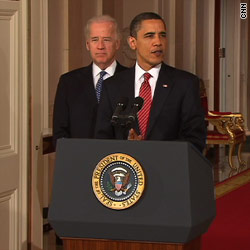
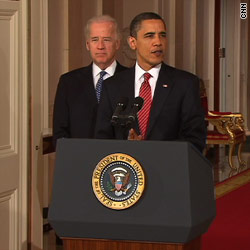
President Obama speaking on passage of Historic Health Reform Bill
“Mr. Speaker, I ask unanimous consent to revise and extend my remarks in opposition to this flawed health care bill”….We heard this canned statement over and over and over again tonight. We heard about the “Cornhusker kickback, the Louisiana Purchase, the Gator aid. We heard that this bill, if it passes, will make Americans less free. We heard that members of the military would loose their health coverage, that abortions would be paid for, that Medicare would be slashed. We heard from John Boehner that this was not the time to create bureaucracies, that there was no transparency, that there was not time to read the bill, that the people do not want this bill. His remarks continued to accent his distress over the process. If I had not been watching and only listening to his remarks over the radio, one would certainly have gotten the distinct impression that he was a very, very angry man. The tone and inflections in his voice gave one to believe that John Boehner just might be a little bit concerned that history was about to pass him by.
Health reform has been talked about and debated dating back to Theodore Roosevelt’s Bull Moose party which called for health insurance for industry. In his first term, President Roosevelt appointed a committee which was to report a program that addressed old-age and unemployment issues, medical care and health insurance. President Truman proposed a single insurance system that would cover all Americans with public subsidies to pay for the poor.
During nearly every Presidential election cycle since those days, every candidate has campaigned on the slogan of “health care for all”. At the end of that cycle, nothing gets done and the cycle continues. We immediately resort back to the status quo. The numbers of uninsured rise, the cost of insurance premiums skyrocket, rescissions continue, out of pocket expenses increase, denials for pre-existing conditions fall off the scales and even children are dropped from coverage.
Well, the time for change is long overdue. Republicans, for too long, have played politics with the lives of all Americans. At every turn, they have denied, delayed, obstructed, lied outright and instilled fear in the hearts and minds of the populace. As Speaker Pelosi said tonight, “all politics are personal”. After tonight, there will be no more politics of fear, no more politics of intimidation, no more threats of personal destruction. All of the talk about process, and all of the whining from republicans with bruised egos, don’t mean a heck of a lot now. What matters to those with no insurance, to those who are uninsured and those who have been bankrupted or lost their homes because of medical bills, simply stated, are results.
Many had given up on health reform with the Senate election results in Massachusetts earlier this year. Many have talked wildly about the upcoming November elections. The insurance companies became emboldened and Sen. Mitch McConnell and Rep. John Boehner actually began to believe their own words. Their repeated echo’s of “No” with the brazen 30-60% premium increases by Anthem and other insurers, re-awakened a cautious Democratic party. I want to personally thank Sen McConnell, Rep. Boehner and the insurance companies for their inadvertent contributions to the cause of health care reform.
In November 2008, America elected a President who said that he would get health reform done. For this President, it was not just a “slogan”. He took flack from all sides…Republicans and Democrats alike. With a determined Speaker of the House in Nancy Pelosi, President Obama and the U.S. House of Representatives delivered for the good of the American people.
When the sun rises in the east tomorrow, the earth will still be turning on it‘s axis, the American economy will not have collapsed, America will still be free, and there will be no Waterloo….the only thing that will be different tomorrow is that historic health reform for all Americans was passed tonight. History is now on the side of the American people.
Health Care and Freedom

Rep Marsha Blackburn, (R-TN) argues that health reform will make Americans "less free".
“Today is the death of freedom as a cause for celebration,” Rep. Marsha Blackburn just said as she opened the House Republicans’ argument against the health-care bill. Her stem-winder was quick and clean. This bill, she argued, will make Americas less free.
There is a tendency to think this sort of inane hyperbole an innovation of our polarized age. But it isn’t. When Medicare was being considered, the American Medical Association hired Ronald Reagan to record a record housewives could play for their friends. It was called Operation: Coffee Cup, and you can read the text here.
Reagan was a more graceful speaker than Blackburn, but his point was much the same. Kill the bill. “If you don’t do this and if I don’t do it,” he said, “one of these days you and I are going to spend our sunset years telling our children and our children’s children, what it once was like in America when men were free.”
Well, the bill passed. And moments ago, Rep. Paul Ryan was on the floor of the House, bellowing against Democrats who would dare propose “across-the-board cuts to Medicare.” This is breathless opportunism from Ryan — he has proposed far deeper across-the-board cuts to Medicare, and is making arguments against the Democrats’ bill that would be far more potent and accurate if aimed at his own — but leave that aside for a moment. The GOP’s embrace of the program that Ronald Reagan fought, and that Newt Gingrich sought to let “whither on the vine,” is based on the lived experience seniors have had with the bill: It has made them more, rather than less, free.
Blackburn’s introduction aside, people do not “celebrate” the freedom to not be able to afford lifesaving medical care. They don’t want the freedom to weigh whether to pay rent or take their feverish child to the emergency room. They don’t like the freedom to lose their job and then be told by insurers that they’re ineligible for coverage because they were born with a heart arrhythmia.
When faced with the passage of programs that would deliver people from these awful circumstances, the Republicans adopt a very narrow and cruel definition of the word “freedom.” But when faced with the existence of programs like Medicare, and the recognition that their constituents depend on those programs to live lives free of unnecessary fear and illness, they abandon their earlier beliefs, forget their dire warnings and, when convenient, defend these government protections aggressively. There’s nothing much to be done about that. It is, after all, a free country. But Americans should feel free to ignore these discredited hysterics.
By: Ezra Klein-Washington Post | March 21, 2010; 3:02 PM ET
Share This Blog


 Unknown Feed
- An error has occurred; the feed is probably down. Try again later.
 mykeystrokes.com

You must be logged in to post a comment.