Climate of Hate: Who Could Not Have Seen This Coming?
When you heard the terrible news from Arizona, were you completely surprised? Or were you, at some level, expecting something like this atrocity to happen?
Put me in the latter category. I’ve had a sick feeling in the pit of my stomach ever since the final stages of the 2008 campaign. I remembered the upsurge in political hatred after Bill Clinton’s election in 1992 — an upsurge that culminated in the Oklahoma City bombing. And you could see, just by watching the crowds at McCain-Palin rallies, that it was ready to happen again. The Department of Homeland Security reached the same conclusion: in April 2009 an internal report warned that right-wing extremism was on the rise, with a growing potential for violence.
Conservatives denounced that report. But there has, in fact, been a rising tide of threats and vandalism aimed at elected officials, including both Judge John Roll, who was killed Saturday, and Representative Gabrielle Giffords. One of these days, someone was bound to take it to the next level. And now someone has.
It’s true that the shooter in Arizona appears to have been mentally troubled. But that doesn’t mean that his act can or should be treated as an isolated event, having nothing to do with the national climate.
Last spring Politico.com reported on a surge in threats against members of Congress, which were already up by 300 percent. A number of the people making those threats had a history of mental illness — but something about the current state of America has been causing far more disturbed people than before to act out their illness by threatening, or actually engaging in, political violence.
And there’s not much question what has changed. As Clarence Dupnik, the sheriff responsible for dealing with the Arizona shootings, put it, it’s “the vitriolic rhetoric that we hear day in and day out from people in the radio business and some people in the TV business.” The vast majority of those who listen to that toxic rhetoric stop short of actual violence, but some, inevitably, cross that line.
It’s important to be clear here about the nature of our sickness. It’s not a general lack of “civility,” the favorite term of pundits who want to wish away fundamental policy disagreements. Politeness may be a virtue, but there’s a big difference between bad manners and calls, explicit or implicit, for violence; insults aren’t the same as incitement.
The point is that there’s room in a democracy for people who ridicule and denounce those who disagree with them; there isn’t any place for eliminationist rhetoric, for suggestions that those on the other side of a debate must be removed from that debate by whatever means necessary.
And it’s the saturation of our political discourse — and especially our airwaves — with eliminationist rhetoric that lies behind the rising tide of violence.
Where’s that toxic rhetoric coming from? Let’s not make a false pretense of balance: it’s coming, overwhelmingly, from the right. It’s hard to imagine a Democratic member of Congress urging constituents to be “armed and dangerous” without being ostracized; but Representative Michele Bachmann, who did just that, is a rising star in the G.O.P.
And there’s a huge contrast in the media. Listen to Rachel Maddow or Keith Olbermann, and you’ll hear a lot of caustic remarks and mockery aimed at Republicans. But you won’t hear jokes about shooting government officials or beheading a journalist at The Washington Post. Listen to Glenn Beck or Bill O’Reilly, and you will.
Of course, the likes of Mr. Beck and Mr. O’Reilly are responding to popular demand. Citizens of other democracies may marvel at the American psyche, at the way efforts by mildly liberal presidents to expand health coverage are met with cries of tyranny and talk of armed resistance. Still, that’s what happens whenever a Democrat occupies the White House, and there’s a market for anyone willing to stoke that anger.
But even if hate is what many want to hear, that doesn’t excuse those who pander to that desire. They should be shunned by all decent people.
Unfortunately, that hasn’t been happening: the purveyors of hate have been treated with respect, even deference, by the G.O.P. establishment. As David Frum, the former Bush speechwriter, has put it, “Republicans originally thought that Fox worked for us and now we’re discovering we work for Fox.”
So will the Arizona massacre make our discourse less toxic? It’s really up to G.O.P. leaders. Will they accept the reality of what’s happening to America, and take a stand against eliminationist rhetoric? Or will they try to dismiss the massacre as the mere act of a deranged individual, and go on as before?
If Arizona promotes some real soul-searching, it could prove a turning point. If it doesn’t, Saturday’s atrocity will be just the beginning.
By: Paul Krugman: Op-Ed Columnist, New York Times-January 10,2011
More Small Businesses Offering Health Care To Employees Thanks To Obamacare
The first statistics are coming in and, to the surprise of a great many, Obamacare might just be working to bring health care to working Americans precisely as promised.
The major health insurance companies around the country are reporting a significant increase in small businesses offering health care benefits to their employees.
Why?
Because the tax cut created in the new health care reform law providing small businesses with an incentive to give health benefits to employees is working.
We certainly did not expect to see this in this economy,” said Gary Claxton, who oversees an annual survey of employer health plans for the nonprofit Kaiser Family Foundation. “It’s surprising.”
How significant is the impact? While we won’t have full national numbers until small businesses file their 2010 tax returns this April, the anecdotal evidence is as meaningful as it is unexpected.
United Health Group, Inc., the nation’s largest health insurer, added 75,000 new customers working in businesses with fewer than 50 employees.
Coventry Health Care, Inc., a large provider of health insurance to small businesses, added 115,000 new workers in 2010 representing an 8% jump.
Blue Cross Blue Shield of Kansas City, the largest health insurer in the Kansas City, Mo. area, reports an astounding 58% increase in the number of small businesses purchasing coverage in their area since April, 2010-one month after the health care reform legislation became law.
“One of the biggest problems in the small-group market is affordability,” said Ron Rowe, who oversees small-group sales for the Kansas City operation for Blue Cross Blue Shied. “We looked at the tax credit and said, ‘this is perfect.”
Rowe went on to say that 38% of the businesses it is signing up had not offered health benefits before.
Whatever your particular ideology, there is simply no denying that these statistics are incredibly heartening. However, for those of you who cannot get past your opposition, even for a moment of universal good news, let’s break it down.
The primary, most enduring complaint of the opponents of the ACA has been that the law is deathly bad for small business.
Apparently, small businesses, and their employees, do not agree.
The next argument has been that the PPACA is a job killer.
If these small businesses found the new law to be so onerous, why have so many of them voluntarily taken advantage of the benefits provided in the law to give their employees these benefits? They were not mandated to do so. And to the extent that the coming mandate obligations might figure into their thinking, would you not imagine they would wait until 2014 to make a move as the rules do not go into effect until that time?
Of course, there is the nagging banter as to how Obamacare is leading us down the road to socialism.
Let it go, folks.
Private market insurance companies are experiencing significant growth because of a tax break provided by the PPACA. I may have missed the day this was discussed in economics class, but I’m pretty sure this is not a socialistic result of federal legislation.
When data like this appears, we have the opportunity to really find out who is talking smack for political benefit and who actually cares about getting affordable and available health care to America’s workers. Certainly, there will be elements of the new law that will not work out exactly as planned. That’s simply reality when it comes to any new piece of landmark legislation. But if you cannot celebrate what appears to be an important early success, you really should give some thought as to where your true interests and intents lie.
If you’re all about beating up on President Obama, you can conveniently forget this bit of data as if it never really happened. However, if your interest is to make health care available to more Americans, this should be a happy day for you – no matter what your ideological beliefs.
By: Rick Ungar, The Policy Page-Forbes, January 6, 2011
When Opposition to Health-Care Reform Stops Being Polite and Starts Getting Scary
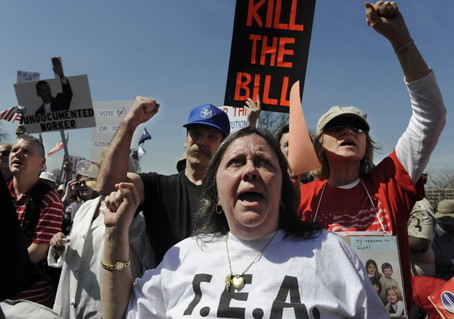
When do you cross the line?
In the Wyoming state legislature, 10 congressmen and three senators have co-sponsored “The Health Care Choice and Protection Act.” The intent? To make it a felony to implement the health-care reform law — which is, you’ll remember, the official law of the land. Here’s the relevant bit:
Enforcement of federal laws prohibited; offenses and penalties.
Any official, agent, employee or public servant of the state of Wyoming as defined in W.S. 6-5-101, who enforces or attempts to enforce an act, order, law, statute, rule or regulation of the government of the United States in violation of this article shall be guilty of a felony punishable by a fine of not more than five thousand dollars ($5,000.00), imprisonment in the county jail for not more than two (2) years, or both.
Any official, agent or employee of the United States government or any employee of a corporation providing services to the United States government that enforces or attempts to enforce an act, order, law, statute, rule or regulation of the government of the United States in violation of this article shall be guilty of a felony punishable by imprisonment for not more than five (5) years, a fine of not more than five thousand dollars ($5,000.00), or both.
There’s not much use in worrying about something like this as it wouldn’t survive two seconds in a court of law. But the sentiments are worth considering: The argument is that this legislation isn’t just policy that the authors disagree with, but rather a deeply, profoundly, un-American threat to liberty. It’s so un-American, in fact, that a plain reading of the Constitution makes clear that the Wyoming legislature, which has sworn to protect and defend the document, must “adopt and enact any and all measures as may be necessary within the borders of Wyoming to prevent the enforcement of the Patient Protection and Affordable Care Act and the Health Care and Education Reconciliation Act of 2010.”
Many of my friends on the right have legitimate technocratic differences with the Affordable Care Act. But many of the politicians they’ve stood with have not made a legitimate case against the bill. Rather, they’ve taken a bill that echoes past legislation Republicans have introduced and called it, as Sen. Jon Kyl did, “a stunning threat to liberty.” They’ve told their supporters, as Sen, Chuck Grassley did, that they’re right to fear that the health-care bill “determines if you’re going to pull the plug on grandma.” This is not merely legislation that they have some technical or philosophical disagreements with. It is, in the words of Speaker John Boehner, “a monstrosity.”
Given the extremism of the rhetoric at the top, is it any wonder that there is incredible fear trickling down to the grass roots? If those are the stakes, then of course criminalizing any implementation of the bill makes sense. Frankly, if those are the stakes, then violent resistance might be required.
Those aren’t the stakes, of course. They’re just the words. And words slip sometimes. Things come out too angry, or too quickly, or too sharply. I’ve had my share of experience with this. But words matter. And the Republican Party hasn’t been slipping up: It’s been engaged in a concerted campaign to scare the population into opposing health-care reform. That may be good politics, but it can have bad consequences.
By: Ezra Klein-Washington Post-January 7, 2011: Photo By: Melina Mara-Washington Post
Different Congress, Same Crap: Get Ready for a GOP Rerun
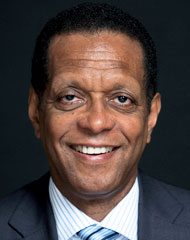
Bob Herbert-Op Ed Columnist, NYT
In any event, the G.O.P. has taken its place once again as the House majority and is vowing to do what it does best, which is make somebody miserable — in this case, President Obama. Representative Darrell Issa, the California Republican who is now chairman of the Oversight and Government Reform Committee, said recently on the Rush Limbaugh program that Mr. Obama was “one of the most corrupt presidents in modern times.” He backed off a little on Sunday, saying that what he really thinks is that Mr. Obama is presiding over “one of the most corrupt administrations.”
This is the attitude of a man who has the power of subpoena and plans to conduct hundreds of hearings into the administration’s activities.
The mantra for Mr. Issa and the rest of the newly empowered Republicans in the House, including the new Budget Committee chairman, Paul Ryan of Wisconsin, is to cut spending and shrink government. But what’s really coming are patented G.O.P. efforts to spread misery beyond Mr. Obama and the Democrats to ordinary Americans struggling in what are still very difficult times.
It was ever thus. The fundamental mission of the G.O.P. is to shovel ever more money to those who are already rich. That’s why you got all that disgracefully phony rhetoric from Republicans about attacking budget deficits and embracing austerity while at the same time they were fighting like mad people to pile up the better part of a trillion dollars in new debt by extending the Bush tax cuts.
This is a party that has mastered the art of taking from the poor and the middle class and giving to the rich. We should at least be clear about this and stop being repeatedly hoodwinked — like Charlie Brown trying to kick Lucy’s football — by G.O.P. claims of fiscal responsibility.
There’s a reason the G.O.P. reveres Ronald Reagan and it’s not because of his fiscal probity. As Garry Wills wrote in “Reagan’s America”:
“Reagan nearly tripled the deficit in his eight years, and never made a realistic proposal for cutting it. As the biographer Lou Cannon noted, it was unfair for critics to say that Reagan was trying to balance the budget on the backs of the poor, since ‘he never seriously attempted to balance the budget at all.’ ”
We’ll see and hear a lot of populist foolishness from the Republicans as 2011 and 2012 unfold, but their underlying motivation is always the same. They are about making the rich richer. Thus it was not at all surprising to read on Politico that the new head of the House Energy and Commerce Committee, Fred Upton of Michigan, had hired a former big-time lobbyist for the hospital and pharmaceuticals industries to oversee health care issues.
I remember President Bush going on television in September 2008, looking almost dazed as he said to the American people, “Our entire economy is in danger.”
Have we forgotten already who put us in such grave peril? Republicans benefit from the fact that memories are short and statutes of limitations shorter. It was the Republican leader in the House, Tom DeLay, who insisted against all reason and all the evidence of history that “nothing is more important in the face of war than cutting taxes.”
But that’s all water under the bridge. The Republicans are back in control of the House, ready to run interference for the rich as recklessly and belligerently as ever.
By: BOB HERBERT-Op-Ed Columnist, New York Times-Published January 3, 2011
‘Death Panels’ and Maxwell’s Silver Hammer: End-of-Life Planning Scare Resurfaces

Hammer or death mallet? You be the judge...
A hammer is supposed to be used to pound nails. But as the Beatles pointed out more than 40 years ago, it can also be used as a murder weapon. Nobody, however, is calling for a ban on hammers or calling them “death mallets.”
Maybe that’s why the resurrection of the “death panel” canard, as applied to end-of-life planning, seems so unnecessary. Here’s how the New York Times started its story a few days ago:
“When a proposal to encourage end-of-life planning touched off a political storm over ‘death panels,’ Democrats dropped it from legislation to overhaul the health care system. But the Obama administration will achieve the same goal by regulation, starting Jan. 1.”
The only opponent quoted in the story was this:
Elizabeth D. Wickham, executive director of LifeTree, which describes itself as “a pro-life Christian educational ministry,” said she was concerned that end-of-life counseling would encourage patients to forgo or curtail care, thus hastening death.“The infamous Section 1233 is still alive and kicking,” Ms. Wickham said. “Patients will lose the ability to control treatments at the end of life.”
Which, with all due respect, was no more accurate a summary of “Section 1233” or the new regulation than “death mallets” would be to describe hammers.
Don’t believe me? Section 1233 was contained in one early draft of the health care reform bill. Here’s the text of that version of the bill (search for “advance care planning consultation”). It would have allowed Medicare to pay for one such consultation every five years, if the patient wanted it.
Such consultation was to include: an explanation of advance care planning, advance directives, health care proxy, list of resources for further information, explanation of palliative and hospice care, explanation of the advantages of an up-to-date advance treatment order. It would have required training for health care providers (you’d be shocked at what some doctors don’t know about this stuff). And would have required standardization of information and forms used.
It also listed some of the conditions that could be included in a directive. And said that Medicare would pay for more frequent consultations if there were a significant change in condition.
Overly detailed and controlling? Maybe so. Death panels? Not hardly. Limit a patient’s ability to control treatments at the end of life? Not in any clause or sub-clause I can find.
Jump to the new regulation. (It’s in here.) The relevant passage is a lot shorter than the killed section of reform legislation. It adds “voluntary advance planning upon agreement with the individual” to the items that Medicare will pay for during an annual physical. Here’s the whole thing:
“Voluntary advance care planning” means, for purposes of this section, verbal or written information regarding the following areas: (1) An individual’s ability to prepare an advance directive in the case where an injury or illness causes the individual to be unable to make health care decisions. (2) Whether or not the physician is willing to follow the individual’s wishes as expressed in an advance directive.”
That’s it. No panels, death or knotty pine. Just a conversation with your doctor if you want it. No loss of patient control unless the patient is in a condition where conscious control is impossible — in which case the whole point of the planning is to ensure that the patient’s wishes be followed.
Since the New York Times figures Wickham has enough clout to stand in for all opponents, I tried to contact her. No joy. I checked her organization’s website for more insight into her objections. I found that LifeTree is not a generically Christian group, but one that has Catholic roots, starting with the blessing of the bishop of Raleigh, N.C.
So I shifted my search to the National Catholic Bioethics Center, figuring I’d find a reasoned critique that would likely be in accord with the beliefs of LifeTree. I found Marie T. Hilliard, the center’s director of bioethics and public policy. She was more than willing to engage me in civil discussion.
The Catholic Church is in favor of end-of-life planning, she said.
“The issue is not whether a discussion by a health care practitioner with a patient on end-of-life care issues is a good. It is a good,” she said. “And encouraging providers to have truly informing discussions on this issue also is a good.”
So what’s Hilliard’s beef with the regulation? She fears the way that written “orders for life-sustaining treatment” (called “POLST” or “MOLST”) could be abused. A form signed today might not include the actual situation that pops up years down the road.
In other words, a patient could complete a POLST/MOLST form indicating the patient did not want life sustaining treatment, which could be an antibiotic or a blood transfusion or proportionately beneficial assisted nutrition and hydration, before any of the facts that would be appropriate to such decision-making were in play.
The new regulation actually addresses at least one of her concerns in that it makes the consultation available annually, rather than using the bill’s five-year rule. And a standardized form can certainly include the vast majority of situations a patient is likely to encounter. The version prepared by the Rabbinical Council of America, for instance, covers persistent vegetative state, coma, lesser brain injuries along with a terminal illness, and brain injury without a terminal illness along with 31 possible procedures.
But there are conditions and procedures the form does not address. Would a longer form, with more choices, make the possibility of error less likely? Or would a form that’s much longer make it less likely that someone would be willing to fill it out at all?
Hilliard also raises a “slippery slope” argument, suggesting that widespread use of such forms would be employed to put pressure “on persons with disabilities and their families to forgo life sustaining health care treatments.”
To which argument I have consistently replied that if you have a doctor who wants you or your loved one dead, your problem is bigger than a signed form.
Hilliard recommends the use of “health care agents,” a sort of human advance directive. This could be a family member or some other designated person who has the authority to speak for the patient.
The concept was actually included in the killed portion of the health care reform bill, referred to as a “health care proxy.” Perhaps it should have been included in the new regulation.
I think Hilliard and I both agree that the biggest problem with end-of-life planning is that far too often it’s done poorly.
We have a 24/7 consultation line on medical ethics; (1,400 calls per year) and the most frequent call we receive is on end-of-life care, NOT because there is not an advanced directive, often because there is and it does not address the situation at hand, and no helpful discussion had been held with the health care agent. Then there is the question of whether or not the health care agent is locked in by the letter of the law, knowing that the spirit of the will of the patient may be violated.
And that’s for people who have directives or health care agents. Imagine the situation for the far greater number of people who never address these issues until there’s a crisis.
I have some personal experience in this matter. My dad died earlier this year. He was 92. Several years before, my wife had prodded him (and the rest of us) to fill out advance-care directives. Her career has been in long-term health care and she’d seen too many families torn apart by being forced to consider these decisions only under the most terrible stress.
Because we’d talked about the topic once, nudged into it by filling out the directive, we found it easier to return to the subject over the years as my dad’s condition faltered. We and his doctors were all clear about what he wanted — right up to the point when he decided he’d had enough. I cannot imagine how much more difficult those final days would have been without those previous conversations.
But most families do not have the advantage of having an elder-care expert “on staff.” If this regulation prods more doctors into a difficult conversation, if it prods more people into thinking about these issues when they have the luxury of time for reflection, that seems like a good idea to me.
Can such a process be abused? There is no system created by humanity that cannot be turned to evil ends. And yet most of us own a hammer.
By: Jeffrey Weiss-Correspondent-Politics Daily, January 2, 2011; Photo- Getty Images
Share This Blog


 Unknown Feed
- An error has occurred; the feed is probably down. Try again later.
 mykeystrokes.com
You must be logged in to post a comment.